Mount Batur
Bali, Indonesia
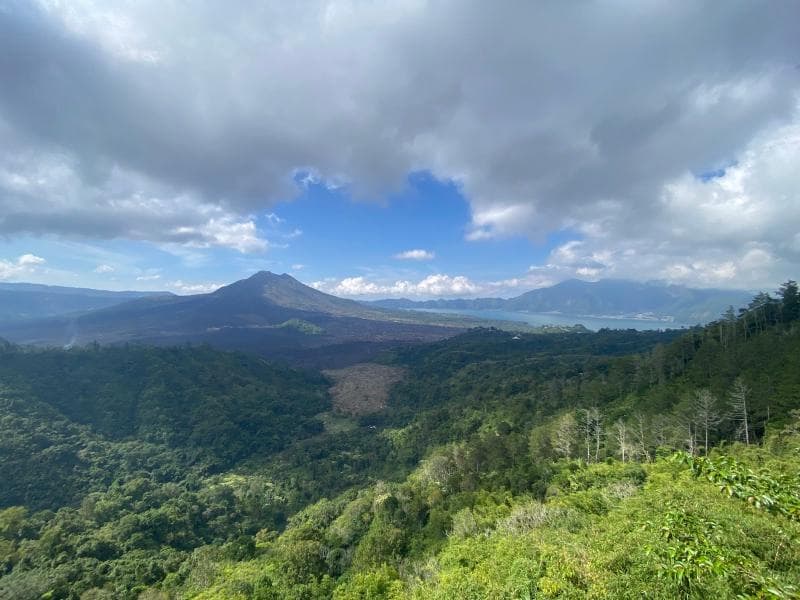
Discover Mount Batur, Bali's active volcano and UNESCO Geopark. Explore its history, cultural significance, and epic sunrise treks in Indonesia.
Overview
Mount Batur, locally known as Gunung Batur, is an active stratovolcano majestically rising 1,717 meters (5,633 feet) above sea level in Bali, Indonesia. Situated within the Bangli Regency, it stands as a prominent natural landmark in the Kintamani district. This captivating geological formation is cradled within two concentric calderas, with the crescent-shaped Lake Batur gracing the larger, outer caldera. Mount Batur is not merely a mountain; it is a globally recognized site, having been designated a UNESCO Global Geopark since 2012, an acknowledgment of its unique geological features, rich cultural heritage, and ongoing volcanic activity.
Renowned worldwide, Mount Batur is a premier destination for sunrise treks, drawing countless adventurers eager to witness the spectacular dawn break over the Balinese landscape. The panoramic vistas from its summit encompass not only the serene Lake Batur but also the towering silhouettes of neighboring Mount Agung and Mount Abang.
History & Cultural Background
The geological narrative of Mount Batur stretches back approximately 29,300 years. It was at this time that a colossal eruption led to the formation of its expansive outer caldera. A subsequent, equally powerful eruption, occurring roughly 20,150 to 20,000 years ago, carved out the smaller, inner caldera within the first. The stratovolcano itself is a testament to millennia of volcanic activity, built up from layers of ash, lava, and rock.
Mount Batur has a documented history of frequent eruptions, with the first recorded event in 1804. Since then, it has been active intermittently, with its most recent significant activity occurring in 2000. Historically, these eruptions have profoundly shaped the landscape and the lives of those dwelling in its shadow. One of the most devastating events occurred in 1917, obliterating thousands of homes and more than 2,500 temples across the region. In 1926, another major eruption completely engulfed the village of Batur and its original temple, Pura Ulun Danu Batur. The resilient local population subsequently rebuilt the temple in a safer location higher up on the caldera rim, where it stands today.
Culturally, Mount Batur holds immense spiritual significance in Balinese Hinduism. It is revered as a sacred mountain, believed to be the dwelling place of the gods. Specifically, it is closely associated with Dewi Danu, the goddess of lakes and rivers, who is believed to oversee the island's vital water sources. The vital Lake Batur, nestled within the caldera, is considered the ultimate origin of all springs and rivers in Bali, playing a crucial role in the island's intricate subak irrigation system. To maintain cosmic balance and appease the mountain spirits, villagers regularly conduct ceremonies at the crater rim.
What Makes It Special
Mount Batur's unique allure stems from a compelling blend of geological marvels and spiritual profundity. Its designation as a UNESCO Global Geopark underscores its exceptional status, highlighting its role in understanding volcanic processes and its rich biodiversity. The dramatic double caldera system, a geological rarity, along with the picturesque crescent-shaped Lake Batur, forms a landscape of extraordinary beauty.
The sunrise experience from the summit is truly unforgettable. As dawn breaks, the sky transforms into a canvas of vibrant hues, illuminating the surrounding volcanic peaks, including the majestic Mount Agung. Adding to its unique character are the active fumaroles that dot the summit. These natural steam vents are hot enough for local guides to demonstrate cooking eggs and bananas, providing a memorable breakfast for trekkers. Despite being an active volcano, Mount Batur is considered safe for trekking with a guide and offers a rewarding experience that is accessible to most individuals with an average level of fitness.
Stories, Fun Facts & Local Details
Mount Batur is steeped in fascinating legends and local lore. Balinese belief holds that the god Brahma, the creator god, resides within the fiery core of the volcano. One captivating myth tells of the giant Kbo Iwo. When food stores dwindled, the giant angrily destroyed homes and temples. The clever villagers tricked Kbo Iwo into digging a deep well to rebuild. As he slept in the well, they buried him alive with limestone, causing the water to boil and form Lake Batur. The earth mound from the digging became Mount Batur. This story symbolizes the interconnectedness of creation and destruction in Balinese culture.
The Batur UNESCO Global Geopark is not just about geology; it's a living landscape encompassing 15 villages within the Kintamani district. These communities blend traditional agriculture, producing notable items like Kintamani sweet oranges and civet coffee, with a growing tourism industry. Visitors may also encounter the long-tailed macaques that inhabit the higher elevations of the mountain. These clever monkeys are known for their opportunistic scavenging, so securing food and belongings is advisable.
The Pura Ulun Danu Batur temple complex, rebuilt on the caldera rim after the 1926 eruption, is a pivotal spiritual site. Dedicated to Dewi Danu, it is considered the second most important Hindu temple in Bali. Farmers from across the island make pilgrimages here, offering prayers and seeking blessings for fertile crops and steady rainfall.
Visitor Perspective
The Mount Batur sunrise trek is consistently described as a transformative and rewarding experience. Trekkers typically begin their journey in the early hours, often between 1:30 AM and 3:00 AM, to ascend the volcano under a blanket of stars and reach the summit just in time for dawn. The hike itself is generally rated as moderately easy to moderate, with an average ascent time of 1.5 to 2 hours. While the path can be uneven, characterized by volcanic gravel and some steeper sections, it remains accessible for most.
Trekking with a local guide is standard practice and highly recommended. Guides provide essential equipment like flashlights and often serve a hot breakfast at the summit, featuring local delights such as banana sandwiches and eggs cooked in the volcanic steam. The optimal time for a visit is during Bali's dry season, from April to October, which offers clearer skies and more favorable trekking conditions. Weekdays typically provide a less crowded experience. After descending, many tours offer additional excursions, such as visits to local coffee plantations or the nearby natural hot springs, providing a perfect way to relax and reflect on the adventure.
Coordinates: 115.3667, -8.2385
View on Google Maps💬 How Travelers Describe This Place
Based on community votes
Photogenic
879Must See
723Unique
482Interesting
396Beautiful
274
Traveler Stories
Discover memorable experiences shared by travelers who have visited this place.
No traveler stories yet.
Be the first traveler to share what made this place memorable.
Things to see at Mount Batur



Tour
By
Spot
Discover amazing places around the world. Your journey starts here.
Explore
© 2026 TourBySpot. All rights reserved.