Lava Fields
Bali, Indonesia
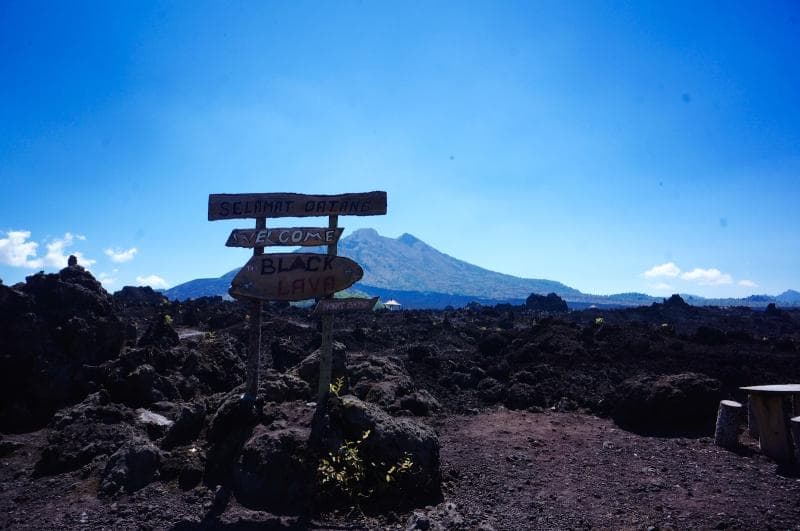
Explore the surreal Lava Fields of Mount Batur in Bali, Indonesia. Discover the geological history, cultural significance, and unique beauty of this volcanic landscape.
Overview
Nestled within the breathtaking caldera of Mount Batur in Bali, Indonesia, lie the dramatic Lava Fields, a stark and captivating testament to the island's powerful volcanic past. This expansive landscape, primarily composed of jagged black basalt rock and volcanic sand, is a direct result of numerous eruptions from Mount Batur, most notably the significant flows from the 1960s and 1974. These fields offer a surreal, almost otherworldly experience, contrasting sharply with the lush green highlands and the serene blue of Lake Batur. The active stratovolcano, Mount Batur, stands at 1,717 meters (5,633 feet) above sea level, and its surrounding caldera is a designated UNESCO Global Geopark, recognized for its unique geological features and rich cultural heritage. Exploring the Lava Fields provides a unique opportunity to witness the raw power of nature and understand how volcanic activity has shaped not only the physical landscape but also the life and culture of the Balinese people.
History & Cultural Background
Mount Batur's history is one of immense geological drama and profound cultural significance. The colossal caldera system was formed through two massive eruptions in pre-historic times, with the outer caldera collapsing around 29,300 years ago and an inner caldera forming approximately 20,150 years ago. These cataclysmic events reshaped the entire region, giving birth to the iconic landscape seen today, including Lake Batur, which fills part of the ancient crater. Since the early 19th century, Mount Batur has recorded at least 26 eruptions, with notable events occurring in 1917, 1926, 1963, 1974, and most recently in 2000. The 1926 eruption was particularly devastating, destroying the entire village of Batur and the original Pura Ulun Danu Batur temple, which was later rebuilt in a safer location. The Lava Fields visible today are primarily the cooled flows from these historical eruptions, leaving behind a rugged terrain that tells a story of both destruction and creation. In Balinese Hinduism, Mount Batur is deeply revered as a sacred entity, considered the home of powerful ancestral spirits and the goddess Dewi Danu, who oversees water sources and fertility. Villagers traditionally make offerings to appease the mountain spirits and maintain cosmic balance.
What Makes It Special
What makes the Lava Fields of Mount Batur truly special is their dynamic nature and the striking visual narrative they present. They are not merely static remnants of past eruptions but a living testament to the Earth's continuous geological processes. The fields consist of various types of lava formations, including sharp, porous 'AA' lava rocks and areas of fine black sand. Riding through these rugged expanses, whether by jeep or on foot, offers an immersive experience, revealing the raw power that sculpted this part of Bali. The dark, volcanic soil resulting from these flows is incredibly fertile, transforming seemingly barren land into productive agricultural areas that support local communities, growing vegetables, fruits, and coffee in the Kintamani region. Furthermore, the juxtaposition of the harsh black landscape with the vibrant greenery that slowly reclaims the land, and the shimmering blue of Lake Batur, creates a visually stunning and ecologically significant environment. It is a unique classroom where one can observe primary succession, the ecological process of life recolonizing a newly formed land. The Batur UNESCO Global Geopark status further highlights its international significance, integrating geological wonders with rich cultural heritage.
Stories, Fun Facts & Local Details
The Mount Batur region, including its Lava Fields, is steeped in fascinating folklore and local customs. Balinese myths recount the formation of Mount Batur and Lake Batur. One such legend describes a giant named Kbo Iwo, whose immense appetite led to destruction. Tricked by villagers into digging a deep well and falling asleep, he was buried with limestone, causing the well to boil and overflow, forming Lake Batur, while the mound of earth he dug became Mount Batur. Another myth states that the island of Bali was once adrift until gods anchored it by splitting the peak of Mount Semeru from Java, forming Mount Agung and Mount Batur. These stories underscore the deep reverence Balinese people hold for the mountain. A fun fact for visitors is that some local guides will demonstrate cooking eggs or bananas using the natural steam emanating from volcanic vents at the summit, a unique culinary experience powered directly by the mountain's geothermal activity. The Pura Ulun Danu Batur temple, located on the caldera rim, is dedicated to Dewi Danu, the goddess of the lake and water, emphasizing the spiritual connection between the volcano, the lake, and the island's life-giving water sources. This temple, rebuilt after the 1926 eruption, symbolizes the resilience of the local community and their enduring faith. Many of the guides who lead treks and tours grew up in the surrounding villages, inheriting stories and knowledge of the mountain from generations past.
Visitor Perspective
For visitors, exploring the Lava Fields at Mount Batur offers an unforgettable adventure and a profound connection with nature's raw beauty. While many opt for the popular sunrise trek to the summit of Mount Batur, the Lava Fields themselves can be explored through a jeep tour, providing a less strenuous but equally immersive experience. These jeep tours navigate the rugged terrain of hardened lava and black sand, offering panoramic views of the volcano and the surrounding caldera. Walking through parts of the Lava Fields allows travelers to feel the unique texture of the volcanic rock underfoot and observe the hardy plant life that has begun to colonize the barren landscape. It's a journey that evokes a sense of ancient history and geological wonder. After exploring, many visitors choose to relax in the natural hot springs located near the base of the mountain, whose waters are heated by geothermal activity and are believed to have therapeutic properties, offering stunning views of Lake Batur. Whether witnessing the sunrise from a viewpoint overlooking the fields, traversing the dramatic black terrain, or simply taking in the vastness of this volcanic masterpiece, the Lava Fields provide a powerful reminder of Bali's dynamic and sacred landscape.
Coordinates: 115.3667, -8.2385
View on Google Maps💬 How Travelers Describe This Place
Based on community votes
Interesting
981Photogenic
617Beautiful
565Must See
157Unique
28
Traveler Stories
Discover memorable experiences shared by travelers who have visited this place.
No traveler stories yet.
Be the first traveler to share what made this place memorable.

Tour
By
Spot
Discover amazing places around the world. Your journey starts here.
Explore
© 2026 TourBySpot. All rights reserved.