Black Lava Area
Bali, Indonesia
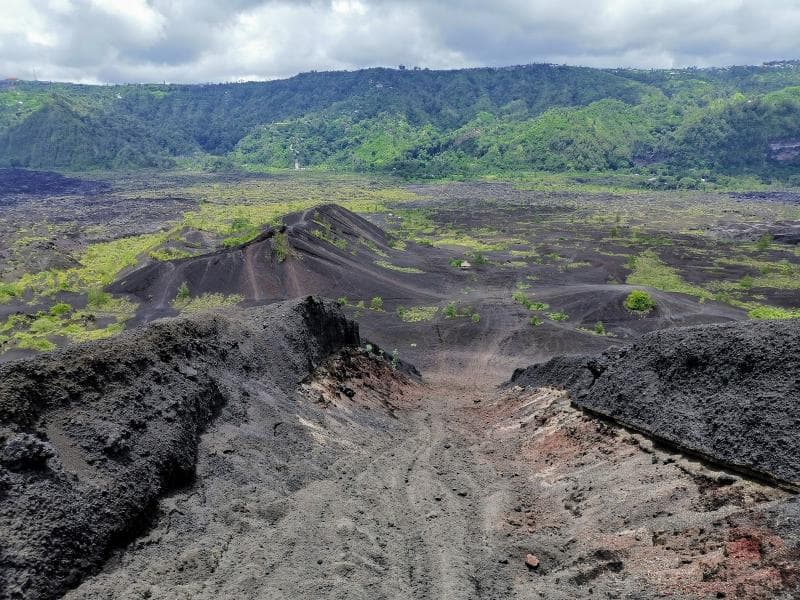
Explore the Black Lava Area of Mount Batur, Bali, Indonesia – a dramatic landscape of hardened volcanic rock forged by ancient eruptions.
Overview
The Black Lava Area of Mount Batur in Bali, Indonesia, presents a stark and captivating landscape, a dramatic testament to the island's powerful volcanic forces. Nestled within the Kintamani region, this unique sub-spot is characterized by vast stretches of hardened, jet-black volcanic rock formations. Unlike Bali's typical verdant rice paddies and lush jungles, the Black Lava Area offers an otherworldly, almost monochromatic vista that deeply impresses visitors. It is an expansive field of solidified lava flows, primarily sculpted by the significant eruptions of Mount Batur in the 20th century.
This striking terrain, comprising jagged rocks, cooled lava rivers, and layers of volcanic ash, tells a vivid geological story. It is a place where nature's raw power is palpable, offering a unique contrast to the serene beauty often associated with Bali. Visiting the Black Lava Area provides an immersive experience into the heart of an active volcanic region, revealing the profound impact of eruptions on the landscape.
History & Cultural Background
Mount Batur, an active stratovolcano, is a central figure in Bali's geological and cultural narrative. Its history is marked by a series of powerful eruptions that have continuously reshaped the surrounding landscape. The Black Lava Area primarily comprises flows from the major eruptions, particularly those in 1963-1964 and earlier events like the one in 1926.
Thousands of years ago, colossal eruptions led to the formation of Mount Batur's impressive double caldera system—a volcano within a volcano. The most destructive historical eruption occurred in 1917, obliterating villages and claiming lives, while the 1926 eruption buried the old Batur village in lava. The lava flows visible today from the 1963-1964 eruption significantly contributed to the expansive black lava fields.
Culturally, Mount Batur holds immense spiritual significance for the Balinese people. It is considered one of the island's most sacred mountains, believed to be the dwelling place of powerful ancestral spirits and the goddess Dewi Danu, the protector of Lake Batur and Bali's water sources. The cycle of destruction and regeneration, evident in the volcanic activity, is deeply integrated into the Hindu-Balinese worldview, where nature and the divine are inseparable. The area is also recognized as part of the Batur UNESCO Global Geopark, preserving its natural and cultural heritage.
What Makes It Special
The Black Lava Area stands apart due to its stark, almost alien beauty. It offers a rare opportunity to witness a landscape forged by intense geological processes. The jet-black basaltic rock, formed from molten lava, twists and curls into sharp ridges, undulating mounds, and dramatic fissures.
The terrain is a mosaic of textures—from crunchy, brittle surfaces to sharp, solid formations—with scattered volcanic glass and ash deposits adding to its unique character. This raw, rugged environment provides an unparalleled visual contrast against the often-clear blue Balinese sky and the distant green slopes of the caldera. It is a striking departure from the island's typical tropical imagery, providing a powerful reminder of Earth's dynamic nature. Despite its harsh appearance, the volcanic ash and mineral-rich lava eventually break down to create incredibly fertile soil, supporting vibrant agriculture in the Kintamani region.
Stories, Fun Facts & Local Details
For the Balinese, Mount Batur is more than just a geological marvel; it is a living entity imbued with spiritual power. Local communities regularly perform offerings to honor the mountain's spirits and maintain harmony with nature. Ancient legends suggest that Mount Batur is a displaced peak of the sacred Mount Mahameru, brought by the gods to serve as a palace for Dewi Danu.
A fascinating geological fact about Mount Batur is its 'double caldera' system, meaning a younger volcano has grown within an older, much larger one. This creates the unique geological setting you observe today. Furthermore, the seemingly barren black lava fields play a crucial role in the local economy. The breakdown of volcanic rock over time enriches the soil, making the Kintamani highlands exceptionally fertile. This rich soil, combined with the cooler climate, allows local farmers to cultivate a variety of crops, including tomatoes, chilies, and coffee, without extensive use of artificial fertilizers. Many locals adhere to traditional farming methods passed down through generations, directly benefiting from the volcano's life-giving cycle.
Visitor Perspective
Exploring the Black Lava Area is a highlight for many visitors to Mount Batur, offering an accessible adventure into its volcanic heart. The most popular way to experience this rugged terrain is through a 4WD jeep tour, which provides a thrilling, bumpy ride across the uneven landscape. This option makes the area accessible even for those not keen on long treks, including families and casual travelers. The journey takes you through winding trails carved by ancient lava flows, revealing dramatic ridgelines and deep fissures.
Photographers particularly appreciate the high-contrast shadows and the visually striking interplay between the dark rocks and the surrounding environment. While there is minimal vegetation and little shade, the raw texture and immense scale of the lava field are truly captivating. Visitors can walk part of the route, feeling the distinct crunch and solidity of the volcanic rock underfoot. Early morning visits, often combined with a sunrise viewing from Mount Batur, are recommended for the best light and cooler temperatures, enhancing the sense of awe and connection to this powerful natural wonder.
Coordinates: 115.3667, -8.2385
View on Google Maps💬 How Travelers Describe This Place
Based on community votes
Must See
981Photogenic
921Beautiful
617Unique
357Interesting
147
Traveler Stories
Discover memorable experiences shared by travelers who have visited this place.
No traveler stories yet.
Be the first traveler to share what made this place memorable.

Tour
By
Spot
Discover amazing places around the world. Your journey starts here.
Explore
© 2026 TourBySpot. All rights reserved.