Mirabell Palace And Gardens
Salzburg, Austria
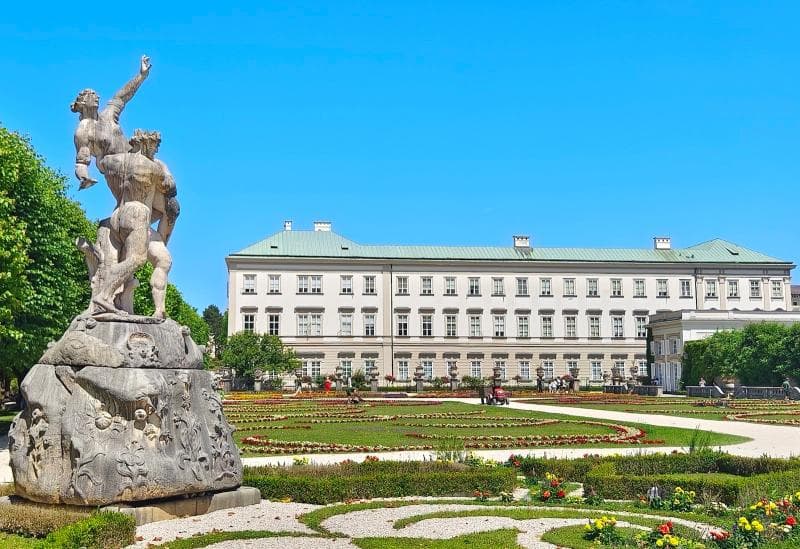
Explore Mirabell Palace and Gardens in Salzburg, Austria. Delve into its baroque beauty, rich history, and famous 'Sound of Music' gardens. A stunning UNESCO World Heritage site.
Overview
Mirabell Palace and Gardens, nestled in the heart of Salzburg, Austria, represent a harmonious blend of historical grandeur and horticultural artistry. This magnificent Baroque complex is a protected monument and forms an integral part of the Historic Centre of the City of Salzburg UNESCO World Heritage Site. Today, the palace serves as the administrative hub for the city, housing the offices of the Salzburg mayor and municipal administration. Its accessible gardens and remarkable architecture make it one of Salzburg's most cherished and popular attractions, drawing visitors from across the globe to experience its beauty and rich past.
History & Cultural Background
The origins of Mirabell Palace trace back to a poignant love story. In 1606, Prince-Archbishop Wolf Dietrich von Raitenau commissioned its construction for his beloved mistress, Salome Alt, and their fifteen children. Originally known as Schloss Altenau, the palace offered a retreat from the city's narrow streets. However, after Raitenau's downfall and imprisonment in 1612, his successor, Markus Sittikus von Hohenems, expelled Salome Alt and her family. He then renamed the palace 'Mirabell,' a name derived from Italian words 'mirabile' and 'bella,' meaning 'admirable' and 'beautiful' respectively.
The palace underwent a significant transformation between 1721 and 1727, rebuilt in a lavish Baroque style under Prince-Archbishop Franz Anton von Harrach, based on plans by the renowned architect Johann Lukas von Hildebrandt. While a devastating town fire in 1818 heavily damaged much of the palace and destroyed many frescoes, the iconic Marble Hall and grand staircase miraculously survived. The palace was subsequently restored, adopting its present Neoclassical appearance.
The Mirabell Gardens were initially laid out around 1690 by Johann Bernhard Fischer von Erlach, showcasing the geometric precision characteristic of Baroque landscape design. These splendid gardens were eventually opened to the public in 1854 by Emperor Franz Joseph I of Austria, making them accessible for everyone to enjoy.
What Makes It Special
Mirabell Palace and Gardens captivate with several unique features. The Marble Hall, once the prince-archbishop's banqueting hall, is now celebrated as one of the world's most beautiful wedding venues. This opulent hall, adorned with marble pillars and intricate stucco, is also a cherished setting for classical concerts, echoing with music as it did centuries ago when the Mozart family performed here.
Ascending to the Marble Hall, visitors are greeted by the 'Angel Staircase' or 'Engelsstiege,' a Baroque masterpiece designed by Austrian sculptor Georg Raphael Donner. Its white marble balustrade is intricately decorated with playful putti, adding an ethereal charm to the ascent.
The meticulously maintained Mirabell Gardens are a testament to Baroque landscaping, with symmetrical flowerbeds, grand fountains, and mythological statues. The central Grand Parterre features four groups of figures by Ottavio Mosto, symbolizing the four elements: fire, air, earth, and water. The Pegasus Fountain, featuring a copper sculpture of the winged horse, is another iconic landmark within the gardens. Furthermore, the Heckentheater, one of the oldest hedge theatres north of the Alps, hosts cultural events during the summer.
Perhaps most whimsical is the Zwergerlgarten, or Dwarf Garden. This oldest dwarf garden in Europe originally comprised 28 white Untersberg marble dwarfs, with 17 still preserved today.
Stories, Fun Facts & Local Details
The story of Mirabell's foundation by an archbishop for his beloved mistress Salome Alt adds a layer of romantic intrigue to its history, hinting at a secret life behind its grand facades. The palace is also notable as the birthplace of King Otto I of Greece on June 1, 1815, during a period when Salzburg was under Bavarian rule.
For many, Mirabell Gardens holds a special place in cinematic history as a filming location for the beloved musical 'The Sound of Music.' It was here that Maria and the children famously danced around the Pegasus Fountain, singing 'Do-Re-Mi,' making the gardens a pilgrimage site for fans worldwide. The dwarfs of the Zwergerlgarten were once caricatures of court jesters or represented different sins and virtues. Some were reportedly removed over time for being considered 'too ugly.'
Today, the Marble Hall's reputation as a breathtaking wedding venue is so strong that a local belief suggests marriages performed there are destined to last forever.
Visitor Perspective
Visiting Mirabell Palace and Gardens offers a delightful experience for any traveler. The gardens are generally accessible to the public and entry is free, inviting leisurely strolls amidst the botanical and architectural splendor. While much of the palace houses city administration, the Marble Hall and the Angel Staircase are open to visitors during specific hours, offering a glimpse into its luxurious interiors.
The gardens provide stunning panoramic views of Salzburg Cathedral and the majestic Hohensalzburg Fortress, creating picturesque backdrops for photography. Located centrally, Mirabell Palace and Gardens are easily reachable on foot from Salzburg's Old Town, making it a convenient and enriching stop on any itinerary. Whether you're drawn by its historical significance, cinematic fame, or simply its aesthetic beauty, Mirabell Palace and Gardens promise a memorable and enchanting visit.
Coordinates: 13.0385, 47.8033
View on Google Maps💬 How Travelers Describe This Place
Based on community votes
Must See
950Beautiful
287Photogenic
255Unique
231Interesting
86
Traveler Stories
Discover memorable experiences shared by travelers who have visited this place.
No traveler stories yet.
Be the first traveler to share what made this place memorable.
Things to see at Mirabell Palace And Gardens



Tour
By
Spot
Discover amazing places around the world. Your journey starts here.
Explore
© 2026 TourBySpot. All rights reserved.