Pegasus Fountain
Salzburg, Austria
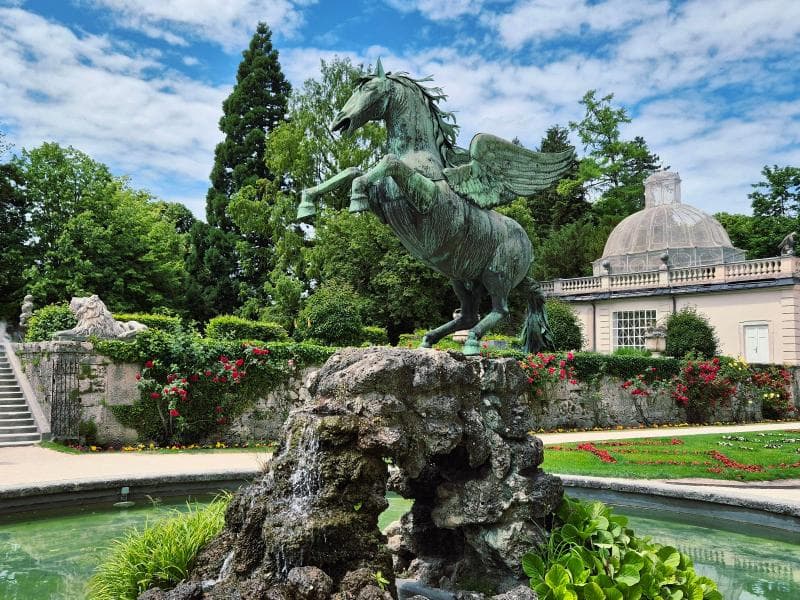
Explore Salzburg's Pegasus Fountain in Mirabell Gardens, a baroque masterpiece known for its mythical charm and 'Sound of Music' fame.
Overview
Nestled within the magnificent Mirabell Palace and Gardens in Salzburg, Austria, the Pegasus Fountain is more than just a beautiful water feature; it is a captivating piece of history and a symbol of enduring charm. As a central highlight of the meticulously designed baroque gardens, this iconic fountain invites travelers to step into a world where mythology, art, and natural beauty intertwine. Visitors encounter the graceful, rearing winged horse, Pegasus, embodying poetry and inspiration, against the stunning backdrop of the garden's vibrant flora and the historic palace itself. The Mirabell Gardens, housing this celebrated fountain, are a UNESCO World Heritage Site, admired for their exquisite design and historical significance.
Known worldwide for its enchanting role in a beloved musical, the Pegasus Fountain is a magnet for those seeking both cultural immersion and a touch of cinematic magic. It represents a focal point within the Mirabell Gardens, encouraging exploration of the surrounding mythological sculptures, geometrically arranged flowerbeds, and the distant, picturesque views of Hohensalzburg Fortress. Free to access, the gardens and its famous fountain offer an accessible and delightful experience for every curious traveler.
History & Cultural Background
The story of the Pegasus Fountain is deeply entwined with the history of Mirabell Palace and Gardens. The palace itself dates back to 1606, built by Prince-Archbishop Wolf Dietrich von Raitenau for his beloved mistress, Salome Alt, and their children. Originally named Schloss Altenau, it was later renamed 'Mirabell,' derived from the Italian words 'mirabile' (admirable) and 'bella' (beautiful), by a successor, Markus Sitticus von Hohenems. The gardens, initially laid out in the late 17th century, underwent significant baroque redesigns, notably by Johann Bernhard Fischer von Erlach around 1690 and later by Franz Anton Danreiter in 1730, shaping them into the masterpiece seen today.
The Pegasus figure itself, a splendid copper sculpture, was forged in 1661 by the acclaimed artist Caspar Gras. Interestingly, the winged horse did not always reside in its current prominent position. It was originally commissioned by Archbishop Guidobald von Thun for a horse-pond at Kapitelplatz, near the Salzburg Cathedral. Over the centuries, the statue moved several times, gracing Mirabellplatz Square for a period, until it finally found its permanent home within the Mirabell Gardens in 1913. This final placement made it an integral part of the baroque aesthetic and artistic narrative of the gardens.
What Makes It Special
Beyond its inherent artistic beauty, the Pegasus Fountain stands out for several compelling reasons. Its primary draw for many is its enduring association with the iconic film 'The Sound of Music.' The fountain features prominently in the unforgettable 'Do-Re-Mi' scene, where Maria and the Von Trapp children joyfully sing and dance around it. This cinematic connection has cemented its place in popular culture, drawing countless visitors who wish to recreate a moment from the beloved movie. The fountain also serves as a starting point for a delightful stroll through the hedge arcade, echoing the path taken by the film's characters.
Architecturally and symbolically, the Pegasus Fountain is equally special. The rearing copper Pegasus, a creature of Greek mythology, traditionally symbolizes poetry, inspiration, and artistic endeavors. Its presence imbues the garden with a sense of classical grandeur and intellectual depth, aligning with the baroque tradition of incorporating mythological narratives into garden design. The fountain's elegant design, combined with the precision of the surrounding symmetrical gardens, contributes to the overall harmonious and awe-inspiring atmosphere of Mirabell Gardens.
Stories, Fun Facts & Local Details
- A Cinematic Star: As mentioned, the Pegasus Fountain is arguably one of the most recognizable landmarks for 'The Sound of Music' fans. Visitors often pose for photos mimicking the famous dance and song sequence, making it a lively and interactive spot.
- The Wanderer's Tale: The journey of the Pegasus statue from Kapitelplatz to its current home in Mirabell Gardens in 1913 is a testament to its enduring artistic value and the changing landscape of Salzburg's public spaces. It's a small detail that adds a layer of nomadic history to this otherwise stationary artwork.
- Mythological Companions: While Pegasus holds center stage, the Mirabell Gardens are rich with other mythological statues and allegorical figures representing the four elements, creating a larger narrative tapestry for visitors to discover.
- A Symbol of Inspiration: For centuries, Pegasus has been associated with creativity and poetic inspiration. Standing before this fountain, one can almost feel the muse at work, stirring imagination and appreciation for the arts.
Visitor Perspective
Visiting the Pegasus Fountain offers a moment of peaceful contemplation amidst Salzburg's bustling attractions. As you approach, the sight of the magnificent winged horse, perpetually poised for flight, captivates the imagination. The fountain's gentle splashes provide a calming soundtrack to the vibrant colors of the seasonal flower arrangements that carpet the surrounding parterres. It's an ideal spot for photography, not only of the fountain itself but also for capturing the breathtaking vistas across the gardens towards the historic Hohensalzburg Fortress and Salzburg Cathedral.
Whether you're a film enthusiast tracing the steps of the Von Trapp family, a lover of baroque art and garden design, or simply seeking a tranquil oasis in the city, the Pegasus Fountain offers a memorable experience. It invites you to pause, reflect, and appreciate the layers of history, mythology, and cultural significance embedded within this beautiful corner of Salzburg. The accessible nature of the gardens means that this inspiring landmark can be enjoyed by all, making it a perfect addition to any Salzburg itinerary.
Coordinates: 13.045, 47.8049
View on Google Maps💬 How Travelers Describe This Place
Based on community votes
Photogenic
817Beautiful
657Must See
481Unique
299Interesting
19
Traveler Stories
Discover memorable experiences shared by travelers who have visited this place.
No traveler stories yet.
Be the first traveler to share what made this place memorable.

Tour
By
Spot
Discover amazing places around the world. Your journey starts here.
Explore
© 2026 TourBySpot. All rights reserved.