Orangery
Salzburg, Austria
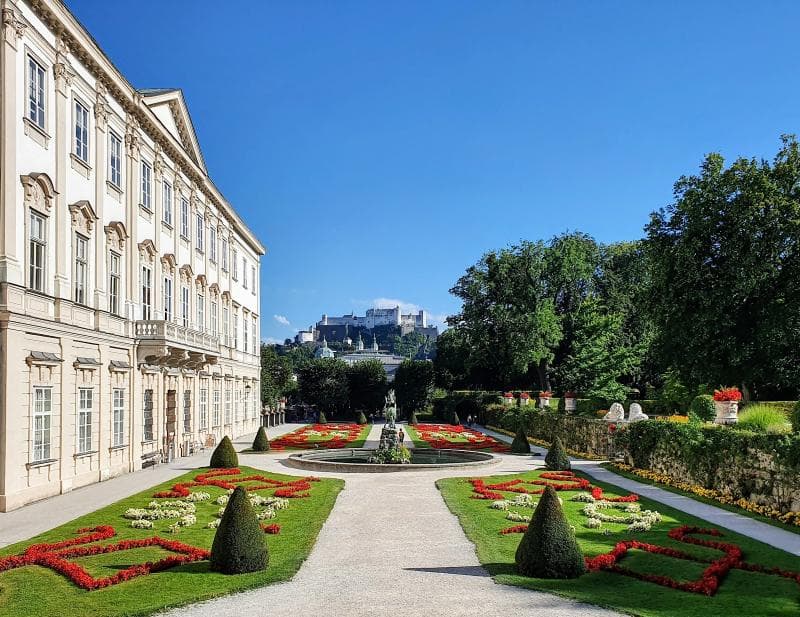
Explore the Orangery in Salzburg's Mirabell Gardens. Discover its history, the stunning Sattler Panorama, and interactive World Heritage exhibits.
Overview
The Orangery, a captivating sub-spot within the celebrated Mirabell Palace and Gardens in Salzburg, Austria, offers a unique blend of horticultural heritage and cultural enrichment. Historically functioning as a winter sanctuary for delicate plants, this elegant building has recently been transformed into the 'Orangery Salzburg – Panorama | World Heritage Centre'. It stands as an integral part of the Mirabell Gardens, a UNESCO World Heritage site renowned for its exquisite baroque design and historical significance. Situated in the southeast section of the sprawling gardens, the Orangery complex encompasses not only its main structure but also the picturesque rose garden, a palm house, and carefully manicured garden parterres, creating a harmonious ensemble for visitors to explore. This revitalized space now serves as a gateway to understanding Salzburg's profound historical and cultural layers, offering an immersive experience that brings the city's rich past to life.
History & Cultural Background
The origins of the Orangery can be traced back to initial designs attributed to the esteemed architect Johann Fischer von Erlach. By approximately 1725, the complex underwent a significant reconstruction following plans laid out by Franz Anton Danreiter, solidifying its place within the baroque aesthetics of the era. Orangeries of this period were not merely architectural statements but practical necessities, providing essential protection for exotic and temperature-sensitive plants, particularly citrus trees, during the harsh European winters. Over the centuries, the Orangery witnessed various transformations. Between 1830 and 1885, its south wing was notably extended. A more dramatic redesign occurred in the early 1970s, when much of the original building, save for a few external walls, was replaced by a two-storey exhibition hall. This modern intervention previously housed the Baroque Museum and the Kurt Rossacher Collection until 2012. Today, the Orangery embarks on a new chapter, with a comprehensive renovation and adaptation project led by MHM architects, positioning it as a dynamic hub for cultural engagement and 'World Heritage' appreciation. This evolution reflects a continuous effort to adapt and preserve Salzburg's heritage while offering contemporary relevance.
What Makes It Special
What truly sets the Orangery apart today is its innovative role as the 'Orangery Salzburg – Panorama | World Heritage Centre'. At its heart lies Johann Michael Sattler's monumental Salzburg Panorama, a breathtaking historic painting created between 1825 and 1829. This panoramic masterpiece provides a vivid depiction of Salzburg, artfully illustrating the reasons behind its UNESCO 'World Heritage' status. The reimagined Orangery brilliantly merges historical artistry with cutting-edge technology. Collaborating with the Ars Electronica Futurelab, the center incorporates multimedia stations, an expansive video wall, and interactive installations. This digital integration offers visitors an in-depth, engaging perspective on the concept and history of 'World Heritage', inviting questions and fostering discussions about the future of global heritage sites. Furthermore, a significant achievement of this renovation is the full accessibility of the panorama for all visitors, marking a crucial step towards inclusive cultural experiences. It serves as an essential starting point for anyone wishing to delve into Salzburg's historic old town and appreciate its unique standing as a global cultural landmark.
Stories, Fun Facts & Local Details
Beyond its structural beauty, the Orangery is woven into the larger tapestry of Mirabell Gardens, themselves a repository of fascinating tales and baroque splendor. Orangeries were once symbols of wealth and sophistication, demonstrating a patron's ability to cultivate exotic flora, a luxury during colder months. The Mirabell Gardens, meticulously reshaped around 1690 under Archbishop Johann Ernst Thun according to designs by Johann Bernhard Fischer von Erlach, epitomize baroque garden artistry with their precise geometric layouts and stunning visual alignments towards the Salzburg Cathedral and Hohensalzburg Fortress. The return of the Sattler Panorama to such a prominent location within the gardens marks a significant cultural event, reconnecting a historical artistic treasure with its geographical context and offering visitors a unique 'then and now' perspective of the city. It is within these very gardens that many visitors find themselves captivated, drawn by the harmony of nature and architecture. The Orangery, with its focus on 'World Heritage', underscores Salzburg's identity as a city deeply rooted in history, celebrated for its Baroque architecture, and intrinsically linked to figures like Wolfgang Amadeus Mozart.
Visitor Perspective
For the curious traveler, the Orangery at Mirabell Palace and Gardens presents an enriching and accessible destination. The 'Orangery Salzburg – Panorama | World Heritage Centre' is generally open year-round, typically from 9 am to 5 pm, offering ample opportunity for exploration. While the Mirabell Gardens themselves offer free admission, a modest fee is applicable for entry into the new 'World Heritage Centre', allowing access to the panorama and its interactive exhibits (e.g., 8 Euros for adults). Conveniently situated at Mirabellplatz 3, 5020 Salzburg, the Orangery is easily reachable, particularly by using public transportation to the 'Salzburg Mirabellplatz' bus stop. The site prides itself on its accessibility, ensuring that the historical panorama and engaging digital installations can be experienced by a wide audience, including those with disabilities. A visit here offers not just a glimpse into a historic building, but a comprehensive narrative of Salzburg's UNESCO 'World Heritage' status, providing a deeper appreciation for this Austrian gem.
Coordinates: 13.04146, 47.80469
View on Google Maps💬 How Travelers Describe This Place
Based on community votes
Must See
998Photogenic
897Beautiful
641Interesting
481Unique
196
Traveler Stories
Discover memorable experiences shared by travelers who have visited this place.
No traveler stories yet.
Be the first traveler to share what made this place memorable.

Tour
By
Spot
Discover amazing places around the world. Your journey starts here.
Explore
© 2026 TourBySpot. All rights reserved.