Marjan Hill
Split, Croatia
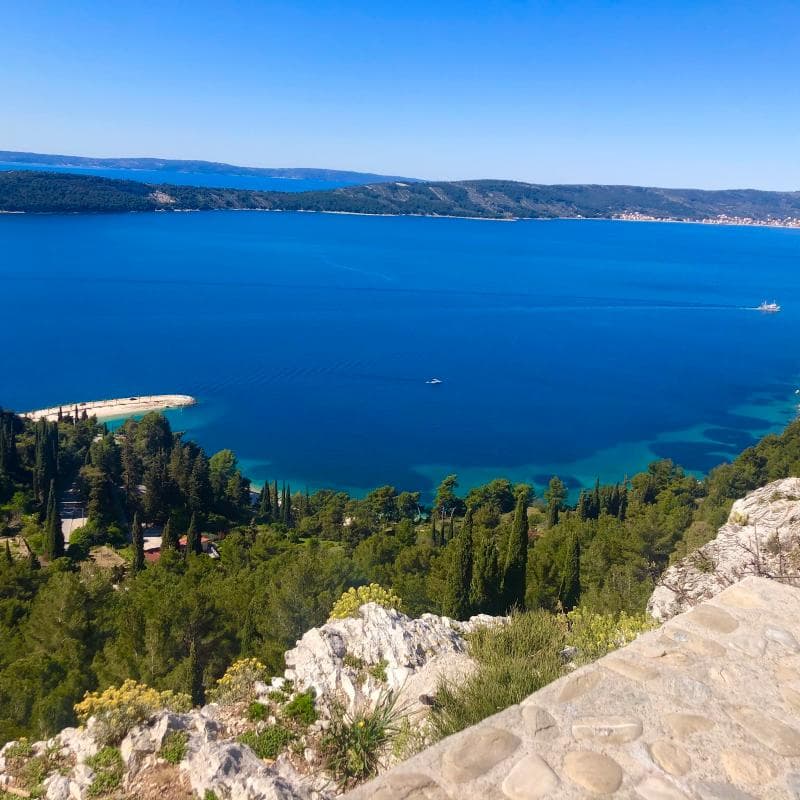
Explore Marjan Hill in Split, Croatia: a forested peninsula offering panoramic views, ancient churches, hidden beaches, and rich history. Discover Split's 'green lungs' for an unforgettable experience.
Overview
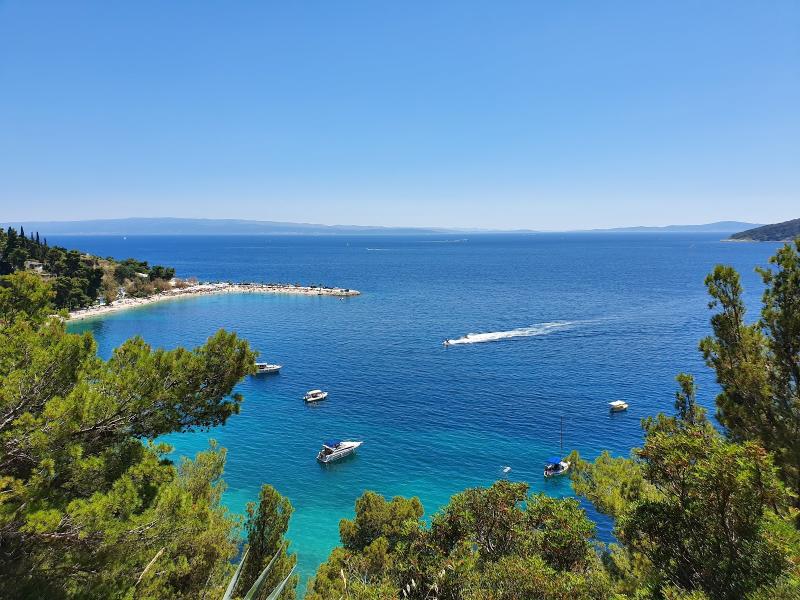
Perched majestically on the western edge of Split, Croatia, Marjan Hill is far more than just a topographical feature; it is an enduring symbol of the city and a beloved natural sanctuary. Often affectionately called 'the lungs of Split,' this forested peninsula rises to a height of 178 meters, offering a breathtaking panorama of the city, its ancient harbor, and the shimmering Adriatic Sea dotted with islands. [4, 6, 12, 14] For centuries, Marjan has provided a green escape, a place where the urban pulse of Split gently fades into the serene embrace of Mediterranean nature. It serves as a vital recreational hub for both locals and curious travelers, inviting exploration through its extensive network of trails, hidden chapels, and secluded beaches. [4, 15]
Designated as a protected forest park, Marjan safeguards a unique blend of natural beauty and cultural heritage. [7, 12] Its dense Aleppo pine forests offer respite from the summer heat, while its elevated viewpoints, such as Vidilica and Telegrin, deliver iconic vistas that are etched into the memories of all who visit. [3, 6, 9, 20] Whether seeking a vigorous hike, a tranquil stroll, or simply a spot to absorb the coastal grandeur, Marjan Hill stands as an accessible and invaluable asset to the vibrant city of Split. [8, 10]
History & Cultural Background
Marjan's story is as rich and layered as the city it overlooks, with human presence and reverence for the hill dating back to antiquity. Originally utilized as a park by the citizens as early as the 3rd century, its importance was recognized long before formal protections were established. [4, 7] The hill is first mentioned in historical records as 'Marulianus' in the 8th century. [4, 6] By the 13th century, Marjan's forests were already considered municipal property, leading to the construction of a fence around the hill and the prohibition of tree cutting in the 14th century, underscoring an early understanding of conservation. [4]
Throughout the centuries, Marjan evolved into a spiritual haven, witnessing the establishment of numerous small churches and hermitage caves carved directly into its cliffs. [6, 9, 21] Among the oldest is the Church of St. Nicholas (Sv. Nikola), built in 1219 by a Split citizen named Rako and his wife Elisabeth, making it one of Marjan's best-preserved medieval chapels. [4, 9, 21] The 15th century saw the addition of the Church of St. Jerome (Sv. Jere) and further hermitage caves, which housed medieval ascetics. [4, 9] These sacred sites reflect the deep spiritual connection people have had with Marjan, often undertaking pilgrimages to this 'holy hill.' [8, 21] Later reforestation efforts, particularly with Aleppo pine starting in 1852, transformed parts of the hill into the verdant forest park we know today. [4, 6]
What Makes It Special
What truly sets Marjan Hill apart is its extraordinary synthesis of natural splendor and historical depth, seamlessly integrated into the urban fabric of Split. The hill's distinctive Mediterranean pine forest, comprised largely of Aleppo pines, is not merely aesthetically pleasing; it acts as a natural air conditioner, perceptibly lowering temperatures compared to the city center during warm months. [5, 9, 20] This 'green lung' provides a crucial ecological balance and a sensory delight, with the scent of warm pine resin filling the air in summer. [9]
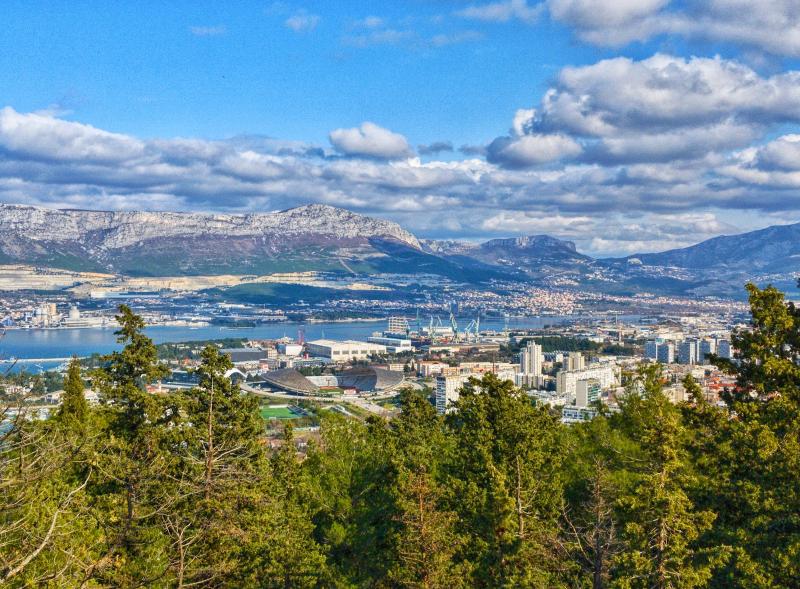
The panoramic vistas from Marjan's various viewpoints are undoubtedly a highlight. From Vidilica, located near the eastern slope, visitors are treated to an iconic postcard-perfect view of Split's red-tiled rooftops, the bustling port, Diocletian's Palace, and the distant islands of Brač, Šolta, and Čiovo. [3, 9, 13, 20] Ascending further to Telegrin, Marjan's highest peak at 178 meters, reveals an even more expansive 360-degree spectacle that includes the open Adriatic and the mountains of Mosor and Kozjak. [4, 5, 6, 14, 22] Beyond the views, the presence of ancient cliffside chapels and enigmatic hermitage caves, some dating back to the Renaissance, provides a profound sense of continuity with the past. [4, 9] This unique combination of unspoiled nature, historical architecture, and unparalleled scenic beauty makes Marjan an indispensable part of the Split experience. [8, 18]
Stories, Fun Facts & Local Details
Marjan Hill is steeped in local lore and personal narratives, making it a place of deep emotional significance for the people of Split. Its nickname, 'the lungs of Split,' is not just a poetic descriptor but a testament to its ecological importance and its role as a breathing space for the city. [6, 9, 12, 15] Locals frequently use Marjan for daily runs, evening strolls, and weekend swims, highlighting its integral role in their everyday lives. [3, 9, 14] The hill is home to the historic Jewish Cemetery, established in 1573, which features tombstones dating back to the 1700s, with its last burial in 1945, and is protected as a cultural monument. [6, 12, 13]
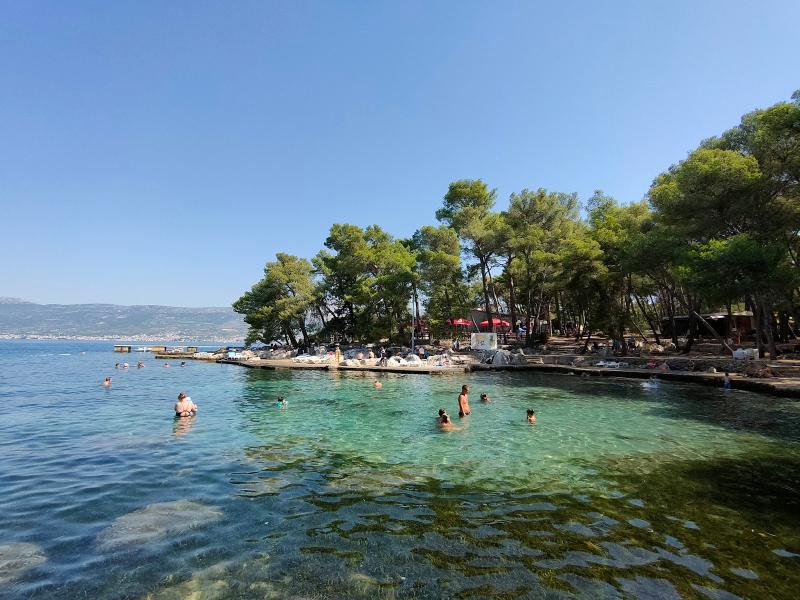
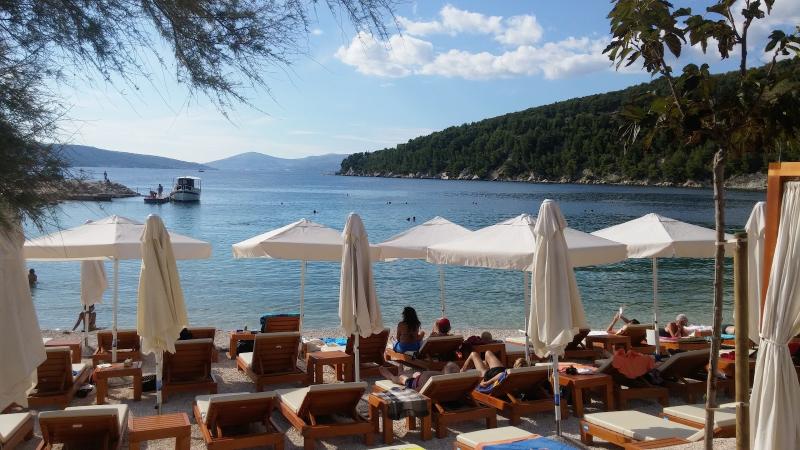
The story of St. Nicholas, the patron saint of sailors, is closely linked to the hill's oldest church. Positioned strategically above the sea, the church of St. Nicholas was believed to protect ships and their crews since ancient times. [21] Another notable figure is Umberto Girometta (1883–1939), a Split professor and natural scientist, who co-founded the Natural History Museum and zoo on Marjan, and after whom a scenic forest trail is named. [6] Furthermore, Marjan boasts several popular beaches along its coastline. Kašjuni beach, on the south side, is known for its clear water and lively atmosphere, while Bene beach on the northern shore offers natural shade and a family-friendly environment with facilities like a café and sports courts. [4, 9, 13] During World War II, Marjan was even the subject of a partisan song, and it is said that Josip Broz Tito, the former president of SFR Yugoslavia, later built his summer residence on the hill. [7]
Visitor Perspective
For visitors to Split, Marjan Hill offers an accessible and rewarding adventure that provides a refreshing contrast to the bustling city center. The most classic way to begin an exploration is by walking west from the Riva promenade through the charming Varoš neighborhood. [3, 5, 9] A broad stone stairway leads uphill to the first viewpoint, Vidilica café, typically a 20-25 minute ascent from the Riva. [3, 5, 13] This spot is ideal for enjoying a coffee with an unparalleled view of Split and its islands, especially at sunset. [3, 9, 10, 20]
Beyond Vidilica, the adventure continues along well-marked paths through the Aleppo pine forest. The full circuit of Marjan can take 2-3 hours, revealing quieter trails, additional viewpoints, and the captivating medieval chapels carved into the cliff face, such as St. Nicholas and St. Jerome. [3, 6, 9] Visitors can also find numerous secluded coves and rocky beaches along the south coast, perfect for a refreshing swim, with Kašjuni being a popular choice. [3, 4, 9] Important tips for visitors include bringing water, especially during the hot summer months, as shade can be limited on the initial uphill sections. [3] While trails are generally well-marked, some areas can be uneven. [3] Marjan is free to enter and open 24 hours, making it a flexible and budget-friendly activity. [3] A Visitor Center is available for more information, and in recent years, facilities like an observatory tower at Sedlo have been reconstructed to enhance the visitor experience, providing modern amenities and panoramic views. [12, 14, 16] Whether you seek an invigorating hike or a peaceful communion with nature, Marjan Hill promises a memorable and enriching experience. [8, 22]
Coordinates: 16.40833, 43.50833
View on Google Maps💬 How Travelers Describe This Place
Based on community votes
Beautiful
873Interesting
477Unique
422Photogenic
157Must See
53
Traveler Stories
Discover memorable experiences shared by travelers who have visited this place.
No traveler stories yet.
Be the first traveler to share what made this place memorable.
Things to see at Marjan Hill





Tour
By
Spot
Discover amazing places around the world. Your journey starts here.
Explore
© 2026 TourBySpot. All rights reserved.