Marjan Forest Park
Split, Croatia
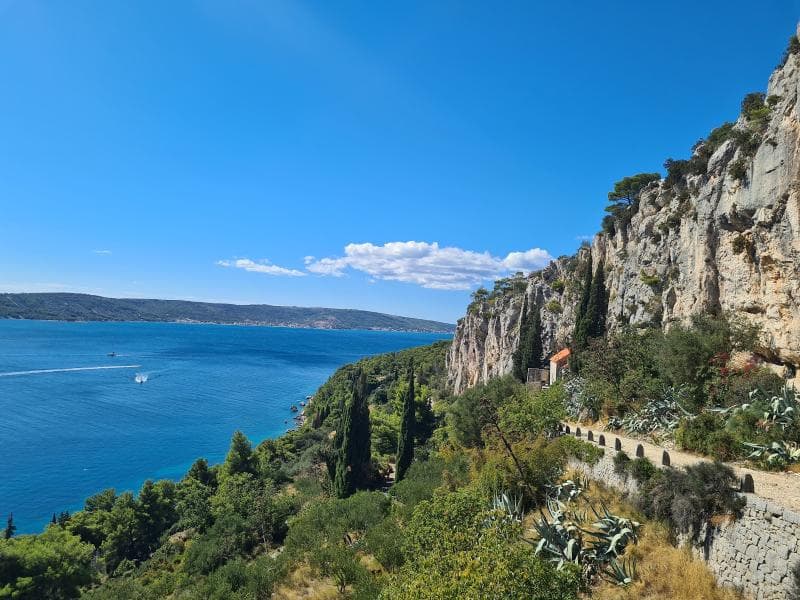
Explore Marjan Forest Park in Split, Croatia – the city's green heart. Discover ancient history, stunning views, hidden chapels, and peaceful trails.
Overview
Nestled on the western side of Split, Croatia, Marjan Forest Park emerges as a verdant sanctuary, affectionately known as the 'lungs of Split'. This protected peninsula, rising majestically above the Adriatic Sea, offers a serene escape from the city's lively rhythm, yet remains remarkably accessible from the historic center. Covering approximately 297 to 340 hectares, Marjan is characterized by its dense Mediterranean pine forests, rugged limestone cliffs, and a rich tapestry of natural and cultural landmarks. It's a place where the scent of pine mingles with sea air, and panoramic vistas stretch across the city, the sparkling sea, and the Dalmatian islands of Brač, Šolta, and Čiovo. Visitors can explore a network of well-maintained trails suitable for walking, running, and cycling, leading to secluded beaches, ancient churches, hermit caves, and breathtaking viewpoints. Marjan Forest Park is not merely a natural landscape; it's an integral part of Split's identity, symbolizing a harmonious blend of nature, history, and vibrant local life. It's open to the public year-round, free of charge, inviting everyone to discover its tranquil beauty and diverse offerings.
History & Cultural Background
The history of Marjan Forest Park is deeply interwoven with that of Split itself, dating back to ancient times. Evidence suggests that the area was utilized as a park as early as the 3rd century, with Roman Emperor Diocletian, whose palace was nearby, reportedly initiating its greening to create a recreational zone. This makes Marjan one of Croatia's oldest recreational areas. The hill was first mentioned as 'Marulianus' in the 8th century, and by the 13th century, it was recognized and enclosed as a municipal forest. Historical records, such as the 14th-century City of Split Statute, explicitly forbade the cutting of trees, underscoring its long-standing importance to the community.
Marjan's cultural significance is also reflected in its numerous sacred sites. Throughout the Middle Ages, many small churches and chapels were built, often nestled into the landscape or carved directly into the cliffs. Examples include the 13th-century Church of St. Nicholas and the 15th-century Church of St. Jerome, the latter often associated with hermitage caves nearby. The Old Jewish Cemetery, established in 1573 on the eastern slopes, stands as another testament to Marjan's rich, multicultural past. The modern era of Marjan's preservation began in the 19th century with systematic reforestation efforts, notably by Professor Juraj Kolombatović, who in 1903 founded the Marjan Association to ensure its lasting care. In 1964, Marjan was officially declared a protected forest park, cementing its status as a vital natural and cultural heritage site for Split. In 2014, the entire Marjan Peninsula was further designated as a protected cultural landscape.
What Makes It Special
What truly sets Marjan Forest Park apart is its unparalleled combination of natural splendor, historical depth, and immediate proximity to a bustling urban center. It is a rare gem where one can transition from the ancient cobblestones of Diocletian's Palace to a tranquil pine forest within minutes. The park's diverse ecosystem, featuring dense Aleppo pine forests and Mediterranean flora, provides a vital green lung for Split, offering fresh air and a cool respite from the summer heat.
Marjan is also famed for its extraordinary panoramic viewpoints. From Vidilica, a renowned terrace café, visitors can gaze upon the entire Roman-medieval core of Split, its harbor, and the expansive Adriatic Sea. The highest point, Telegrin Summit (178 meters), further offers breathtaking 360-degree views extending to distant islands and mountains. Beyond its scenic beauty, Marjan hosts a network of well-maintained trails that cater to various activities, from leisurely strolls to challenging runs and bike rides. Its hidden coves and pristine beaches like Bene and Kašjuni offer opportunities for swimming and relaxation, making it a comprehensive recreational hub. The unique blend of easily accessible nature, ancient religious sites, and recreational opportunities makes Marjan an indispensable part of the Split experience.
Stories, Fun Facts & Local Details
Marjan is steeped in local lore and fascinating details that add layers to its natural beauty. Locals often refer to Marjan as 'the Holy Hill,' reflecting its profound spiritual significance over centuries, marked by numerous small churches and hermitages. One enduring legend recounts how the hill, though now densely forested, was once bare. However, historical evidence and ancient Roman maps depicting a temple to Diana, the goddess of the hunt, suggest Marjan has been wooded since antiquity. The reforestation efforts of the 19th century, spearheaded by local activists like Juraj Kolombatović, were a massive undertaking, transforming barren slopes into the lush forest we see today and instilling immense civic pride.
The hermitage caves, particularly those carved into the 'Šantine stine' cliffs, tell tales of reclusive monks and hermits who sought solitude and spiritual contemplation on Marjan's southern slopes, often adapting these natural dwellings into tiny chapels. According to legend, Saint Jerome and Saint Cyriacus once resided there, adding to the mystical aura of these secluded spots. Marjan is also home to a small zoo and the Institute of Oceanography and Fisheries, further diversifying its offerings and reflecting its role in education and research. Its strategic location also means it has served as a silent witness to Split's tumultuous history, providing both refuge and a strategic vantage point.
Visitor Perspective
For any curious traveler, Marjan Forest Park offers an invitation to slow down and connect with nature and history. Whether you dedicate a quick hour or a leisurely half-day, the park promises a rewarding experience. Many visitors choose to begin their exploration with a walk from the Riva promenade, ascending the steps to Vidilica for an iconic first view of Split. The car-free nature of the park ensures a peaceful environment, where the sounds of the city fade into birdsong and rustling leaves.
Trails vary in difficulty, allowing for everything from gentle walks along paved paths to more challenging hikes up to Telegrin Summit. Summer offers the shade of the pine canopy and refreshing dips in the Adriatic at beaches like Bene, while spring and autumn provide ideal temperatures for hiking with fewer crowds. Even in winter, Marjan offers a unique beauty, shielded from the Bura wind in certain areas, providing a calm retreat. With its free entry and year-round accessibility, Marjan is a welcoming destination for families, couples, solo adventurers, and anyone seeking a moment of peace, an invigorating workout, or simply a magnificent view of this enchanting Croatian city.
Coordinates: 16.40833, 43.50833
View on Google Maps💬 How Travelers Describe This Place
Based on community votes
Interesting
972Photogenic
787Beautiful
726Unique
720Must See
300
Traveler Stories
Discover memorable experiences shared by travelers who have visited this place.
No traveler stories yet.
Be the first traveler to share what made this place memorable.

Tour
By
Spot
Discover amazing places around the world. Your journey starts here.
Explore
© 2026 TourBySpot. All rights reserved.