Telegrin Peak
Split, Croatia
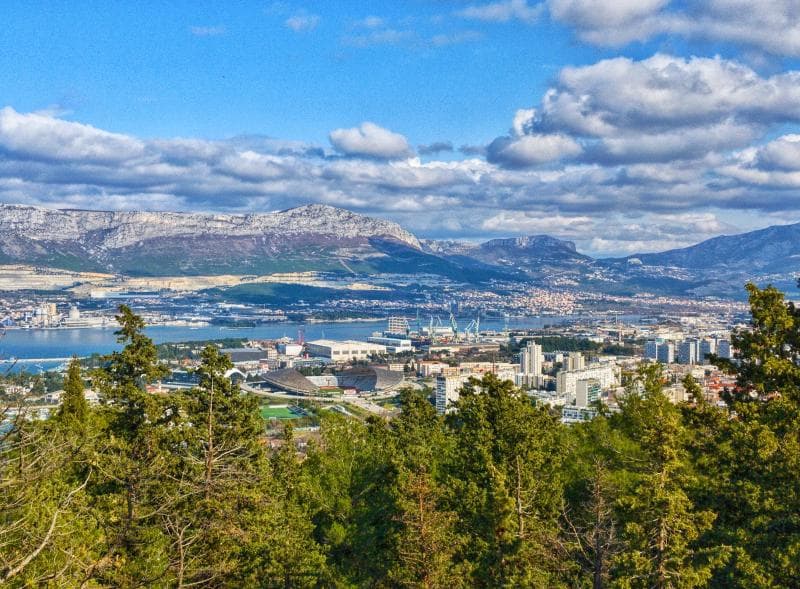
Discover Telegrin Peak, the highest point of Marjan Hill in Split, Croatia. Enjoy panoramic views of the city, Adriatic Sea, and islands from this historic spot.
Overview
Perched atop the verdant Marjan Hill in Split, Croatia, Telegrin Peak stands as the highest point, offering an unparalleled 360-degree panorama of the city, the sparkling Adriatic Sea, and the surrounding islands. Rising 178 meters (584 feet) above sea level, this sub-spot within the Marjan Forest Park is a beloved destination for both locals and travelers seeking tranquility, natural beauty, and breathtaking vistas. Often referred to as the 'lungs of Split', Marjan Hill, with Telegrin as its crown, provides a refreshing escape from the urban bustle. The summit is easily identified by a prominent white stone cross and a large Croatian flag, proudly waving against the backdrop of the sky.
The journey to Telegrin Peak is an experience in itself, winding through fragrant Mediterranean pine groves. Marjan Hill is a car-free zone, encouraging visitors to explore its numerous trails and paths by foot or bicycle, ensuring a peaceful and natural ambiance. The ascent, while offering a moderate challenge, is richly rewarded with expansive views that stretch across the historic red rooftops of Split, its busy port, and out to the distant islands of Brač, Šolta, and Čiovo, framed by the majestic Mosor and Kozjak mountains.
History & Cultural Background
Marjan Hill's significance dates back to ancient times, with Emperor Diocletian himself utilizing areas near his palace for recreation as early as the 3rd century. The name 'Telegrin' itself carries a historical echo, derived from a telegraph station established on this very peak during Napoleon's control of Dalmatia. This strategic location was ideal for visual telegraphy, visible for miles around, especially from the sea.
A white stone cross was first erected on Telegrin Peak in 1900. However, it was temporarily removed during World War I in 1917 by Austrian forces, who feared it could serve as a target for enemy attacks. Today's cross stands as a symbol, reinforcing the peak's landmark status. The transformation of Marjan from a bare hillside to a lush forest park is a testament to dedicated conservation efforts. In the early 1900s, the Marjan Society spearheaded major reforestation initiatives, planting countless pine trees and establishing the intricate network of paths and trails we see today. Marjan was officially declared a forest park in 1964 and later designated a protected cultural landscape in 2014, reflecting its ecological and historical value to Split.
What Makes It Special
Telegrin Peak offers a unique blend of natural splendor and historical intrigue, making it more than just a viewpoint. Its distinction lies in providing the most comprehensive panoramic views of Split and its aquatic surroundings. Visitors can literally trace the city's geography from this vantage point, observing the arc of Kaštela Bay and the distant mountain ranges. The combination of urban landscape, the serene Adriatic, and the dramatic mountainous backdrop creates a visual feast, particularly captivating during sunrise or sunset when the changing light bathes the entire scene in golden hues. The tranquil atmosphere, a stark contrast to the lively city center below, allows for a profound connection with nature, making it a perfect spot for reflection and relaxation. The presence of the large Croatian flag imbues the spot with a sense of national pride and identity.
Stories, Fun Facts & Local Details
Locals affectionately refer to Marjan Hill as the 'lungs of Split', a testament to its role as a vital green oasis for the city. It's a place deeply woven into the daily lives of Split's residents, a place for morning jogs, evening strolls, and weekend swims in its numerous coves. The journey to Telegrin is often seen as a local pilgrimage for exercise and connection with nature. Beyond the peak, Marjan Hill is dotted with ancient chapels, some dating back to the 13th century, like the Church of St. Nicholas, once cared for by Benedictine monks and hermits. The Old Jewish Cemetery, with tombstones dating back to 1573, also lies within Marjan's embrace, adding another layer of historical depth to the area. For the more adventurous, the 'Santine Stine' or 'Sacred Rocks' on the southern slopes offer challenging rock climbing routes.
Visitor Perspective
Reaching Telegrin Peak is a moderately challenging yet incredibly rewarding experience. The most common approach involves a walk from Split's city center, which can take anywhere from 30 to 60 minutes depending on your starting point and pace. For those seeking a more vigorous workout, routes featuring hundreds of steps lead directly to the summit. Despite the effort, visitors consistently describe the views as 'breathtaking' and 'well worth the climb'. It's highly recommended to wear comfortable walking or hiking shoes and to bring water, especially during warmer months. Many suggest planning your visit to coincide with sunset to witness the most spectacular display of colors over the Adriatic and the illuminated city. Benches are available at the summit, providing a perfect spot to rest, enjoy a snack, and fully immerse yourself in the expansive scenery. Telegrin Peak truly offers a memorable and enriching encounter with Split's natural and cultural heritage.
Coordinates: 16.4188, 43.50871
View on Google Maps💬 How Travelers Describe This Place
Based on community votes
Interesting
703Beautiful
521Photogenic
291Must See
157Unique
28
Traveler Stories
Discover memorable experiences shared by travelers who have visited this place.
No traveler stories yet.
Be the first traveler to share what made this place memorable.

Tour
By
Spot
Discover amazing places around the world. Your journey starts here.
Explore
© 2026 TourBySpot. All rights reserved.