King Nikola’s Palace
Podgorica, Montenegro
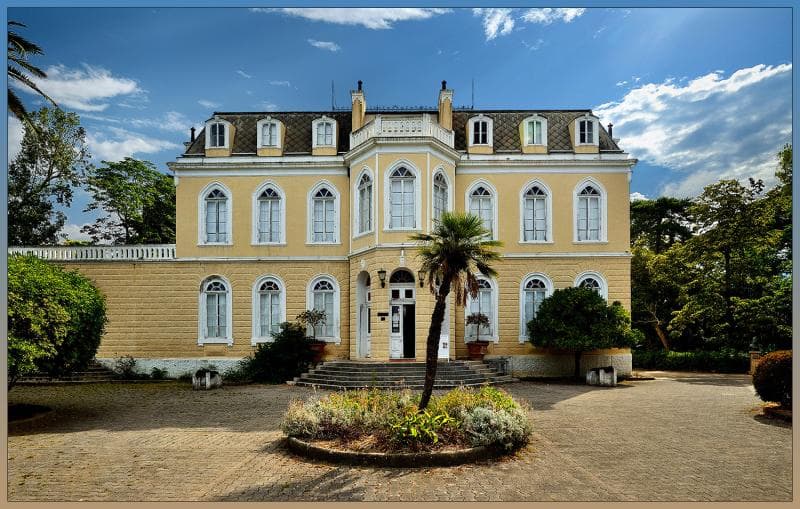
Explore King Nikola's Palace in Podgorica, Montenegro. Discover its royal history as a winter residence and its modern role as a contemporary art center.
Overview
Nestled within the expansive Petrović Park along the tranquil Morača River in Podgorica, Montenegro, stands King Nikola's Palace, also known as Petrović Palace or Kruševac Palace. This architectural gem, once the winter residence of Montenegro's last monarch, King Nikola I Petrović-Njegoš, now serves as the distinguished Centre of Contemporary Art of Montenegro. It offers visitors a compelling blend of royal history and vibrant modern culture, making it a pivotal landmark in the nation's capital. The palace complex, a cultural property of Montenegro, invites exploration into a past where royalty resided and a present where artistic expression thrives amidst serene natural surroundings.
History & Cultural Background
The story of King Nikola's Palace began with its construction between 1891 and 1894. Commissioned by King Nikola I Petrović-Njegoš, the palace was intended as a representative winter residence for his son, Prince Mirko Petrović-Njegoš. The foundation stone was laid on April 20, 1891, marking a significant period shortly after Podgorica transitioned from Ottoman to Montenegrin control. Built in a historicist architectural style, the complex originally comprised the main palace, the House of the King's Guard (Perjanički dom), and the court chapel of Saint Demetrius.
Its royal life was interrupted during the tumultuous Balkan Wars (1912–1913), when the palace and its outbuildings were repurposed as a hospital, a function they served for decades. Following significant revitalisation in 1984, the complex transformed into an exhibition space. It inaugurated the Gallery of Art of the Non-Aligned Countries 'Josip Broz Tito' in 1984, an institution unique in its direct establishment under the Non-Aligned Movement's auspices. By 1985, or officially in 1995 through an integration, the site evolved into the Centre for Contemporary Art of Montenegro, a role it maintains to this day. Notably, this resilient structure is one of the few buildings in Podgorica that survived the devastations of World War II, preserving a tangible link to Montenegro's rich past.
What Makes It Special
What truly sets King Nikola's Palace apart is its harmonious fusion of a storied royal past with a dynamic contemporary art scene. As a cultural monument, the complex presents a striking architectural statement from the late 19th century, serving as a testament to Montenegro's burgeoning statehood and cultural development. The two-story palace, accompanied by the Perjanički dom and the Church of Saint Demetrius, is gracefully situated within the spacious Kruševac forest park, creating one of Podgorica's most distinctive exhibition settings.
Today, the palace houses a significant collection of modern and contemporary art, boasting approximately 1500 art pieces from over 60 countries. This impressive collection reflects a wide array of artistic movements, offering a unique international perspective within a historical Montenegrin context. The juxtaposition of elegant royal chambers with avant-garde artworks creates an engaging and thought-provoking visitor experience, showcasing the country's commitment to both its heritage and its future in the arts.
Stories, Fun Facts & Local Details
Beyond its grand facade, King Nikola's Palace holds several fascinating details that illuminate Montenegro's historical progression. For instance, after its completion, an auxiliary building within the complex saw the construction of Podgorica's first telegraph station, and by 1895, the palace was among the first places in the city to have telephones installed. This highlights its role not just as a royal abode but also as a hub of early technological adoption in the region.
A recent and particularly interesting development is the parliamentary decision, effective August 15, 2026, to transfer ownership of the palace and its land to the descendants of the Petrović Njegoš dynasty. This re-establishes a direct link between the royal family and their ancestral home, even as the existing cultural institutions are slated to continue their operations through rental arrangements, perhaps until a new museum building is constructed. This dynamic interplay between historical ownership and contemporary public function adds a unique layer to the palace's ongoing narrative, making it a living monument to Montenegro's past and evolving present.
Visitor Perspective
Visiting King Nikola's Palace offers a multi-layered experience for the curious traveler. As you wander through the historic halls, you can almost hear the echoes of royal life, imagining the gatherings and decisions made within these walls. The transition into exhibition spaces, displaying contemporary art, provides a thought-provoking journey through time, connecting the old with the new. The palace's setting within Petrović Park is an attraction in itself; it's the largest park in Podgorica, offering lush green spaces, walking paths, and a tranquil escape from the urban bustle.
Here, you can spend time reflecting on Montenegro's rich history while also engaging with its modern artistic dialogue. The serene environment, coupled with the cultural richness of the exhibitions, makes for a deeply rewarding visit. Whether you are a history enthusiast, an art lover, or simply seeking a peaceful retreat, King Nikola's Palace provides a unique window into the Montenegrin soul, offering both educational insight and aesthetic pleasure.
Coordinates: 19.25028, 42.43778
View on Google Maps💬 How Travelers Describe This Place
Based on community votes
Interesting
639Photogenic
526Beautiful
421Unique
366Must See
212
Traveler Stories
Discover memorable experiences shared by travelers who have visited this place.
No traveler stories yet.
Be the first traveler to share what made this place memorable.
Things to see at King Nikola’s Palace



Tour
By
Spot
Discover amazing places around the world. Your journey starts here.
Explore
© 2026 TourBySpot. All rights reserved.