Historic Exhibits
Podgorica, Montenegro
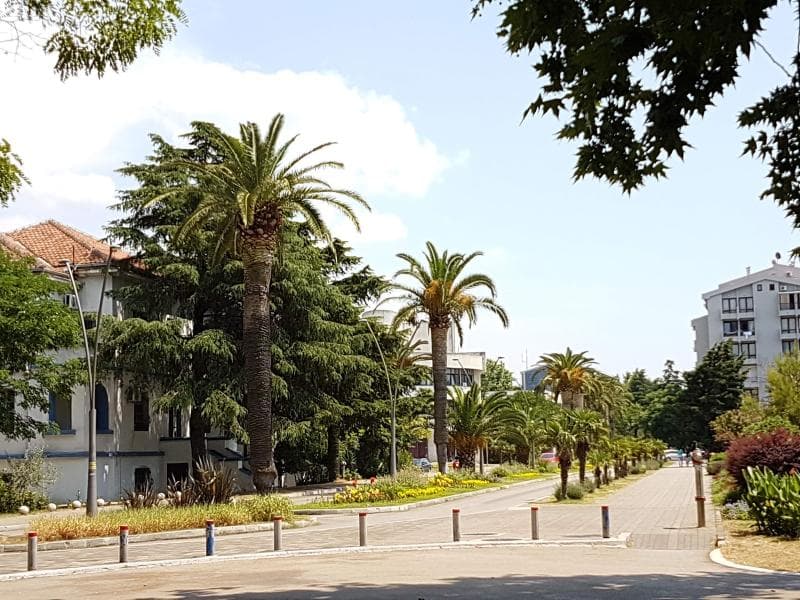
Explore the historic King Nikola's Palace in Podgorica, Montenegro. Discover contemporary art exhibits housed within this former royal winter residence and its beautiful park.
Overview
Nestled within the expansive Petrović Park in Podgorica, Montenegro, King Nikola's Palace stands as a compelling fusion of historical grandeur and contemporary artistic expression. Once the distinguished winter residence of Montenegro's last sovereign, King Nikola I Petrović-Njegoš, this magnificent structure now serves as the primary home for the Museum of Contemporary Art of Montenegro (MSUCG). While visitors might anticipate traditional ‘historic exhibits’ showcasing royal artifacts, the palace today thoughtfully presents its own rich history through its architecture and setting, while its interior spaces are dedicated to a vibrant collection of modern and contemporary art from Montenegro, the former Yugoslavia, and international artists. The complex, also known as Petrović Palace or Kruševac, invites exploration of both its regal past and its dynamic present as a cultural hub.
History & Cultural Background
The construction of King Nikola's Palace in Podgorica began in 1891 and was completed by 1894. It was commissioned by King Nikola I as a representative winter residence for the Montenegrin royal family, specifically for his son, Prince Mirko Petrović-Njegoš. The palace complex, built on an elevation then known as Kruševac, rapidly became a significant landmark, reflecting the architectural trends of the late 19th century. During the Balkan Wars, the palace transitioned from a royal abode to a humanitarian role, serving as a hospital for several decades. This period of transformation underscores its resilience and adaptability in Montenegrin history.
Later, the palace underwent another significant metamorphosis, shifting its purpose to cultural enrichment. Since 1985, it has been officially recognized as a center for contemporary art, culminating in its current role as the seat of the Museum of Contemporary Art of Montenegro. This evolution from a royal residence to a contemporary art institution highlights a unique cultural trajectory, preserving the historical edifice while embracing modern artistic narratives. The entire complex holds the esteemed status of a cultural monument of Montenegro.
What Makes It Special
What makes King Nikola's Palace truly special is its intriguing dual identity: a historical royal dwelling that now champions contemporary art. The palace itself, a two-story neoclassical building, is a testament to 19th-century Montenegrin architecture. It is surrounded by the beautifully landscaped Petrović Park, which features a botanical garden and provides a serene backdrop for the art. The complex also includes the Perjanički Dom (House of the King's Guard), and the Church of St. Dimitrije, contributing to its multifaceted appeal.
The current exhibits primarily feature a diverse collection of modern and contemporary art. The Museum of Contemporary Art of Montenegro, housed within these historic walls, displays works by Montenegrin, Yugoslav, and international artists, showcasing various artistic movements and media from the 20th century to the present day. This juxtaposition of classical architecture with avant-garde expressions creates a captivating visitor experience, where the past and present engage in a silent, artistic dialogue.
Stories, Fun Facts & Local Details
The palace's location in Petrović Park, one of Podgorica's largest and most beautiful green spaces, adds another layer to its charm. The park was originally designed as a forest park, providing recreational space for the royal family and later the public. It is an ideal place for a leisurely stroll before or after visiting the museum, offering sculptures scattered throughout its grounds.
A recent interesting development, effective from August 15, 2026, involves the transfer of ownership of the palace and its land to the descendants of the Petrović-Njegoš dynasty. However, the cultural institutions, including the Museum of Contemporary Art, are slated to continue their operations within the building, albeit under a rental arrangement, until a new dedicated museum facility can be constructed. This arrangement ensures the preservation of the palace's cultural function while recognizing its royal heritage.
Visitor Perspective
For the curious traveler, a visit to King Nikola's Palace offers a unique opportunity to step into a piece of Montenegrin history and engage with its contemporary art scene. You'll wander through the halls where King Nikola once resided, appreciating the historical ambiance of the building itself, before immersing yourself in thought-provoking modern art exhibitions. The natural light filtering through the palace windows onto abstract sculptures and vibrant canvases creates a truly memorable atmosphere. The surrounding Petrović Park provides a peaceful retreat, allowing for reflection on the historical significance of the site and the modern artistic narratives unfolding within its walls. This blending of epochs makes the palace a must-visit for anyone interested in Montenegro's layered cultural identity.
Coordinates: 19.25028, 42.43778
View on Google Maps💬 How Travelers Describe This Place
Based on community votes
Must See
639Beautiful
569Interesting
476Photogenic
465Unique
128
Traveler Stories
Discover memorable experiences shared by travelers who have visited this place.
No traveler stories yet.
Be the first traveler to share what made this place memorable.

Tour
By
Spot
Discover amazing places around the world. Your journey starts here.
Explore
© 2026 TourBySpot. All rights reserved.