Royal Artifacts
Podgorica, Montenegro
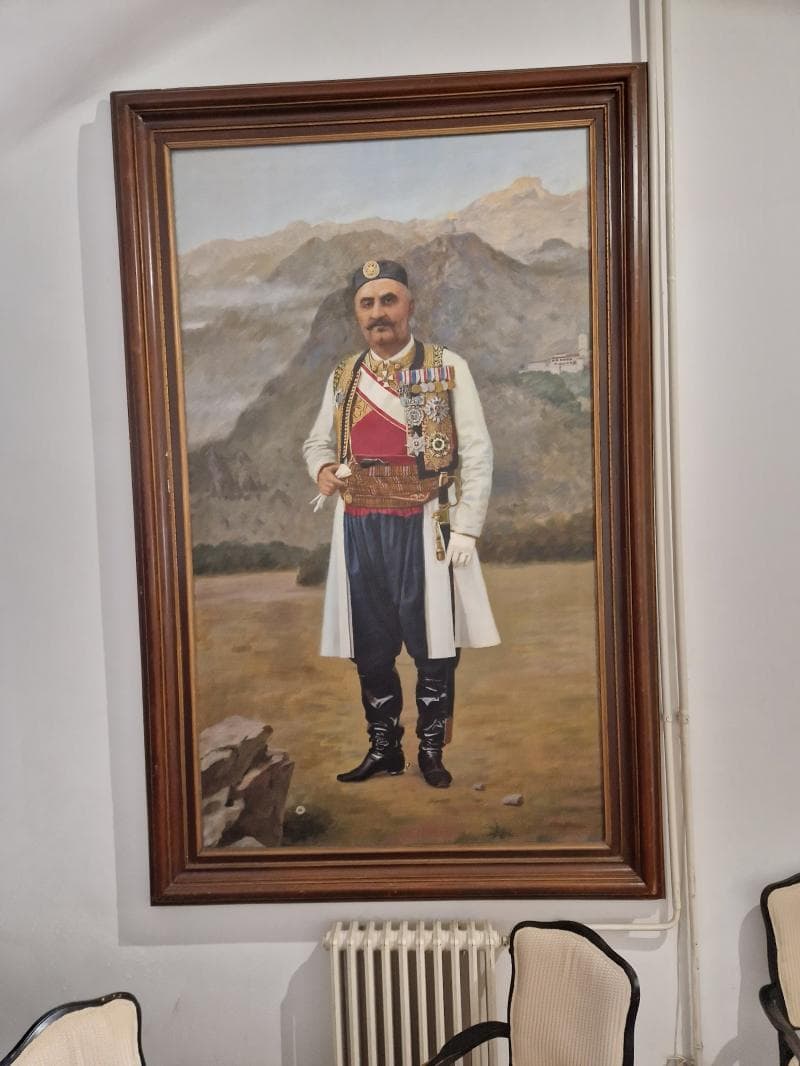
Discover King Nikola’s Palace in Podgorica, Montenegro. Explore royal history and its transformation into a contemporary art museum.
Overview
Stepping into King Nikola’s Palace in Podgorica, Montenegro, is to journey through layers of history where royal legacy intertwines with modern artistic expression. Often referred to as the Petrović Palace or Kruševac, this grand estate, nestled within a verdant park, was once a cherished winter residence of Montenegro’s last monarch, King Nikola I Petrović-Njegoš. Today, it serves as a prominent cultural hub, housing the Museum of Contemporary Art of Montenegro and the Petrović Njegoš Foundation. While not a dedicated 'Royal Artifacts' exhibition in the traditional sense, the entire complex breathes the spirit of its regal past, offering visitors a unique perspective on Montenegrin heritage through its architecture, historical context, and the continuing presence of the royal foundation. It’s a place where the echoes of a bygone era meet the vibrant pulse of contemporary creativity, making every corner a subtle 'royal artifact' waiting to be discovered.
History & Cultural Background
The history of King Nikola’s Palace traces back to the late 19th century. Construction commenced in 1891, with the foundation stone laid on April 20th, shortly after Podgorica transitioned from Ottoman to Montenegrin control. King Nikola I commissioned the palace as a winter abode for his royal family, particularly for his son, Prince Mirko Petrović-Njegoš. The main residence was completed between 1891 and 1892, and the broader complex, including the House of the King's Guard (Perjanički dom) and the court chapel, was finished by 1894. This two-story palace, crafted by local artisans under an unidentified architect, embodies the historicist architectural style prevalent at the time.
Over the decades, the palace witnessed significant transformations. During the Balkan Wars (1912-1913), the royal residence and its outbuildings were converted into a hospital, a role they maintained for many years, even after renovations by the American Red Cross in 1919. Later, in 1985, the castle found a new purpose as the Center of Contemporary Art, an institution that has since evolved into the Museum of Contemporary Art of Montenegro. This evolution highlights Montenegro's dedication to preserving its historical landmarks while fostering contemporary cultural development. Importantly, the palace continues its royal connection as the seat of the Petrović Njegoš Foundation, presided over by the head of the House of Petrović-Njegoš.
What Makes It Special
What makes King Nikola’s Palace truly special is its remarkable duality: a historical royal residence now serving as a vibrant center for contemporary art. This unique blend allows visitors to appreciate the grandeur of Montenegrin royalty while engaging with modern artistic expressions. The palace's original design, its setting within the extensive Kruševac forest park, and the associated structures like the House of the King's Guard and the Church of Saint Demetrius, offer glimpses into the royal lifestyle of the late 19th century. The botanical garden, added around 1905, further enhances the serene and stately atmosphere.
Inside, the museum houses a significant collection of approximately 1500 art pieces from various international and Montenegrin artists, showcasing the rich tapestry of creativity that the institution champions. This artistic collection, though modern, is displayed within walls that once sheltered royalty, creating a compelling dialogue between past and present. The fact that the Petrović Njegoš Foundation still operates from here underscores its enduring link to the Montenegrin royal family, making the palace not just a museum but a living testament to its regal heritage.
Stories, Fun Facts & Local Details
One charming detail about King Nikola’s Palace is its original dedication as a winter retreat for the royal family, a stark contrast to the summer residences often favored by European monarchs. This choice reflected the specific needs and lifestyle of King Nikola I and his large family. The palace's location on Kruševac, an elevated area near the Morača river, was strategically chosen for its scenic beauty and tranquility, a fitting backdrop for royal life.
A fun fact is how King Nikola, known as 'Europe's father-in-law,' orchestrated strategic marriages for his daughters across European royal houses, including Princess Jelena who became Queen Helen of Italy. While the Podgorica palace wasn't their primary wedding venue, it was certainly a place where the extended royal family would have gathered, filled with stories and diplomatic discussions that shaped the future of Montenegro and beyond. The palace complex was expanded and beautified over the years, with features like an upper storey, auxiliary kitchen building, and a botanical garden added to enhance its functionality and aesthetic appeal, transforming it into a self-contained royal estate.
Visitor Perspective
For the curious traveler, visiting King Nikola’s Palace offers an enriching experience that extends beyond a typical museum visit. As you stroll through the expansive park, you're walking the same grounds where Montenegrin royalty once did, amidst Mediterranean vegetation and carefully planned landscapes. The palace’s transformation from a royal residence to a hospital, and now a leading contemporary art institution, provides a compelling narrative of adaptation and cultural evolution.
Inside the palace, exploring the art collections means appreciating modern creativity within a historical shell. While you might not see crowns and scepters, the very structure and its enduring royal affiliation through the Petrović Njegoš Foundation speak volumes of Montenegrin history. It encourages contemplation on how places retain their identity even as their functions change, and how history continues to influence the present. It’s an opportunity to connect with the spirit of Montenegrin royalty through the tangible heritage of their former home, now a dynamic cultural space.
Coordinates: 19.25028, 42.43778
View on Google Maps💬 How Travelers Describe This Place
Based on community votes
Beautiful
898Unique
667Must See
308Photogenic
190Interesting
32
Traveler Stories
Discover memorable experiences shared by travelers who have visited this place.
No traveler stories yet.
Be the first traveler to share what made this place memorable.

Tour
By
Spot
Discover amazing places around the world. Your journey starts here.
Explore
© 2026 TourBySpot. All rights reserved.