Karlskirche
Vienna, Austria
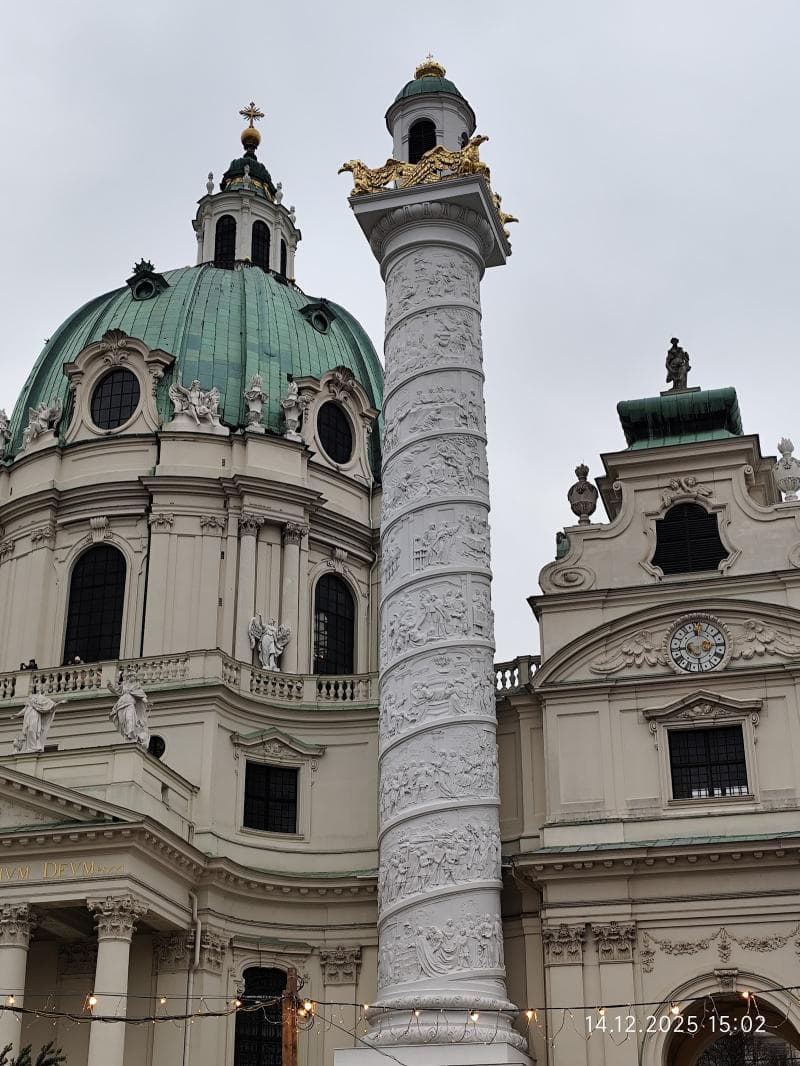
Explore Karlskirche in Vienna, Austria, a magnificent Baroque church with a rich history, stunning frescoes, and unique architecture.
Overview
Standing proudly at Karlsplatz, Karlskirche, or St. Charles's Church, is a magnificent Baroque church in Vienna, Austria. Dedicated to Saint Charles Borromeo, it is renowned as one of Central Europe's most significant Baroque religious structures and an undeniable symbol of the city. Its striking silhouette, featuring a grand dome and two towering columns, immediately captures attention, reflecting a unique blend of architectural traditions.
More than just a beautiful building, Karlskirche serves as a cultural and historical landmark, encapsulating centuries of faith, imperial power, and artistic ingenuity. It invites curious travelers to delve into its rich past and appreciate its intricate details, offering a profound experience that extends beyond mere sightseeing.
History & Cultural Background
The genesis of Karlskirche lies in a profound moment of crisis. In 1713, as Vienna grappled with the devastating Great Plague epidemic, Holy Roman Emperor Charles VI made a solemn vow. He pledged to erect a church dedicated to his namesake and the patron saint of plague sufferers, Saint Charles Borromeo, if the city were spared. Following the plague's recession, the Emperor initiated an architectural competition.
The celebrated architect Johann Bernhard Fischer von Erlach won the commission, prevailing over notable rivals with his visionary design. Construction commenced in 1716. However, Fischer von Erlach passed away in 1723, leaving his son, Joseph Emanuel Fischer von Erlach, to complete the monumental task. The church was largely finished by 1737, with its official dedication taking place in 1738 or 1739. This grand votive church stands as a testament to imperial piety and the city's resilience, embodying the 'Kaiserstil' or imperial Baroque style that defined Vienna during this era.
What Makes It Special
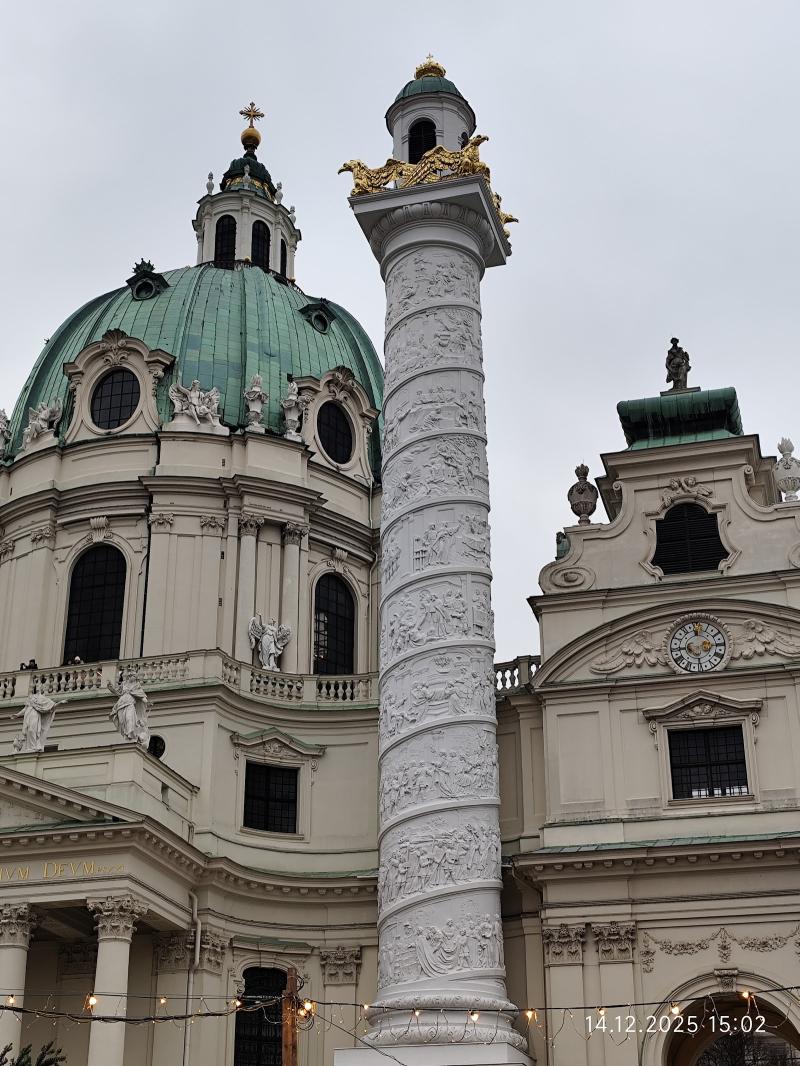
Karlskirche is a masterpiece of architectural fusion, deliberately combining diverse historical and cultural elements to create a unique and powerful statement. Its facade features a Greek temple portico, evocative of classical antiquity. Flanking this are two colossal columns, inspired by Rome's Trajan's Column, which spiral upwards with reliefs depicting scenes from the life of Saint Charles Borromeo. Next to these, two tower pavilions showcase Roman Baroque influences, reminiscent of Bernini and Borromini. Capping it all is an imposing oval dome, rising dramatically and visible across Vienna's skyline.
Inside, the church's opulence unfolds, most notably in the breathtaking dome frescoes. These magnificent paintings by Johann Michael Rottmayr and Gaetano Fanti illustrate the glorification of Saint Charles Borromeo and form a central focal point of the interior. For a truly immersive experience, visitors can ascend a panorama lift that takes them up close to these stunning frescoes, offering an unparalleled view of the intricate artistry.
Stories, Fun Facts & Local Details
- A Name's True Origin: While commissioned by Emperor Charles VI, the church is actually named after his patron saint, Saint Charles Borromeo, rather than the emperor himself. This dedication underscores the spiritual significance of the vow made during the plague.
- Vivaldi's Viennese Connection: Intriguingly, the renowned Baroque composer Antonio Vivaldi was buried near the Karlskirche in 1741, shortly after his passing in Vienna.
- Imperial Vista: Originally, the Karlskirche enjoyed a direct line of sight to the Hofburg Palace, visually connecting the church to the imperial residence and emphasizing its importance within the Habsburg empire.
- Melodies in Marble: The church is a vibrant venue for classical music, regularly hosting concerts featuring works like Mozart's Requiem and Vivaldi's Four Seasons, often performed by Orchestra 1756 on period instruments.
- The Adventurous Ascent: The panorama lift, installed during dome renovations, allows visitors to reach the frescoes. Be prepared for a unique, slightly swaying experience as you ascend, adding a memorable twist to your visit.
Visitor Perspective
Visiting Karlskirche is an accessible and enriching experience for any traveler in Vienna. Its prime location at Karlsplatz makes it easy to reach via public transportation, including metro (U1, U2, U4), tram, and bus. The open area in front, including a reflective water pool, provides excellent opportunities for photography, allowing you to capture its grandeur from various angles.
While there is an entrance fee, it typically grants access not only to the main church interior but also to the treasury, the organ loft, and most notably, the panorama lift. This lift is a highlight, offering close-up views of the magnificent dome frescoes and leading to an outdoor terrace with panoramic vistas of Vienna's cityscape. Plan for approximately 1 to 1.5 hours to fully absorb the architectural details, the artistry, and the historical ambiance of this iconic Viennese landmark.
Coordinates: 16.37183, 48.19841
View on Google Maps💬 How Travelers Describe This Place
Based on community votes
Photogenic
951Unique
748Beautiful
499Interesting
427Must See
94
Traveler Stories
Discover memorable experiences shared by travelers who have visited this place.
No traveler stories yet.
Be the first traveler to share what made this place memorable.
Things to see at Karlskirche





Tour
By
Spot
Discover amazing places around the world. Your journey starts here.
Explore
© 2026 TourBySpot. All rights reserved.