Exterior Columns
Vienna, Austria
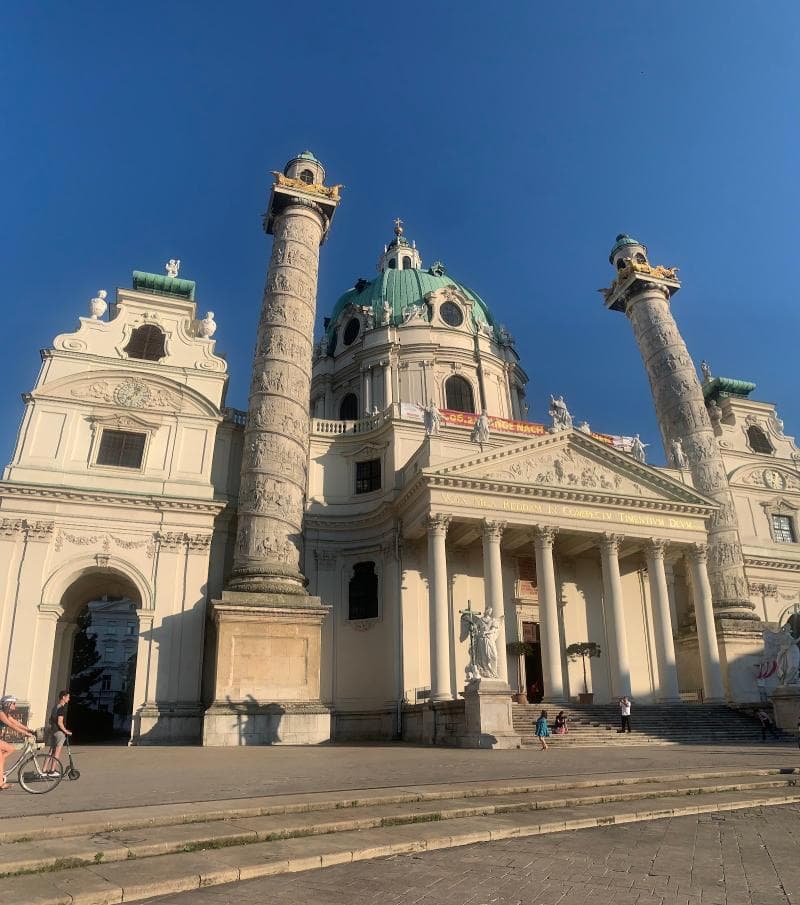
Explore the iconic exterior columns of Karlskirche in Vienna, Austria. Discover their unique spiral reliefs, historical significance, and diverse architectural inspirations.
Overview
The Karlskirche, or St. Charles's Church, in Vienna, Austria, is a magnificent example of High Baroque architecture, instantly recognizable by its distinctive exterior. Among its most striking features are the two monumental exterior columns that flank the central portico. These towering columns are not merely decorative but are integral to the church's profound symbolic narrative and unique architectural style, drawing the eye upwards with their intricate spiraling reliefs. Dedicated to Saint Charles Borromeo, the church and its columns stand as a testament to faith, imperial power, and architectural innovation, creating a captivating focal point in Vienna's urban landscape.
History & Cultural Background
The construction of the Karlskirche was initiated by Holy Roman Emperor Charles VI in 1713, following the devastating last major plague epidemic that swept through Vienna. The Emperor made a solemn vow to build a church dedicated to his namesake patron saint, Charles Borromeo, who was revered for his efforts in caring for plague victims in Milan during the 16th century.
Johann Bernhard Fischer von Erlach, a master of Baroque architecture, won the architectural competition for the church's design, which commenced in 1716. His vision for the Karlskirche was ambitious, blending diverse architectural elements to create a powerful imperial statement. The two large exterior columns were directly inspired by Trajan's Column in Rome, a famous ancient Roman monument celebrating military triumph. Fischer von Erlach, familiar with Roman architecture, integrated this classical form but imbued it with a new Christian and imperial meaning.
Beyond the Roman influence, the columns also draw symbolic connections to the biblical pillars Boaz and Jachin that stood before Solomon's Temple in Jerusalem, as well as the mythological Pillars of Hercules, a long-standing symbol of imperial power for the Habsburgs. This rich tapestry of influences—Roman, biblical, and mythological—underscores the church's significance as both a religious offering and a political manifesto, elevating Vienna's status as a 'new Rome'.
What Makes It Special
What truly sets the Karlskirche's exterior columns apart are their intricate spiral reliefs. Crafted by the Italian sculptor Lorenzo Mattielli, these bas-reliefs ascend each column in a continuous, winding narrative, much like an ancient scroll. However, instead of depicting military victories as on Trajan's Column, they illustrate scenes from the life and virtuous deeds of Saint Charles Borromeo. These detailed carvings visually recount his compassion, his work during the plague, and his unwavering faith, transforming the columns into colossal storytelling devices.
Standing approximately 47 meters (about 154 feet) tall, these columns dominate the Karlsplatz, inviting onlookers to gaze upwards and decipher the spiritual journey etched into their stone. The architectural choice to incorporate such distinct columns contributes to the church's reputation as a 'world history of architecture,' fusing Greco-Roman, Byzantine, and even subtle Eastern influences into a cohesive Baroque masterpiece.
Stories, Fun Facts & Local Details
The columns of Karlskirche are rich with layers of meaning. Beyond the narrative of Saint Charles Borromeo, they embody Emperor Charles VI's personal motto, 'Constantia et fortitudo' (steadfastness and strength), symbolizing his own enduring resolve in the face of adversity, particularly the plague. Their imposing height and winding appearance also led to some contemporary observers noting their resemblance to Ottoman minarets, a fascinating, if perhaps unintentional, blend of Eastern aesthetics within a Western Baroque context, especially given Vienna's history with the Ottoman Empire.
Interestingly, much like their Roman predecessor, Trajan's Column, these columns are believed to contain spiral staircases within them, though these are not accessible to the public. This internal architectural marvel speaks to the engineering prowess and meticulous planning that went into their construction. The columns also served as a visible reminder of the vow made by the Emperor, a 'plague column' of immense scale, commemorating divine intervention and gratitude.
Visitor Perspective
Approaching the Karlskirche, the twin exterior columns immediately capture attention. Their sheer scale and the meticulous detail of the spiraling reliefs create a profound sense of awe. Visitors often find themselves craning their necks, attempting to trace the stories of Saint Charles Borromeo unfolding upwards, a visual narrative that draws them into the church's historical and spiritual depth. Even from a distance, the columns, along with the grand portico and the soaring dome, contribute to the church's majestic silhouette against the Vienna skyline.
Standing before them, one can feel the weight of history and the blend of cultural influences that Johann Bernhard Fischer von Erlach so masterfully synthesized. The columns are more than just architectural elements; they are silent storytellers, guardians of an imperial vow, and enduring symbols of faith and resilience that continue to inspire and captivate travelers from around the world.
Coordinates: 16.3719, 48.1982806
View on Google Maps💬 How Travelers Describe This Place
Based on community votes
Interesting
443Must See
414Unique
310Beautiful
277Photogenic
233
Traveler Stories
Discover memorable experiences shared by travelers who have visited this place.
No traveler stories yet.
Be the first traveler to share what made this place memorable.

Tour
By
Spot
Discover amazing places around the world. Your journey starts here.
Explore
© 2026 TourBySpot. All rights reserved.