Main Dome
Vienna, Austria
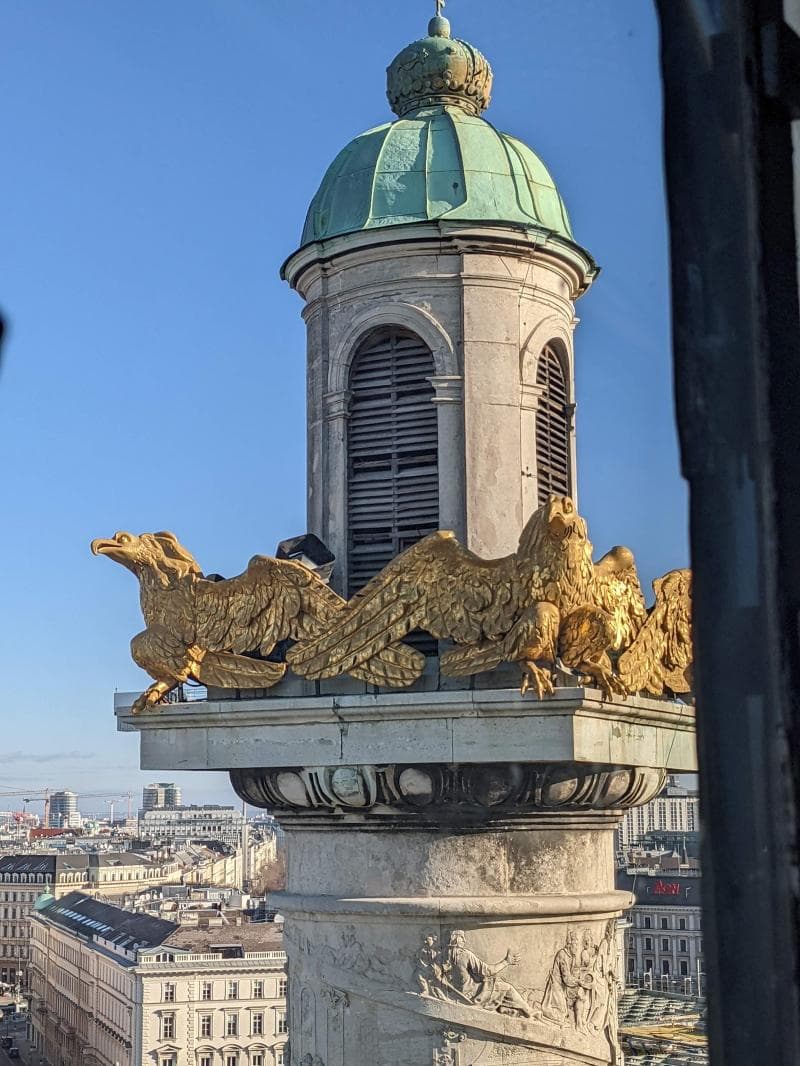
Discover the Main Dome of Karlskirche in Vienna, Austria, an architectural marvel adorned with Johann Michael Rottmayr's stunning Baroque frescoes.
Overview
The Main Dome of Karlskirche in Vienna stands as a magnificent testament to Baroque artistry and imperial devotion. Rising majestically above Karlsplatz, its distinctive green copper-clad exterior and elongated ellipsoid shape make it an undeniable landmark on the city's skyline. Inside, the dome truly captivates with its colossal fresco, a breathtaking masterpiece that draws the eye upward into a celestial realm.
Standing approximately 70 to 74 meters high, the dome is a central feature of one of Vienna's most outstanding Baroque churches. It is not merely an architectural element but a canvas for a profound narrative, showcasing the pinnacle of 18th-century Austrian art and devotion. The dome's interior frescoes span an impressive area, covering about 1,250 square meters, making them a significant artistic endeavor.
History & Cultural Background
The very existence of Karlskirche, and by extension its grand dome, is rooted in a pivotal moment of Viennese history: the devastating plague epidemic of 1713. Emperor Charles VI made a solemn vow that if the plague ceased, he would construct a church dedicated to Saint Charles Borromeo, who was revered as a healer for plague sufferers. True to his word, construction began in 1716.
The church's design was the brainchild of the renowned Baroque architect Johann Bernhard Fischer von Erlach, who won an architectural competition for the project. After his death in 1723, his son, Joseph Emanuel Fischer von Erlach, took over and completed the church in 1737, making some modifications to the original plans. The dome's design and its eventual fresco were integral to this grand vision, embodying the emperor's gratitude and the city's hope for divine protection.
What Makes It Special
The Main Dome of Karlskirche is special for several compelling reasons, chief among them being its spectacular fresco by Johann Michael Rottmayr. Painted between 1725 and 1730, this vast ceiling artwork depicts the intercession of Saint Charles Borromeo, supported by the Virgin Mary, pleading with Christ to end the plague. This central scene is surrounded by allegories of the cardinal virtues: Faith, Hope, and Charity.
Architecturally, the dome itself is noteworthy for its elongated ellipsoid shape, which is a characteristic feature. It represents a masterful blend of styles, reflecting elements of Roman and Byzantine influences integrated within a distinctly Viennese Baroque framework. The sheer scale of the fresco, spanning approximately 1,250 square meters, allowed Rottmayr to employ illusionistic techniques, creating a dramatic sense of depth and heavenly ascent.
Stories, Fun Facts & Local Details
One fascinating aspect of the dome is the sheer effort involved in its creation. Johann Michael Rottmayr, a native of Salzburg, spent years meticulously bringing his vision to life, with Gaetano Fanti contributing illusionistic architectural framing. The dome's iconography was carefully devised by the imperial official Carl Gustav Heraeus, ensuring that the visual narrative aligned with the church's founding vow and imperial glorification.
For visitors, a unique opportunity sometimes arises to experience the dome's frescoes up close. During past restoration periods, temporary lifts have been installed, allowing individuals to ascend high into the dome, offering an intimate, eye-level perspective of Rottmayr's intricate brushwork and vibrant colors that would otherwise be seen only from afar.
Visitor Perspective
Upon entering Karlskirche, the Main Dome immediately draws the gaze upwards. The immense scale and vibrant detail of Rottmayr's fresco create a profound sense of awe and wonder. As light filters into the church, the painted figures seem to come alive, creating a dynamic and immersive experience. The feeling is one of being enveloped in a celestial drama, a powerful visual representation of faith and divine intervention.
Whether viewed from the nave below or, if available, from an elevated platform, the dome offers a rich tapestry of narrative and artistry. It encourages contemplation not just of the artistic skill, but also of the historical context—the gratitude and hope that inspired its creation. This upward gaze provides a moment of quiet reflection, connecting the visitor to centuries of Viennese history and spiritual aspiration.
Coordinates: 16.3719, 48.198281
View on Google Maps💬 How Travelers Describe This Place
Based on community votes
Must See
951Beautiful
491Unique
414Photogenic
310Interesting
277
Traveler Stories
Discover memorable experiences shared by travelers who have visited this place.
No traveler stories yet.
Be the first traveler to share what made this place memorable.

Tour
By
Spot
Discover amazing places around the world. Your journey starts here.
Explore
© 2026 TourBySpot. All rights reserved.