Frescoes
Vienna, Austria
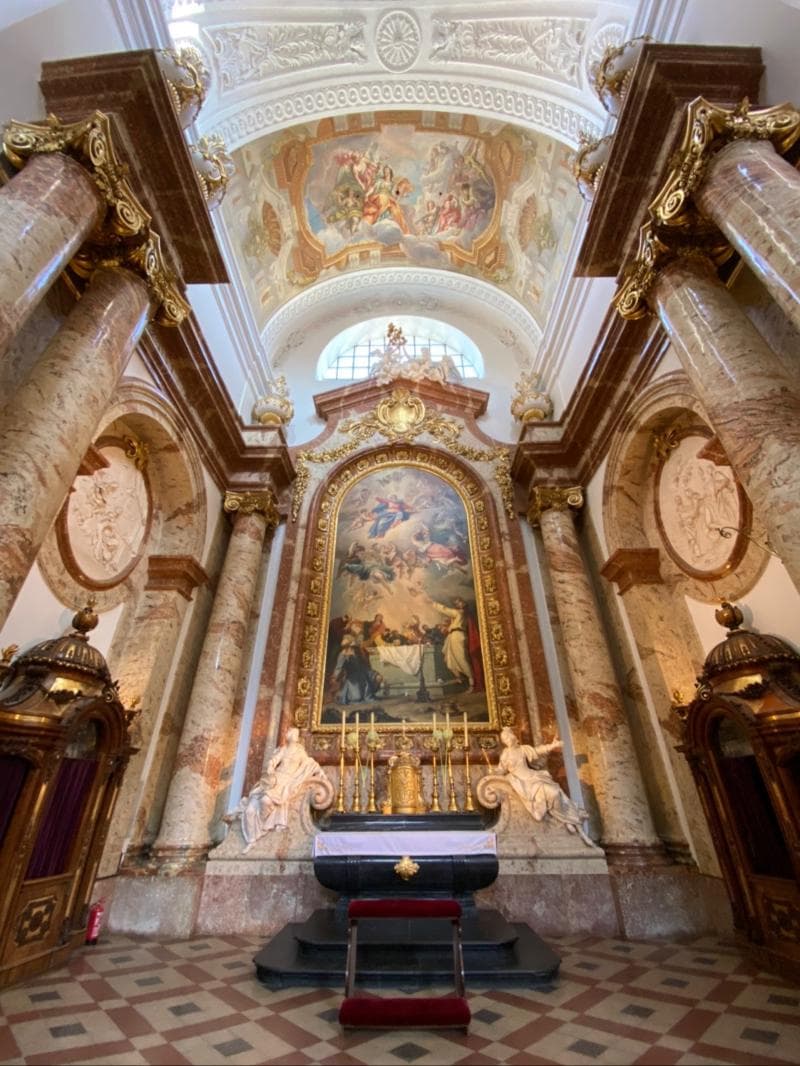
Discover the stunning Baroque frescoes of Karlskirche in Vienna, Austria. Explore the dome's celestial artistry and historical significance.
Overview
Stepping into Vienna's magnificent Karlskirche, or St. Charles's Church, is to enter a realm where art and faith converge in spectacular fashion. Among its most captivating features are the breathtaking frescoes that adorn its interior, especially the grand dome fresco. These elaborate paintings are not merely decorative; they are narratives brought to life, offering deep insights into the church's purpose and the Baroque era's artistic zenith. The central dome fresco, a masterpiece by Johann Michael Rottmayr, with illusionistic architectural elements by Gaetano Fanti, depicts a profound scene of divine intercession, drawing the eye heavenward with its vibrant colors and dynamic composition. Beyond the dome, smaller yet equally significant frescoes by artists like Daniel Gran enrich the side chapels, each contributing to the church's overarching spiritual message and artistic grandeur.
History & Cultural Background
The story behind the Karlskirche's frescoes is deeply rooted in Vienna's history, particularly the devastating plague epidemic of 1713. Emperor Charles VI, in an act of profound faith, vowed to build a church dedicated to his namesake, Saint Charles Borromeo, if the city were spared from the scourge. Saint Charles Borromeo, a 16th-century Italian bishop, was revered for his compassionate care of plague victims in Milan, making him a fitting patron for such a vow. The construction of Karlskirche began in 1715, led by the eminent Baroque architect Johann Bernhard Fischer von Erlach, and later completed by his son. The church's iconography, particularly its frescoes, was meticulously planned to convey this narrative of divine mercy and gratitude. The Baroque style, known for its dramatic intensity, emotional expression, and opulent detail, was the perfect medium to articulate such a powerful message, transforming the interior into a heavenly vision designed to inspire awe and devotion.
What Makes It Special
The frescoes of Karlskirche are distinguished by their extraordinary scale, artistic brilliance, and profound theological narrative. The dome fresco, spanning approximately 1,250 square meters, is the largest contiguous work of its kind by Johann Michael Rottmayr, who worked on it between 1725 and 1730. This immense canvas glorifies Saint Charles Borromeo, showing him interceding before God, supported by the Virgin Mary, to end the plague. This central scene is powerfully framed by allegorical representations of the three divine virtues: Faith, Hope, and Charity, alongside the four Latin Church Fathers. Rottmayr's masterful use of perspective and color creates an illusionistic effect, making the ceiling seem to open up to the heavens. This dramatic interplay of painting and architecture, typical of the High Baroque, is further enhanced by Gaetano Fanti's illusionistic architectural framing, which seamlessly integrates the painted scenes with the church's physical structure. The sheer vibrancy and dynamism of these frescoes, especially after their restoration, highlight the artist's original intent and the intense emotional conviction of the era.
Stories, Fun Facts & Local Details
One of the most compelling narratives depicted within the dome fresco is the moment an angel sheathes the sword of punishment, symbolizing the end of the plague—a direct visual representation of Emperor Charles VI's answered prayer. Saint Charles Borromeo is clearly identifiable by his cardinal's hat and cross, subtly woven into the grand celestial drama. While Rottmayr's dome fresco is the undisputed highlight, it's a fun detail to note that the frescoes in the side chapels were executed by other notable artists such as Daniel Gran, Sebastiano Ricci, Martino Altomonte, and Jakob van Schuppen, each adding their unique touch to the church's rich tapestry of art. The overall iconographical program was developed by the imperial official Carl Gustav Heraeus, ensuring that every artistic element contributed to the church's profound message. The integration of light is also a key element; on a sunny day, the natural light entering through the dome's windows dramatically illuminates the frescoes, intensifying their colors and forms, offering a truly ethereal experience.
Visitor Perspective
Experiencing the frescoes of Karlskirche is an unforgettable part of any visit to Vienna. As you step inside, the grandeur of the interior immediately captures your attention, but it's the upward gaze towards the dome that truly mesmerizes. The vastness of Rottmayr's work, depicting a heavenly assembly, feels both expansive and intimately detailed. For those keen to fully appreciate the intricate brushwork and the artist's vision, a special viewing platform (accessible via an elevator) allows visitors to ascend closer to the dome, providing an unparalleled, almost 'face-to-face' encounter with these Baroque masterpieces. This unique perspective offers a deeper understanding of the illusionistic techniques and the sheer artistry involved. The interplay of light and shadow throughout the day can dramatically change the appearance of the frescoes, revealing new details and intensifying their spiritual impact, making each viewing a potentially unique experience. The frescoes are not just historical artifacts; they are a living testament to faith, art, and resilience, inviting every visitor to ponder the stories they tell and the beauty they embody.
Coordinates: 16.3718, 48.1984
View on Google Maps💬 How Travelers Describe This Place
Based on community votes
Photogenic
950Beautiful
929Interesting
858Must See
730Unique
275
Traveler Stories
Discover memorable experiences shared by travelers who have visited this place.
No traveler stories yet.
Be the first traveler to share what made this place memorable.

Tour
By
Spot
Discover amazing places around the world. Your journey starts here.
Explore
© 2026 TourBySpot. All rights reserved.