House Of Flowers
Belgrade, Serbia
Explore the House of Flowers in Belgrade, Serbia, the mausoleum and memorial complex of Josip Broz Tito, offering deep insights into Yugoslav history.
Overview
The House of Flowers, or Kuća Cveća as it is known locally, is a profoundly significant memorial complex located in Belgrade, Serbia. Nestled within the expansive grounds of the Museum of Yugoslavia, this site serves as the final resting place of Josip Broz Tito, the former President of the Socialist Federal Republic of Yugoslavia, and his wife, Jovanka Broz. What began its life as a tranquil winter garden for Tito's personal use has transformed into a poignant symbol of a bygone era, attracting countless visitors eager to delve into the rich and complex history of Yugoslavia.
Today, the House of Flowers is a central component of the Museum of Yugoslavia, which also encompasses the 'May 25' Museum and the Old Museum. Together, these institutions offer a comprehensive look at the country's past through various exhibitions and artifacts. The setting itself, situated in Belgrade's green Dedinje district, provides a contemplative atmosphere, encouraging reflection on the historical narrative it preserves.
History & Cultural Background
The story of the House of Flowers begins in 1975, when it was constructed according to the design of architect Stjepan Kralj. Its original purpose was far from that of a mausoleum; it was conceived as a winter garden, a serene space for Josip Broz Tito's rest and work, conveniently located near his residence. Here, amidst lush greenery, Tito spent his final years.
Following Tito's passing on May 4, 1980, the winter garden was repurposed to become his mausoleum, fulfilling his personal wish to be buried there. He was interred in May 1980, and the site officially opened to the public in 1982. Later, in 2013, his wife, Jovanka Broz, was also laid to rest beside him. The name 'House of Flowers' originated from the abundant floral arrangements that once adorned his tomb, creating a garden-like ambiance. While the flowers have since been replaced by white rocks, the evocative name has endured, symbolizing the reverence and the memory associated with the site.
What Makes It Special
Beyond its function as a mausoleum, the House of Flowers offers a unique window into the life and legacy of Josip Broz Tito and the history of Yugoslavia. It stands as a significant cultural landmark, attracting over 17 million visitors since its opening.
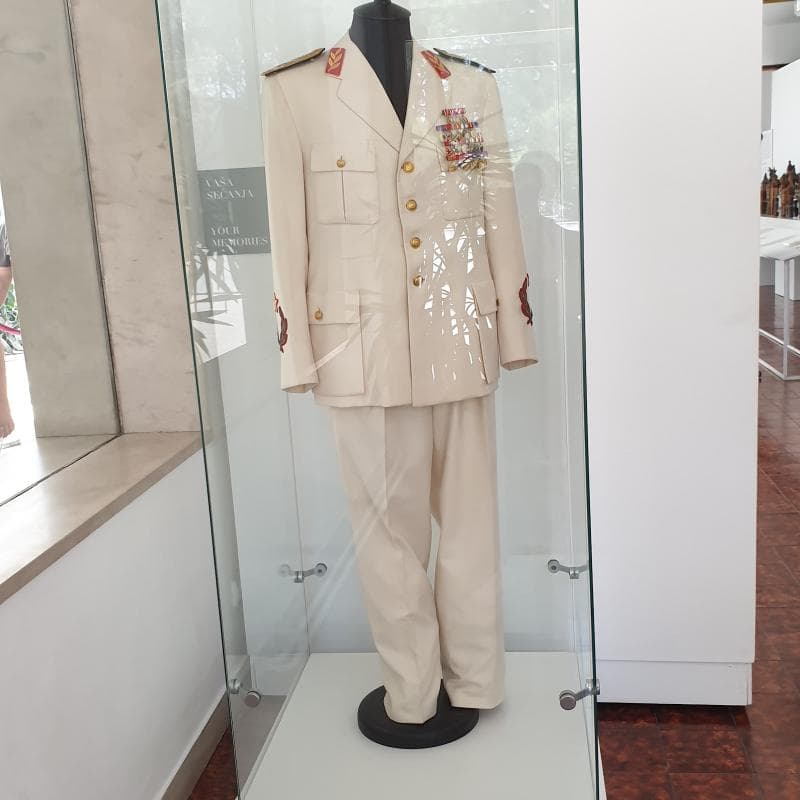
Inside, visitors can view Tito's tomb, accompanied by a memorial room and a book of sorrow for visitors to sign. The complex also houses compelling exhibitions, including a vast collection of Youth Relay batons – symbols of unity and youth movements from Tito's era. These batons, numbering around 20,000, each tell a story of regional solidarity and national identity. Additionally, exhibits display a rich array of gifts Tito received from global leaders and ordinary citizens, along with his military uniforms and personal effects, providing intimate insights into his public and private life.
Stories, Fun Facts & Local Details
One of the most touching aspects of the House of Flowers is its enduring connection to the people of former Yugoslavia. Each year, on May 4th, the anniversary of Tito's death, and especially on May 25th, his birthday which was formerly celebrated as Youth Day, thousands gather to pay their respects. This tradition highlights the profound impact Tito had on generations and the complex emotions still tied to his legacy. It is a rare space where individuals from all former Yugoslav republics come together, acknowledging a shared past without political contention.
The original 'flower shop' designation, a private internal name during Tito's life, humorously contrasts with its later role as a solemn mausoleum. The extensive collection of relay batons is particularly fascinating; these were carried by young people across Yugoslavia as part of elaborate celebrations for Tito's birthday, showcasing creativity and national pride. The terrace opposite the main entrance also offers a splendid panoramic view of Belgrade, adding another layer to the visitor experience.
Visitor Perspective
A visit to the House of Flowers is an opportunity for quiet contemplation and historical immersion. While some come to honor a leader they admired, others visit to understand a pivotal chapter in Balkan history. The atmosphere is generally respectful and reflective. Visitors often notice the subtle scent of wax and old paper, and the continued tradition of placing red carnations or handwritten notes on Tito's marble sarcophagus speaks volumes about his lasting memory.
To fully appreciate the experience, it's recommended to allocate ample time to explore not just the House of Flowers but also the adjoining 'May 25' Museum and the Old Museum, as a single ticket often covers the entire complex. These other sections provide broader context to Yugoslav history. Comfort is key, as paths through the surrounding gardens can be uneven. Engaging with the exhibits, particularly the Youth Relay batons, offers a tangible link to the enthusiasm and ideology of a bygone era, making the House of Flowers a compelling and educational destination for anyone interested in political and cultural history.
Coordinates: 20.451694, 44.786725
View on Google Maps💬 How Travelers Describe This Place
Based on community votes
Beautiful
551Must See
547Photogenic
421Unique
298Interesting
212
Traveler Stories
Discover memorable experiences shared by travelers who have visited this place.
No traveler stories yet.
Be the first traveler to share what made this place memorable.
Things to see at House Of Flowers



Tour
By
Spot
Discover amazing places around the world. Your journey starts here.
Explore
© 2026 TourBySpot. All rights reserved.