Tito’s Tomb
Belgrade, Serbia
Explore Tito's Tomb in Belgrade, Serbia, located within the House of Flowers. Discover the history of Josip Broz Tito and Yugoslavia at this poignant memorial site.
Overview
Deep in the heart of Belgrade, Serbia, lies a poignant historical site known as Tito’s Tomb, nestled within the expansive House of Flowers. This unique mausoleum serves as the final resting place of Josip Broz Tito, the revered long-time President of the Socialist Federal Republic of Yugoslavia, and his wife, Jovanka Broz. What began as Tito’s personal winter garden and auxiliary office in 1975 has since transformed into a significant memorial center. Today, Tito's Tomb, often simply referred to as the House of Flowers, is an integral part of the larger Museum of Yugoslavia complex, drawing countless visitors eager to explore a pivotal era of Balkan and global history.
It stands not merely as a grave but as a profound testament to a complex and influential figure who shaped the 20th century. The site offers a distinctive glimpse into Yugoslavia's past, attracting those with a keen interest in its political, social, and cultural heritage.
History & Cultural Background
Josip Broz Tito (1892–1980) was a towering figure in 20th-century history, a communist revolutionary and politician who led Yugoslavia from 1943 until his death. His leadership was marked by several defining moments, including his command of the Yugoslav Partisans during World War II, which grew into one of Europe's most effective resistance movements against Nazi occupation.
Perhaps his most significant legacy was his defiance of Soviet influence in 1948, charting an independent socialist course for Yugoslavia and becoming a co-founder of the Non-Aligned Movement, a bloc of states not formally aligned with or against any major power bloc during the Cold War. This distinct path allowed Yugoslavia to maintain a unique position on the world stage, fostering an identity that resonated deeply with its diverse population.
The House of Flowers itself was constructed in 1975, designed by architect Stjepan Kralj as a spacious winter garden for Tito's personal use, located adjacent to his residence. Upon his passing in May 1980, Tito was interred here, fulfilling his personal wish to be buried within the beloved flower garden. Years later, his wife, Jovanka Broz, joined him in eternal rest at the same site in 2013. Following the dissolution of Yugoslavia, the complex was temporarily closed to the public for nearly a decade, with military guards removed, but has since reopened, once again welcoming visitors.
What Makes It Special
Tito's Tomb within the House of Flowers is an extraordinary site, not least for its unique blend of solemn remembrance and historical exhibition. The central feature is Tito's symbolic tomb, a marble sarcophagus that marks his resting place. Intriguingly, he was actually buried beneath the flower garden, making the visible tomb a representation of his presence.
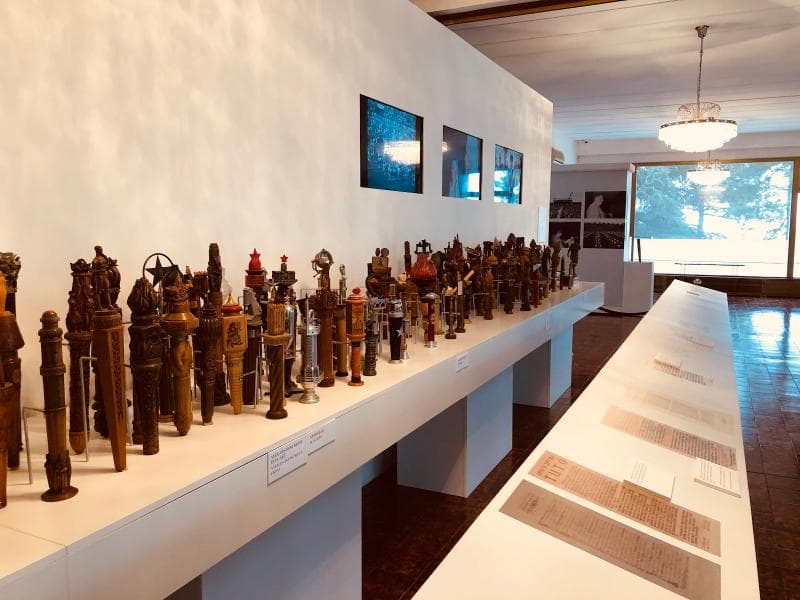
The House of Flowers also houses a compelling permanent exhibition, featuring the iconic 'Relay of Youth' batons. These batons were ceremonially carried across Yugoslavia by young people each year to mark Tito's birthday, becoming powerful symbols of national unity. Alongside these, visitors can explore a rich collection of personal items, photographs, and diplomatic gifts Tito received from world leaders, reflecting his extensive international engagements and the era's global dynamics.
The mausoleum transcends being merely a historical relic; it serves as a place for reflection and debate regarding Yugoslavia's complex legacy, attracting those who remember the past with fondness and those who seek to understand its challenges. The immense interest in Tito's life and the former Yugoslavia is evident in the numbers: between 1982 and 2012, over 17 million people visited the site. His funeral in 1980 was a monumental event, drawing more than 200 statesmen from 127 countries and 700,000 citizens, cementing its place in history as one of the world's largest state funerals.
Stories, Fun Facts & Local Details
The name 'House of Flowers' is steeped in history. Originally, the tomb was surrounded by a profusion of vibrant flowers, inspiring its poetic name. Following the breakup of Yugoslavia, these colorful blooms were replaced with simple white rocks, but the name endured. During Tito's lifetime, the winter garden was affectionately known internally as the 'flower shop' and served as a tranquil space for his work and relaxation, where he often spent his time, particularly in his final years.
A touching tradition continues today: visitors often place red carnations and heartfelt handwritten notes on Tito's marble tomb, a quiet act of remembrance that began soon after his passing. May 25th, Tito's official birthday, was celebrated as 'Youth Day' across former Yugoslavia, and even now, many visitors flock to the House of Flowers on this significant date to pay their respects and connect with a shared past. The 'Relay of Youth' tradition, where batons were carried to him, impressively continued until 1987, well after his death.
Beyond his political prowess, Tito was known for a certain flair for life. While he enjoyed luxuries like 20-year-old Chivas Royal whiskey and Cuban cigars, he was reportedly not picky about food, though he had a particular fondness for traditional Zagorje cuisine and beef. A unique detail reveals his embrace of wellness: he began drinking ginseng tea daily after receiving it as a gift from North Korea.
Visitor Perspective
A visit to Tito's Tomb and the House of Flowers offers a profound journey through history. The site is part of the larger Museum of Yugoslavia complex, which includes the 'May 25 Museum' and the 'Old Museum'. To make the most of your experience, plan for about 1-2 hours to explore the entire complex. Combined tickets are often available, offering access to all three components of the museum.
For a more serene visit, consider arriving on weekdays, either early in the morning or late in the afternoon, to avoid larger crowds and tour groups. Comfortable footwear is recommended, as some paths within the garden and approaches to the site can be uneven. The Museum of Yugoslavia's official website, muzej-jugoslavije.org, is an excellent resource for up-to-date information on opening hours, ticket prices, and any special exhibitions or events.
The experience is more than just observing artifacts; it's an opportunity to engage with the narrative of a nation and its leader, prompting reflection on the ideals, achievements, and eventual dissolution of a unique historical entity. Whether you are a history enthusiast or a curious traveler, the House of Flowers provides an unforgettable and thought-provoking encounter with Belgrade's rich past.
Coordinates: 20.451694, 44.786725
View on Google Maps💬 How Travelers Describe This Place
Based on community votes
Unique
639Interesting
526Must See
421Beautiful
366Photogenic
181
Traveler Stories
Discover memorable experiences shared by travelers who have visited this place.
No traveler stories yet.
Be the first traveler to share what made this place memorable.

Tour
By
Spot
Discover amazing places around the world. Your journey starts here.
Explore
© 2026 TourBySpot. All rights reserved.