Memorial Gardens
Belgrade, Serbia
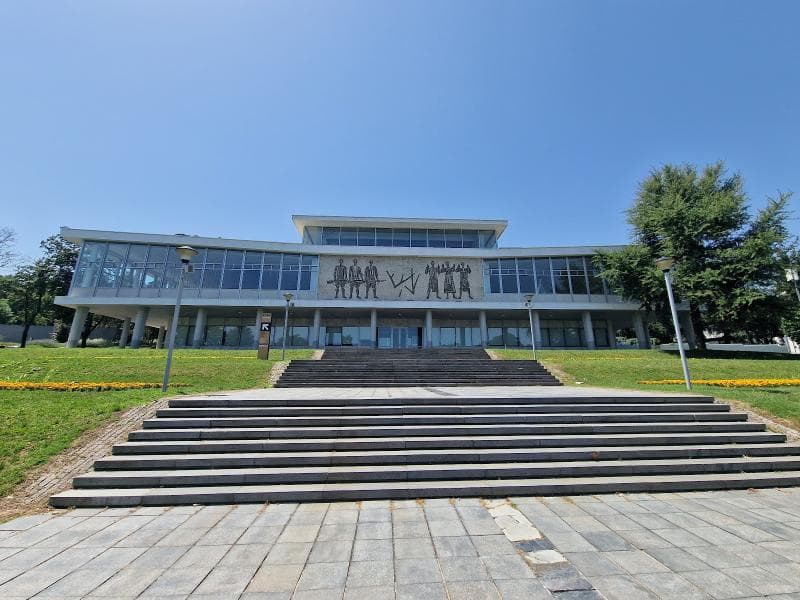
Explore the Memorial Gardens (House of Flowers) in Belgrade, Serbia, the resting place of Josip Broz Tito and his wife.
Overview
Nestled within the serene Dedinje neighborhood of Belgrade, Serbia, the Memorial Gardens, more formally known as the House of Flowers (Kuća cveća), stands as a profoundly significant historical and cultural landmark. It is renowned globally as the final resting place of Josip Broz Tito, the lifelong president of the Socialist Federal Republic of Yugoslavia, and his wife Jovanka Broz. This site is not merely a tomb but a meticulously preserved complex, forming an integral part of the larger Museum of Yugoslavia. Visitors are invited to explore the unique blend of a former winter garden, a memorial, and a museum space that collectively tells the story of a pivotal era in Balkan history. From its origins as a tranquil retreat for a powerful leader to its transformation into a public memorial, the House of Flowers offers a reflective journey into Yugoslavia's complex past and the legacy of its charismatic leader.
History & Cultural Background
The House of Flowers was originally conceived and built in 1975, not as a mausoleum, but as a lavish winter garden for Josip Broz Tito. Designed by architect Stjepan Kralj, this expansive 902-square-meter facility served as a private space for Tito to work and relax, conveniently located near his official residence. It featured a central area that once housed a fountain, surrounded by lush flora, and included various rooms for rest and work. Following Tito's death on May 4, 1980, and in accordance with his personal wishes, the winter garden was reverently transformed into his mausoleum. The name 'House of Flowers' itself emerged from the abundance of flowers that initially surrounded his tomb, symbolizing the deep respect and affection many Yugoslavs held for their leader. For over a decade following the dissolution of Yugoslavia, the complex was temporarily closed to the public, and the military guards who once stood vigil were withdrawn. However, it was later reopened, reaffirming its role as a crucial site for historical remembrance and public access.
What Makes It Special
What sets the Memorial Gardens or House of Flowers apart is its unique dual identity: it is simultaneously a serene garden space and a potent symbol of a bygone era. Unlike traditional mausoleums, its origins as a living, breathing winter garden imbue it with a softer, more personal character. The site houses the simple, yet profound, white marble tomb of Josip Broz Tito and, since 2013, that of his wife Jovanka Broz. Surrounding the tomb are exhibits that bring Tito's life and the history of Yugoslavia into vivid focus. Among the most iconic displays are the 'Relays of Youth' batons. These elaborate ceremonial staffs were carried annually across Yugoslavia by young people, culminating in their presentation to Tito on May 25th, his official birthday, celebrated as Youth Day. These artifacts, alongside personal gifts and photographs, offer an intimate glimpse into the socialist period and Tito's cult of personality, which resonated deeply across the nation and internationally. The complex also features an exposed terrace that provides panoramic views of Belgrade, adding another layer to the visitor experience.
Stories, Fun Facts & Local Details
The House of Flowers is steeped in narratives that transcend mere historical facts. For many, particularly those from the former Yugoslav republics, a visit here is a nostalgic pilgrimage, a way to connect with a shared past. The sheer number of visitors, reportedly over 17 million since 1982, underscores its enduring impact and emotional resonance. Interestingly, the decision to call it the 'House of Flowers' rather than a 'grave' or 'mausoleum' was a deliberate choice, reflecting the desire to maintain a more personal and less imposing designation for Tito's final resting place. While the original vibrant flowers around the tomb were eventually replaced with white rocks after the country's breakup, the name lovingly persists. On significant dates, such as May 4th (Tito's death anniversary) and May 25th (his birthday), the memorial becomes a focal point for gatherings, attracting people from across the region who come to pay their respects and reflect on the legacy of a leader who stood uniquely between East and West during the Cold War. The site is not just about political history; it's a testament to the cultural fabric and collective memory of a nation that no longer exists in its former form. Visitors can also observe marshal uniforms and various gifts received by Tito from world leaders and ordinary citizens, showcasing the breadth of his influence.
Visitor Perspective
Visiting the Memorial Gardens is an engaging experience that appeals to a diverse range of interests. History enthusiasts will find a rich repository of information about Josip Broz Tito and the Socialist Federal Republic of Yugoslavia. The detailed exhibitions, including the famous Youth Batons, offer tangible connections to a pivotal period in the 20th century. For those seeking cultural insight, the site provides a unique lens through which to understand regional identity, nostalgia, and the complex historical narratives of the Balkans. The atmosphere, often described as quiet and reflective, encourages contemplation on the rise and fall of nations and leaders. The House of Flowers is part of the larger Museum of Yugoslavia complex, which often requires a single ticket to explore all its components, including the 25 May Museum and the Old Museum, offering a comprehensive historical journey. Located in the beautiful Dedinje area, the memorial is easily accessible and offers picturesque surroundings. Comfortable shoes are recommended as visitors explore the grounds and various exhibition spaces. Whether you approach it with academic curiosity, historical interest, or a sense of personal connection, the House of Flowers stands as a compelling destination in Belgrade, offering an educational and emotionally resonant encounter with a significant chapter of European history.
Coordinates: 20.451694, 44.786725
View on Google Maps💬 How Travelers Describe This Place
Based on community votes
Beautiful
804Unique
733Must See
563Interesting
404Photogenic
336
Traveler Stories
Discover memorable experiences shared by travelers who have visited this place.
No traveler stories yet.
Be the first traveler to share what made this place memorable.

Tour
By
Spot
Discover amazing places around the world. Your journey starts here.
Explore
© 2026 TourBySpot. All rights reserved.