Ceremonial Halls
Belgrade, Serbia
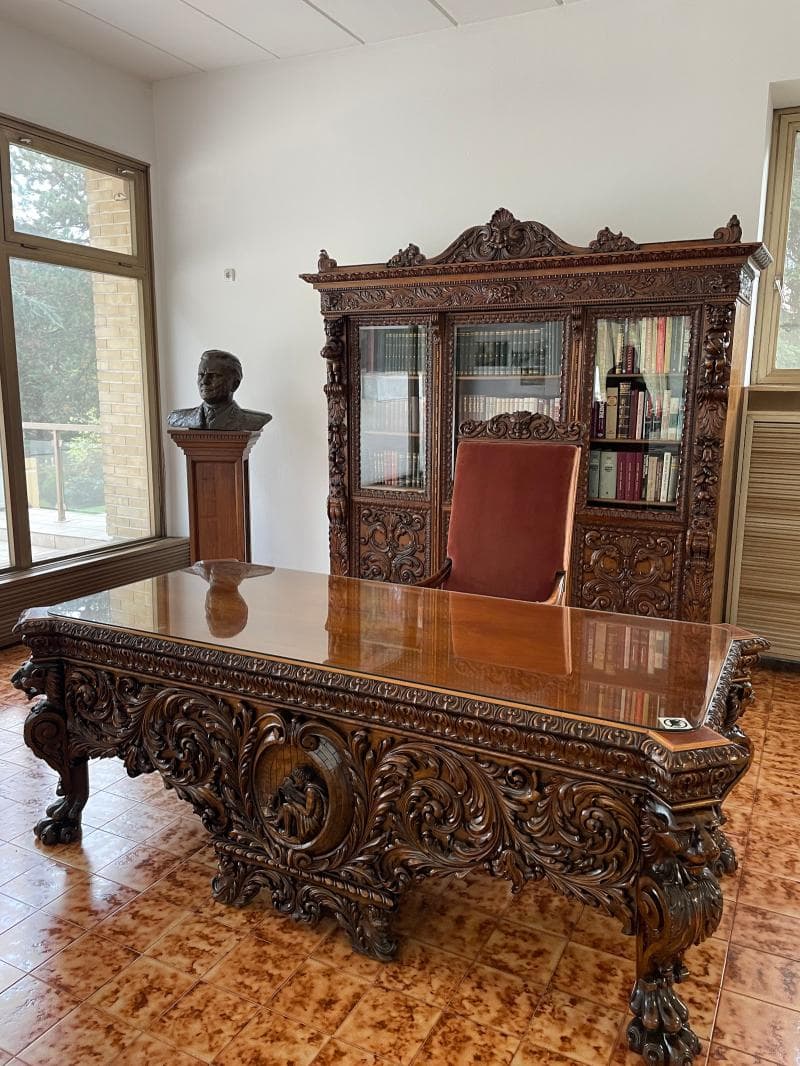
Explore the House of Flowers (Kuća cveća) in Belgrade, Serbia, the mausoleum and memorial for Josip Broz Tito and his wife.
Overview
Nestled within the serene grounds of the Museum of Yugoslavia in Dedinje, Belgrade, the House of Flowers, or Kuća cveća, stands as a poignant memorial and the final resting place of Josip Broz Tito, the former President of the Socialist Federal Republic of Yugoslavia, and his wife, Jovanka Broz. What began as a personal winter garden for Tito, a place for work and quiet reflection, has evolved into a significant historical site, drawing visitors eager to understand a pivotal era of 20th-century history. The structure, designed with simplicity and a quiet dignity, is more than just a mausoleum; it is a cultural touchstone offering deep insights into the life and legacy of one of the most influential figures of his time.
History & Cultural Background
The House of Flowers was originally constructed in 1975, conceived by architect Stjepan Kralj as a winter garden and auxiliary office for Josip Broz Tito. During his lifetime, it was affectionately known as 'Cvećara' or 'Flower Shop', serving as a tranquil retreat near his primary residence. This purpose changed profoundly after Tito's death on May 4, 1980. Following his personal wishes, the winter garden was transformed into his mausoleum, where he was interred on May 8, 1980. The decision to name it the 'House of Flowers' rather than a 'grave' or 'mausoleum' was a deliberate choice, reflecting the desire to preserve a sense of warmth and respect, and indeed, the site was once adorned with numerous flowers. In 2013, Tito's wife, Jovanka Broz, was laid to rest beside him, further cementing its role as a joint memorial. The site, which opened to the public in 1982, is a central component of the Museum of Yugoslavia complex, which aims to preserve and present the complex history of Yugoslavia.
What Makes It Special
The House of Flowers is distinguished by its unique evolution from a private sanctuary to a public memorial. Its architecture, while modest, carries significant symbolic weight. The central hall, originally featuring a fountain, now hosts Tito's marble sarcophagus, standing as a focal point of historical reflection. Surrounding the tomb, visitors will find permanent exhibitions that chronicle Tito's life and the Yugoslav era. A highlight is the extensive collection of 'Relays of Youth' batons, symbolizing the annual relay race held across Yugoslavia to mark Tito's birthday. These batons, accompanied by written messages, photographs, and marshal uniforms, offer a vivid glimpse into the collective enthusiasm and ideology of the time. Additionally, displays feature personal belongings of Tito and an impressive array of diplomatic gifts received from world leaders, showcasing his global stature. From a terrace on the opposite side of the entrance, visitors can enjoy panoramic views of Belgrade, connecting the historical site with the vibrant modern city.
Stories, Fun Facts & Local Details
The House of Flowers is imbued with rich stories and cultural nuances. It is reported that over 17 million people have visited this memorial since its opening, a testament to Tito's enduring impact and the curiosity surrounding Yugoslavia's past. A particularly meaningful tradition sees many visitors, especially those from the former Yugoslav republics, converging on May 25th, Tito's official birthday (celebrated as Youth Day), to pay their respects. This day transforms the quiet mausoleum into a vibrant hub of remembrance. Although the lush flowerbeds that once gave the House its name were replaced by white rocks after the dissolution of Yugoslavia, the essence of the name persists. An intriguing detail for visitors is that while Tito's marble tomb is prominently displayed, he is actually buried in the ground beneath it, a symbolic gesture rather than a direct burial chamber. On the anniversary of his passing, local elders maintain a touching tradition, bringing simple wreaths and softly singing Partisan songs, creating a deeply personal and moving atmosphere. The diversity of the nearly 20,000 relay batons, ranging from miniature factories to cosmonauts, highlights the varied aspirations and cultural landscape of the former federation.
Visitor Perspective
Visiting the House of Flowers offers a unique opportunity for introspection and education. It provides a tangible link to a complex chapter in Balkan history, encouraging visitors to reflect on the era of Yugoslavia and the legacy of Josip Broz Tito. The atmosphere within the mausoleum is generally quiet and serene, fostering a contemplative experience. Many choose to sign the book of sorrow, leaving their thoughts and memories. As part of the larger Museum of Yugoslavia complex, a single ticket often grants access to the House of Flowers along with the Old Museum and the 25 May Museum, allowing for a comprehensive historical journey. To make the most of your visit, particularly for photography and to avoid larger tour groups, it's advisable to arrive early on weekday mornings. The interior, featuring marble from the Arandjelovac area, contributes to its dignified aesthetic. Comfortable footwear is recommended, as the museum grounds involve some walking on varied paths. After being closed for nearly a decade following the breakup of Yugoslavia, the site is now fully open, welcoming guests to explore this significant piece of European history.
Coordinates: 20.451694, 44.786725
View on Google Maps💬 How Travelers Describe This Place
Based on community votes
Interesting
996Photogenic
726Beautiful
494Unique
193Must See
125
Traveler Stories
Discover memorable experiences shared by travelers who have visited this place.
No traveler stories yet.
Be the first traveler to share what made this place memorable.

Tour
By
Spot
Discover amazing places around the world. Your journey starts here.
Explore
© 2026 TourBySpot. All rights reserved.