Archival Displays
Belgrade, Serbia
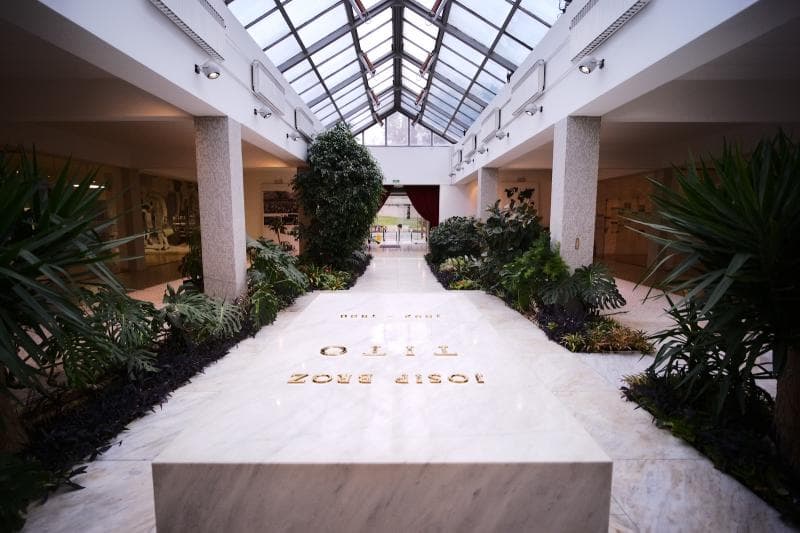
Explore Archival Displays at Belgrade's House of Flowers, Josip Broz Tito's mausoleum. Discover Yugoslav history, iconic Youth Batons, and cultural insights in Serbia.
Overview
Nestled in the tranquil Dedinje district of Belgrade, Serbia, the House of Flowers, or 'Kuća Cveća' as it's known locally, stands as a profound historical landmark. This unique space, originally conceived as a winter garden, evolved into the final resting place of Josip Broz Tito, the former President of the Socialist Federal Republic of Yugoslavia, and his wife, Jovanka Broz. As a key component of the larger Museum of Yugoslavia complex, the Archival Displays within the House of Flowers offer a compelling journey into a pivotal era of Balkan and global history. Visitors are invited to explore a space that is both a mausoleum and a museum, providing a reflective insight into Tito's life, his legacy, and the cultural landscape of former Yugoslavia.
History & Cultural Background
The House of Flowers was not initially designed as a mausoleum but was built in 1975 as a lavish winter garden, serving as a peaceful retreat and workspace for President Josip Broz Tito. Designed by architect Stjepan Kralj, it was originally referred to as the 'Flower Shop' and featured a central fountain surrounded by work and rest areas, all spanning 902 square meters. Its location was strategically chosen near Tito's main residence, offering him a serene environment with a commanding view over Belgrade from its terrace.
Following Tito's passing on May 4, 1980, his wish to be interred in this very garden was honored. The winter garden underwent a transformation, becoming his mausoleum. The name 'House of Flowers' was intentionally retained and popularized, as authorities at the time found it more fitting than calling it a 'grave' or 'mausoleum,' especially given Tito's enduring popularity. This decision subtly underscores the blend of personal reverence and public memory that defines the site. In 2013, his wife, Jovanka Broz, was laid to rest beside him.
What Makes It Special
The Archival Displays at the House of Flowers are particularly special for their direct connection to the former Yugoslav state and its iconic leader. At the heart of the structure lies Tito's tomb, a simple yet imposing white marble sarcophagus, a focal point for visitors who come to reflect on his impactful rule and the complex history of the region. The lack of extensive epitaphs or overtly ideological symbols on the tomb itself contributes to its solemn atmosphere.
Perhaps the most distinctive exhibits are the 'Relays of Youth' (Štafete mladosti). These intricately designed batons were carried by young people across Yugoslavia every year, culminating in a grand celebration on May 25th, Tito's birthday, which was observed as Youth Day. The display features a vast collection of these batons, alongside written messages that Tito received with them, photographs of the baton bearers, and other memorabilia from the annual festivities. These collections are not merely artifacts; they are tangible symbols of a collective youth experience and a carefully cultivated national identity.
Additionally, the House of Flowers includes a memorial room where visitors can sign a book of mourning, connecting them directly to the millions who have paid their respects over the decades. Other displays include marshal uniforms and personal items, offering further glimpses into the life and persona of Josip Broz Tito. The entire setting, with its light-filled interior and a terrace offering views of Belgrade, adds to the contemplative experience.
Stories, Fun Facts & Local Details
The sheer scale of visitors to the House of Flowers speaks volumes about its enduring significance; over 17 million people visited between 1982 and 2012 alone. This remarkable number highlights Tito's lasting imprint on both Yugoslav and world history.
A poignant detail is the annual gathering on May 25th, the former Youth Day, and May 4th, the anniversary of Tito's death. On these dates, people from across the former Yugoslav republics continue to visit, often bringing flowers or simply spending time in quiet remembrance. This tradition underscores how the site remains a symbolic neutral ground, where diverse perspectives on a shared past converge.
The batons themselves tell a story of a nation's youth and devotion. Each relay was a unique piece of art, often reflecting the specific region or industry from which it originated, making the collection a diverse representation of Yugoslav creativity and unity. The concept of the 'House of Flowers' itself, rather than a conventional mausoleum, reflects a desire to preserve a sense of vitality and personal connection to the leader, rather than a somber tomb. Until 1992, Tito's grave was guarded by the Yugoslav National Army, a practice that ceased with the dissolution of the country.
Visitor Perspective
For a curious traveler, a visit to the Archival Displays within the House of Flowers offers a deeply resonant experience. It's an opportunity to step away from typical tourist bustle and immerse oneself in a period of history that profoundly shaped the Balkans. The atmosphere is often described as serene and reflective, allowing for personal contemplation rather than a fast-paced museum tour. You'll find yourself walking through a beautifully maintained space that subtly encourages an understanding of the complexities of Yugoslavia's socialist era and Tito's unique leadership.
The displays, particularly the Youth Batons, invite an emotional connection to a historical narrative, allowing visitors to ponder the ideals, hopes, and realities of a bygone state. This isn't just about viewing historical objects; it's about engaging with the collective memory and identity of a region still grappling with its past. Whether you approach it as a historical enthusiast, a student of political science, or simply a traveler seeking to understand local culture, the House of Flowers provides a unique and meaningful cultural encounter in Belgrade.
Coordinates: 20.451694, 44.786725
View on Google Maps💬 How Travelers Describe This Place
Based on community votes
Beautiful
551Must See
547Photogenic
421Unique
298Interesting
212
Traveler Stories
Discover memorable experiences shared by travelers who have visited this place.
No traveler stories yet.
Be the first traveler to share what made this place memorable.

Tour
By
Spot
Discover amazing places around the world. Your journey starts here.
Explore
© 2026 TourBySpot. All rights reserved.