Heroes’ Square
Budapest, Hungary
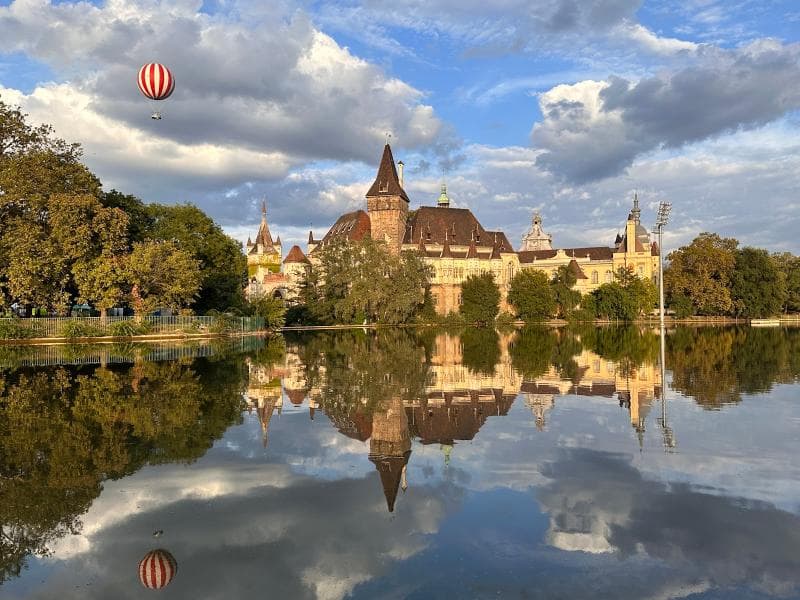
Explore Heroes' Square in Budapest, Hungary, a UNESCO World Heritage site commemorating a millennium of Hungarian history with grand monuments and statues.
Overview
Heroes' Square, or Hősök tere in Hungarian, stands as a majestic and deeply symbolic landmark in Budapest, Hungary. Located at the end of the grand Andrássy Avenue, it serves as an impressive gateway to the expansive City Park (Városliget) and is a prominent feature of the city's UNESCO World Heritage site inscription. This iconic plaza is dominated by the Millennium Monument, a sprawling complex featuring towering statues that commemorate a thousand years of Hungarian history and the foundational figures of the nation. It is a place where history resonates, offering visitors a profound insight into Hungary's national identity and its journey through time.
History & Cultural Background
The construction of Heroes' Square and its central Millennium Monument was primarily undertaken for Hungary's millennium celebrations in 1896, marking the 1,000th anniversary of the Magyar conquest of the Carpathian Basin in 895 AD. However, the full completion of the monument and the naming of the square as 'Heroes' Square' took until 1929 and 1932, respectively. The monument itself is a testament to Hungary's complex past. At its heart stands a 36-meter-high column topped by a statue of the Archangel Gabriel, holding the Holy Crown of St. Stephen and the apostolic double cross. Surrounding the column at its base are the equestrian statues of the Seven Chieftains of the Magyars, led by Árpád, who guided their tribes into the Carpathian Basin. Behind this central column, a grand semicircular colonnade features statues of significant Hungarian kings, national leaders, and historical figures. Originally, five spaces in the colonnade were reserved for Habsburg rulers, as Hungary was then part of the Austro-Hungarian Empire. However, after World War II, these figures were replaced by statues of other Hungarian national heroes, reflecting the country's shifting political landscape and national consciousness.
What Makes It Special
What truly sets Heroes' Square apart is its monumental scale and the rich narrative embedded within its sculptural elements. The sheer grandeur of the Millennium Monument, with its towering column and extensive colonnades, immediately captivates visitors. The intricate bronze statues, meticulously crafted by sculptor György Zala and others, depict a visual chronicle of Hungary's leadership and pivotal moments. Beyond the historical figures, the monument includes allegorical bronze statues atop the colonnades, representing profound concepts such as War, Peace, Work and Prosperity, and Knowledge and Glory. Flanking the square are two impressive neoclassical buildings: the Museum of Fine Arts and the Palace of Art (Műcsarnok), which further elevate the square's cultural significance and architectural splendor. This combination of art, history, and grand architecture creates a powerful and evocative space.
Stories, Fun Facts & Local Details
- The Archangel's Crown: Legend has it that the Archangel Gabriel appeared to St. Stephen in a dream, offering him the crown of Hungary. The statue of Gabriel on the monument prominently holds this Holy Crown and the apostolic cross, symbolizing Hungary's Christian foundation. This statue even won a Grand Prize at the 1900 Paris World Exhibition.
- Not a 'Tomb of the Unknown Soldier': At the front of the Millennium Monument lies the Memorial Stone of Heroes (Hősök emlékköve). While often mistaken for a Tomb of the Unknown Soldier, it is actually a cenotaph dedicated 'To the memory of the heroes who gave their lives for the freedom of our people and our national independence.' No human remains are interred beneath it; instead, an artesian well provides thermal water for nearby baths.
- Underground History: The M1 metro line, one of the oldest underground railways in continental Europe, runs directly beneath Heroes' Square. Opened in 1896 as part of the millennium celebrations, the 'Yellow Line' station beneath the square is a historical artifact in itself and part of the UNESCO World Heritage site.
- A Stage for History: Beyond its static beauty, Heroes' Square has been a vibrant stage for many significant historical events, including political rallies, national celebrations, and even the ceremonial reburial of Imre Nagy in 1989, marking a turning point in Hungary's transition to democracy.
Visitor Perspective
Visiting Heroes' Square offers a uniquely immersive experience into Hungarian heritage. The sheer openness and size of the square provide a sense of grandeur and reflection, particularly in contrast to the bustling city. Approaching it from Andrássy Avenue allows for a gradual appreciation of its impressive scale. Many visitors spend an hour or two taking in the details of the statues, reading the names, and simply absorbing the atmosphere. Its location is also highly convenient, sitting directly at the entrance to City Park (Városliget), which houses other popular attractions like Vajdahunyad Castle, the Budapest Zoo, and the famous Széchenyi Thermal Bath. The square is easily accessible via the historic M1 metro line, making it a central and unmissable stop on any Budapest itinerary. Whether you're interested in art, history, or simply enjoying a grand public space, Heroes' Square provides a memorable journey through Hungary's storied past.
Coordinates: 19.07778, 47.515
View on Google Maps💬 How Travelers Describe This Place
Based on community votes
Photogenic
846Must See
564Beautiful
201Unique
121Interesting
87
Traveler Stories
Discover memorable experiences shared by travelers who have visited this place.
No traveler stories yet.
Be the first traveler to share what made this place memorable.
Things to see at Heroes’ Square



Tour
By
Spot
Discover amazing places around the world. Your journey starts here.
Explore
© 2026 TourBySpot. All rights reserved.