Art Hall
Budapest, Hungary
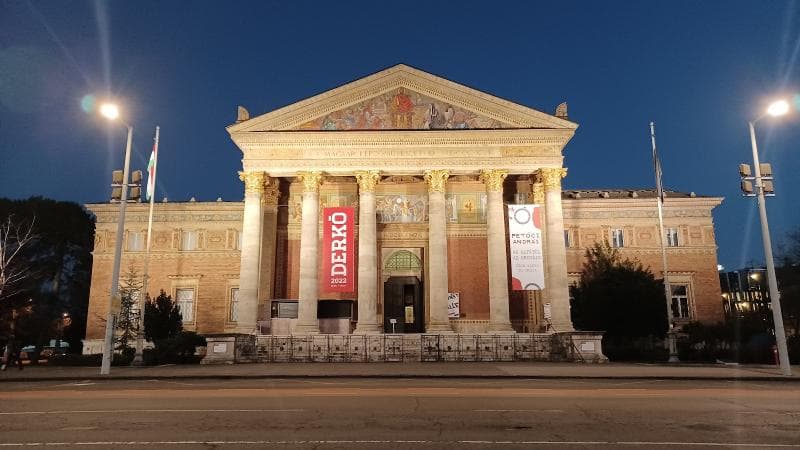
Explore Art Hall (Műcsarnok) in Budapest, Hungary – a renowned contemporary art exhibition space at Heroes' Square, showcasing dynamic international and Hungarian works.
Overview
Nestled proudly on the eastern side of Budapest's iconic Heroes' Square (Hősök tere), the Art Hall, known locally as Műcsarnok, stands as a distinguished landmark of Hungarian and international contemporary art. It harmoniously complements the grandeur of the square, facing the Museum of Fine Arts and forming a significant cultural complex in the city. Unlike traditional museums, Műcsarnok operates on the model of a German 'Kunsthalle', meaning it functions as an exhibition space that does not maintain its own permanent collection. Instead, its mission is to continuously mediate, present, and influence trends and phenomena within the contemporary visual arts scene.
The building itself is a masterpiece of Eclectic-Neoclassical architecture, designed by Albert Schickedanz and Fülöp Herczog. Completed in 1896 as part of Hungary's ambitious Millennium celebrations, which marked the 1,000th anniversary of the state's founding, its design features a basilica floor plan spanning 2,300 square meters. A distinctive three-bayed, semi-circular apse houses a roofed exhibition hall, ingeniously designed to allow natural light to illuminate the artworks. Adorning the pediment above the facade is an impressive mosaic depicting King St Stephen, portrayed as the patron of the arts.
History & Cultural Background
The origins of the Műcsarnok trace back to 1877 when it was founded under the initiative of the Hungarian National Fine Arts Association. Its initial home was on Andrássy Street before the current magnificent structure on Heroes' Square was erected for the Millennium celebrations of 1896. This monumental undertaking was part of a larger vision to create a grand cultural statement for Budapest, alongside the development of Heroes' Square itself and the adjacent Museum of Fine Arts.
Since its establishment in its current location, Műcsarnok has been a central pillar of contemporary Hungarian fine art and has played a crucial role in shaping its canon. It functions as a national institution, dedicated to showcasing the most significant developments in both Hungarian and international contemporary art. The institution underwent a significant renovation in 1995, ensuring its facilities remain modern and suitable for cutting-edge exhibitions. Today, it continues its work in partnership with the Ministry of Education and Culture, upholding its role as a vital cultural institution.
What Makes It Special
What truly sets Műcsarnok apart is its dynamic and forward-thinking approach to art. By choosing not to maintain a permanent collection, it remains agile and relevant, constantly evolving its offerings to reflect current artistic expressions and dialogues. Visitors can expect to see five to six major exhibitions annually, featuring a diverse range of local and foreign contemporary artists across various mediums, including painting, sculpture, photography, installations, and multimedia art.
This continuous rotation of exhibitions makes Műcsarnok a vibrant and active meeting point for contemporary culture and art, engaging with the cultural and social environment. The striking Neoclassical architecture of the building, with its imposing columns and elegant facade, creates a fascinating juxtaposition with the modern and sometimes challenging contemporary art housed within. This blend of historical grandeur and artistic innovation provides a unique experience for art enthusiasts and casual visitors alike. Its prime location within the UNESCO World Heritage site of Heroes' Square further enhances its prestige and accessibility, making it an unmissable stop for those exploring Budapest's cultural landscape.
Stories, Fun Facts & Local Details
The Art Hall's existence is deeply intertwined with a pivotal moment in Hungarian history: the Millennium celebrations of 1896. This period saw a surge in national pride and monumental construction, with Heroes' Square and its surrounding buildings designed to be a lasting testament to Hungary's heritage. The coordinated design of Műcsarnok and the Museum of Fine Arts by the same architects, Albert Schickedanz and Fülöp Herczog, ensures a visual harmony that defines the entire square, making it one of Budapest's most majestic public spaces.
A charming detail is the mosaic above the entrance, depicting King St Stephen, Hungary's first king, as a benevolent patron of the arts, subtly connecting the institution to the nation's historical roots and its long-standing appreciation for culture. Inside, beyond the exhibition spaces, Műcsarnok also provides amenities such as a bookshop, a library, and a cozy café that offers views overlooking Heroes' Square, perfect for contemplation after an immersive art experience. Its location next to the expansive City Park (Városliget) means visitors can easily combine an art outing with a leisurely stroll through one of Budapest's largest green spaces.
Visitor Perspective
Visiting Műcsarnok offers a journey into the heart of contemporary art, all within a historically rich setting. The institution is well-integrated into Budapest's public transport network, easily reachable via the Millenniumi Underground (Hősök tere stop), as well as by several trolley buses and bus lines.
For a pleasant visit, guests are asked to observe a few guidelines: artworks should be admired from a distance of at least 30 centimeters and not touched, unless explicitly indicated. A mandatory, yet free, cloakroom service is available for luggage, backpacks, and umbrellas. To maintain a respectful atmosphere for all, food and beverages are not permitted inside the galleries, and visitors are requested to keep voices low and mobile phones silenced. The building is also fully accessible, featuring a lift for convenience, and offers free admission for disabled visitors and their accompanying persons. Educational programs and guided tours are frequently available, providing deeper insights into the exhibitions and the institution's significant role in the art world.
Coordinates: 19.07884, 47.51392
View on Google Maps💬 How Travelers Describe This Place
Based on community votes
Interesting
872Unique
846Photogenic
684Must See
121Beautiful
87
Traveler Stories
Discover memorable experiences shared by travelers who have visited this place.
No traveler stories yet.
Be the first traveler to share what made this place memorable.

Tour
By
Spot
Discover amazing places around the world. Your journey starts here.
Explore
© 2026 TourBySpot. All rights reserved.