Tomb Of The Unknown Soldier
Budapest, Hungary
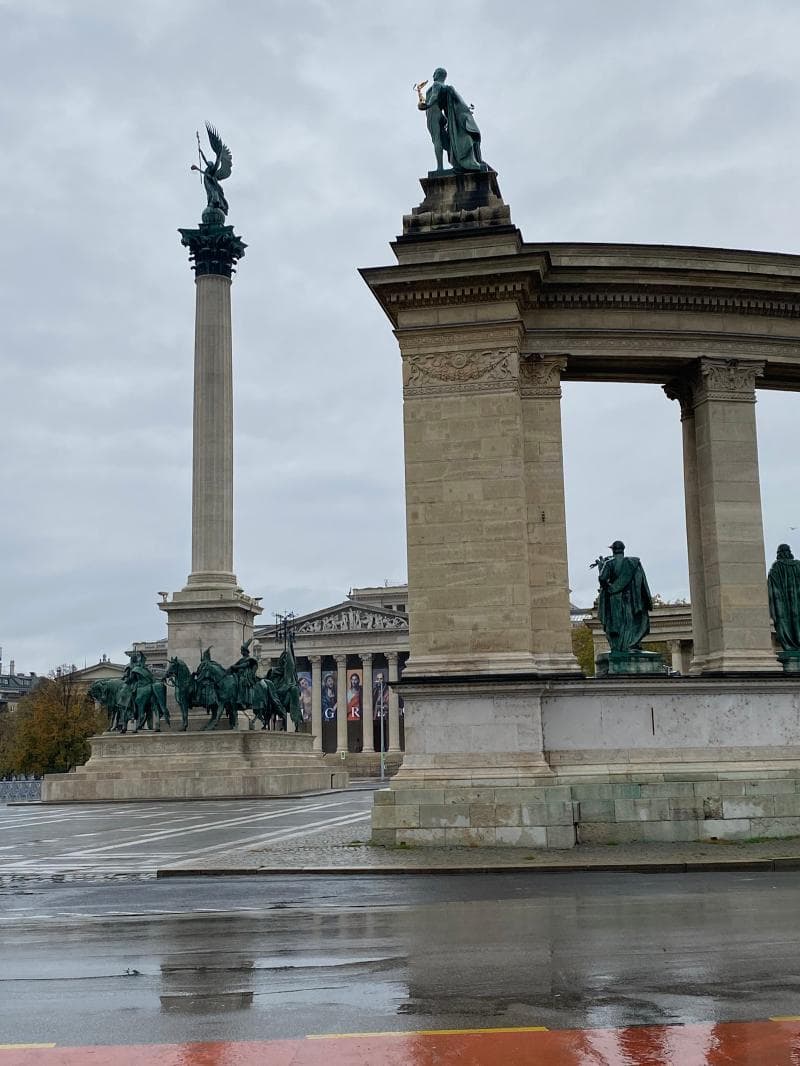
Discover the Memorial Stone of Heroes at Budapest's iconic Heroes' Square, a cenotaph honoring Hungarian sacrifices, not a traditional tomb.
Overview
Heroes' Square, or Hősök tere as it's known in Hungarian, stands as one of Budapest, Hungary's most iconic and historically significant public spaces. Located majestically at the end of Andrássy Avenue and serving as a grand gateway to City Park (Városliget), this expansive plaza is a powerful tribute to Hungary's national identity and its rich history. It is a UNESCO World Heritage site, recognized for its monumental design and profound cultural importance. At the heart of this grand square lies the Millennium Monument, an awe-inspiring sculptural complex that chronicles the nation's thousand-year journey. While many visitors seek out a 'Tomb of the Unknown Soldier', what they discover is the equally poignant Memorial Stone of Heroes (Hősök emlékköve), a cenotaph honoring all who sacrificed their lives for Hungary's freedom and independence.
The square is not merely a collection of statues; it is a vibrant public space that has witnessed pivotal moments in Hungarian history and continues to be a focal point for national celebrations and gatherings. Flanked by the Museum of Fine Arts and the Palace of Art (Műcsarnok), Heroes' Square offers a unique blend of historical reflection and cultural immersion. Its impressive scale and intricate details make it a must-visit destination for anyone seeking to understand the spirit of Hungary.
History & Cultural Background
The construction of Heroes' Square and its central Millennium Monument began in 1896 as part of the Millennium celebrations, marking the 1,000th anniversary of the Magyar conquest of the Carpathian Basin and the founding of the Hungarian state in 896. Designed primarily by Albert Schickedanz, with sculptures by György Zala, the full monument was finally completed in 1929.
The towering central column, reaching 36 meters (118 feet) in height, is crowned by a statue of Archangel Gabriel, who, according to legend, appeared to Saint Stephen in a dream and offered him the crown of Hungary. At the column's base, seven equestrian statues depict the legendary Magyar chieftains, led by Prince Árpád, who guided their people into the Carpathian Basin. Behind the column, two grand semicircular colonnades house statues of 14 significant figures from Hungary's history, including kings, leaders, and statesmen. Originally, some of these positions were held by Habsburg rulers, reflecting Hungary's place within the Austro-Hungarian Empire, but these were later replaced by Hungarian national heroes after World War II.
The Memorial Stone of Heroes, situated in front of the central column, was first erected in 1929. This large stone cenotaph serves as a tribute 'To the memory of the heroes who gave their lives for the freedom of our people and our national independence'. It was temporarily removed in 1951 by the communist regime due to its politically unacceptable message, but was re-erected in 1956.
What Makes It Special
What truly sets Heroes' Square apart is its profound symbolic resonance. It is not just a collection of impressive statues, but a comprehensive narrative in stone, reflecting the entire sweep of Hungarian history. The square provides a tangible connection to the nation's origins, its struggles, and its enduring spirit. The Memorial Stone of Heroes, often mistakenly identified as a traditional Tomb of the Unknown Soldier, is special precisely because it is a symbolic memorial rather than a burial site. This distinction highlights the Hungarian focus on national memory and collective sacrifice, rather than individual interment. Underneath the memorial stone lies an artesian well, which feeds the nearby Széchenyi Thermal Bath, linking this historical site to the city's natural and cultural amenities. The square's role as a UNESCO World Heritage site further underscores its universal value and significance.
Stories, Fun Facts & Local Details
- A Misconception Clarified: The 'Tomb of the Unknown Soldier' is actually the Memorial Stone of Heroes, a cenotaph dedicated to all Hungarian heroes who died for the nation, with no human remains interred beneath it. This is a common point of interest for curious visitors who might be familiar with similar memorials in other countries.
- Artesian Well: Directly beneath the Memorial Stone of Heroes lies a 971-meter deep artesian well, a source of thermal water for the famous Széchenyi Bath, linking the square's historical gravity with Budapest's therapeutic waters.
- Political Stage: Heroes' Square has been a stage for significant political events, including the poignant reburial of Imre Nagy in 1989. This event, attended by a quarter-million people, marked a crucial turning point in Hungary's transition from communism to democracy.
- Award-Winning Design: The statue of Archangel Gabriel, atop the central column, won the Grand Prize at the 1900 World's Fair in Paris, a testament to its artistic merit.
- Changing Faces: The statues within the colonnades have changed over time. Originally, some spots were reserved for Habsburg rulers, but these were replaced with statues of Hungarian national heroes after World War II, reflecting shifts in national identity and historical perspective.
Visitor Perspective
Visiting Heroes' Square offers a unique opportunity to step into the grandeur of Hungarian history. The square is freely accessible 24/7, inviting visitors to explore its vastness and intricate details at their own pace. It is easily reachable via Budapest's historic M1 metro line, with a station conveniently located right at the square.
As you approach, whether by metro or by walking down Andrássy Avenue, the monument's colossal scale immediately impresses. Take time to observe the detailed bronze figures of the Magyar chieftains and the historical leaders, each telling a story of the nation's past. The Memorial Stone of Heroes, though simple in form, exudes a solemn reverence, inviting contemplation on the sacrifices made for Hungarian liberty. The surrounding museums, the Museum of Fine Arts and the Palace of Art, offer further cultural enrichment, making Heroes' Square a perfect starting point for a day of exploration in Budapest's City Park area. Early mornings or evenings, when the square is beautifully lit, can offer a more tranquil and atmospheric experience, often with fewer crowds.
Coordinates: 19.07778, 47.515
View on Google Maps💬 How Travelers Describe This Place
Based on community votes
Must See
996Unique
673Photogenic
186Beautiful
143Interesting
80
Traveler Stories
Discover memorable experiences shared by travelers who have visited this place.
No traveler stories yet.
Be the first traveler to share what made this place memorable.

Tour
By
Spot
Discover amazing places around the world. Your journey starts here.
Explore
© 2026 TourBySpot. All rights reserved.