Museum Of Fine Arts
Budapest, Hungary
Explore Budapest's Museum of Fine Arts in Heroes' Square, Hungary, featuring over 100,000 international artworks from ancient times to the 18th century.
Overview
Nestled gracefully at the edge of Heroes' Square (Hősök tere) in Budapest, Hungary, the Museum of Fine Arts (Szépművészeti Múzeum) stands as a beacon of European art and cultural heritage. This grand institution, facing the Hall of Art, is a crucial part of the city's monumental and historically significant square, which itself is a UNESCO World Heritage Site. The museum's imposing eclectic-neoclassical architecture, with its tall Corinthian columns and decorative facade, evokes the grandeur of ancient temples, signaling its dedication to the fine arts even before one steps inside. Housing a vast collection of over 100,000 international artworks, the Museum of Fine Arts offers an immersive journey through millennia of artistic expression, ranging from ancient civilizations to the late 18th century.
History & Cultural Background
The Museum of Fine Arts was conceived and constructed between 1900 and 1906, opening its doors to the public in December 1906. Its establishment was a significant part of Hungary's grand plan to celebrate its millennium anniversary, aiming to create a national institution for art. Architects Albert Schickedanz and Fülöp Herzog were the masterminds behind its design, also contributing to the overall majestic layout of Heroes' Square and other nearby landmarks. The museum's core collection was initially formed from numerous acquisitions, notably the esteemed Esterházy Gallery, which the Hungarian state purchased in 1870. Other significant contributions came from the Buda Castle, and the Zichy and Jankovich estates, along with various individual collectors, establishing a European-ranking collection. Following damage sustained during World War II, parts of the museum, such as the Romanesque Hall, remained closed for decades, serving as storage. However, a comprehensive renovation between 2015 and 2018 meticulously restored the building to its original splendor, re-opening these spaces to the public.
What Makes It Special
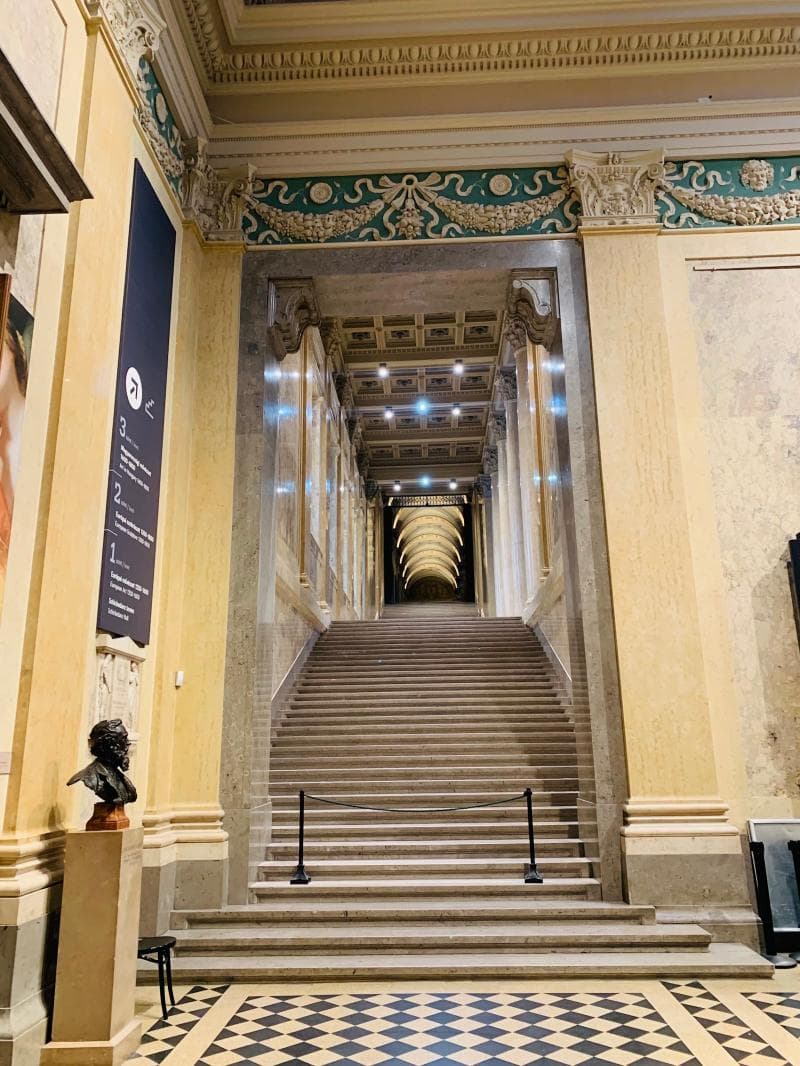
What truly sets the Museum of Fine Arts apart is its remarkably diverse and extensive international collection, particularly its focus on art from beyond Hungary's borders. It is divided into six main departments: Egyptian Antiquities, Classical Antiquities, Old Master Paintings, Old Sculpture Gallery, Modern Collection, and Graphics Collection. The Egyptian collection, featuring approximately 3,500 artifacts including painted mummy sarcophagi, is considered the second-largest in Central Europe. The Classical Antiquities section boasts significant works from Ancient Greece and Rome, including the notable 3rd-century marble statue known as the 'Budapest Dancer'. The Old Master Paintings gallery offers an almost uninterrupted survey of European painting from the 13th to the late 18th centuries, with masterpieces by renowned artists such as Raphael, Goya, Titian, El Greco, Rubens, Rembrandt, and Velázquez. Beyond its collections, the museum itself is an architectural marvel. Its interior features halls designed to evoke different historical styles, such as the Renaissance Hall, reminiscent of an Italian palace, and the breathtaking Romanesque Hall with its intricate frescoes.
Stories, Fun Facts & Local Details
The Museum of Fine Arts holds intriguing stories within its walls. One notable incident was the 1983 theft of seven Old Master paintings, including Raphael's iconic 'Esterházy Madonna', from the museum, which thankfully were later recovered. During the extensive renovation concluding in 2018, a time capsule from 1904, left by the original decorators, was discovered inside the Romanesque Hall. A new note from the current renovation team was added before it was resealed for future generations. The building's exterior itself tells a story; the south portico is a direct replica of the Temple of Zeus at Olympia, reflecting the ambition of the Austro-Hungarian Empire at the time of its construction. Inside, visitors can engage with a 15-meter-wide interactive iWall in the Marble Hall, showcasing nearly 300 artworks through cutting-edge technology. This blend of ancient art and modern interaction creates a unique and memorable experience.
Visitor Perspective
Visiting the Museum of Fine Arts is an experience that transcends mere viewing; it's a journey through time and artistic epochs. The sheer scale and beauty of the building, alongside the depth of its collections, can make one feel as if they've stepped into a 'time machine'. The deliberately varied architectural styles of its halls—from the Romanesque to the Renaissance and Baroque—create immersive environments that enhance the appreciation of the art displayed within. Whether you are an ardent art historian or a curious traveler, the museum offers engaging narratives through its artifacts, from Egyptian mummies and the 'Budapest Dancer' to the powerful canvases of European masters. The thoughtful restoration has ensured that the building's historic charm is preserved while integrating modern amenities, providing a comfortable and enriching cultural encounter in the heart of Budapest.
Coordinates: 19.07678, 47.51587
View on Google Maps💬 How Travelers Describe This Place
Based on community votes
Must See
684Beautiful
363Photogenic
302Unique
250Interesting
88
Traveler Stories
Discover memorable experiences shared by travelers who have visited this place.
No traveler stories yet.
Be the first traveler to share what made this place memorable.

Tour
By
Spot
Discover amazing places around the world. Your journey starts here.
Explore
© 2026 TourBySpot. All rights reserved.