Grand Palace
Bangkok, Thailand
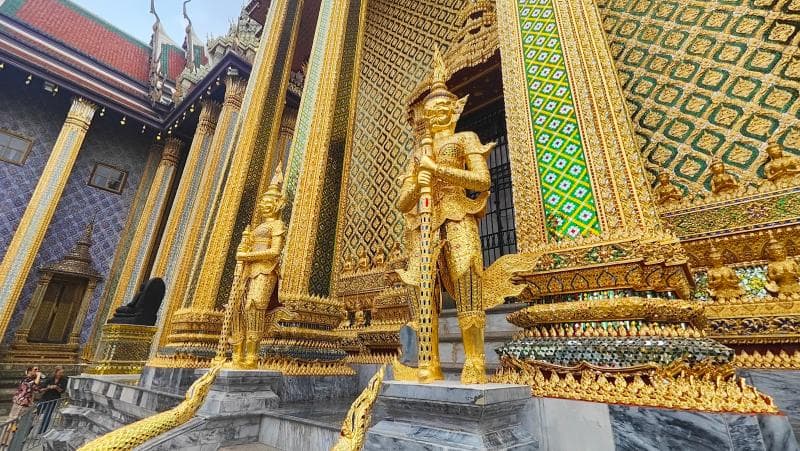
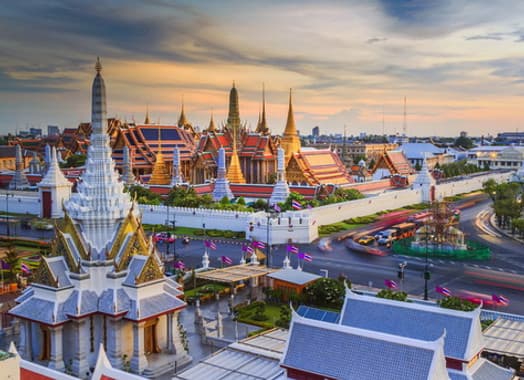
Explore the Grand Palace in Bangkok, Thailand – a historic complex, former royal residence, and home to the sacred Emerald Buddha.
Overview
The Grand Palace, known in Thai as Phra Borom Maha Ratcha Wang, is a magnificent complex of buildings nestled in the heart of Bangkok, Thailand. This sprawling landmark has served as the official residence of the Kings of Siam and later Thailand since its establishment in 1782. While the current monarch resides elsewhere, the Grand Palace remains a vibrant center for important royal ceremonies and state functions, making it a living symbol of Thailand's rich heritage and enduring monarchy. It is also one of the most popular tourist attractions in Thailand, drawing millions of visitors annually to admire its intricate architecture and spiritual atmosphere.
History & Cultural Background
The construction of the Grand Palace commenced on May 6, 1782, under the command of King Phutthayotfa Chulalok (Rama I), the founder of the Chakri dynasty. This marked a pivotal moment as he moved the capital from Thonburi to Bangkok, establishing a new seat of power for his nascent dynasty. Initially, the palace was built primarily from wood, but King Rama I soon ordered its reconstruction with more durable materials. Bricks for this purpose were even salvaged from the ruins of Ayutthaya, the former capital, which had been devastated during the Burmese-Siamese war. Over more than two centuries, successive kings expanded and embellished the complex, with significant additions and stylistic developments occurring particularly during the reigns of King Rama IV and King Rama V. Until 1925, the Grand Palace functioned as a 'city within a city,' housing the king, his court, and the royal government, serving as both the administrative and religious heart of the country. After 1925, the royal family and government relocated to other residences, and after the abolition of absolute monarchy in 1932, all government agencies moved out.
What Makes It Special
The Grand Palace is not a single structure but an intricate collection of halls, pavilions, and courtyards that showcase a remarkable blend of traditional Thai architecture with influences from other styles, notably European. At its spiritual core lies the revered Wat Phra Kaew, or the Temple of the Emerald Buddha. This royal chapel, consecrated in 1785, houses Thailand's most sacred religious icon: the Emerald Buddha. This precious image, carved from a single piece of green jade (not actual emerald), is deeply venerated by the Thai Royal Family and citizens alike. Unique among Thai temples, Wat Phra Kaew lacks living quarters for monks, underscoring its role as a royal chapel. Another architectural marvel is the Chakri Maha Prasat Throne Hall, completed in 1882. This building famously fuses a distinctly European ground plan and lower levels with traditional Thai-style tiered roofs and gilded spires. This eclectic design, reportedly a compromise after King Rama V initially desired an entirely Western structure, earned it the affectionate local nickname, 'the Westerner with a Thai hat.' The complex is broadly divided into the Outer, Middle, and Inner Courts, each with distinct historical functions.
Stories, Fun Facts & Local Details
One of the most captivating traditions associated with the Emerald Buddha is the ceremonial changing of its gold garments. The king presides over this ritual three times a year, marking the transition between the hot, rainy, and cool seasons. This tradition, initiated by King Rama I and expanded by Rama III, symbolizes national prosperity and the changing agricultural cycles. The history of the Emerald Buddha itself is shrouded in legend, believed to have traveled across various kingdoms before finding its permanent home in Bangkok. The Chakri Maha Prasat Hall’s unique architecture stemmed from a design discussion between King Rama V and his chief minister, highlighting the blend of progressive Western influence and steadfast Thai tradition in the late 19th century. Beyond its grand halls, the palace grounds also host the Queen Sirikit Museum of Textiles, offering insights into royal garments and the country's textile heritage.
Visitor Perspective
Visiting the Grand Palace is an immersive cultural experience. The palace is generally open daily from 8:30 AM to 3:30 PM, though it may close for special royal ceremonies. A strict dress code is enforced out of respect for this sacred site: visitors must ensure their shoulders and knees are covered. Sleeveless tops, short pants, mini-skirts, ripped clothing, and transparent fabrics are not permitted. Comfortable walking shoes are highly recommended as you explore the vast complex. For those who arrive unprepared, suitable clothing may be available for rent near the entrance. Tickets are typically 500 THB and include access to Wat Phra Kaew and other exhibits, such as the Queen Sirikit Museum of Textiles. To enhance the experience, audio guides are available in multiple languages. It's often advised to visit early in the morning to avoid the biggest crowds and the midday heat.
Coordinates: 100.492, 13.7501
View on Google Maps💬 How Travelers Describe This Place
Based on community votes
Photogenic
692Beautiful
674Must See
503Interesting
261Unique
49
Traveler Stories
Discover memorable experiences shared by travelers who have visited this place.
No traveler stories yet.
Be the first traveler to share what made this place memorable.
Things to see at Grand Palace



Tour
By
Spot
Discover amazing places around the world. Your journey starts here.
Explore
© 2026 TourBySpot. All rights reserved.