Miniature Model of Angkor Wat
Bangkok, Thailand
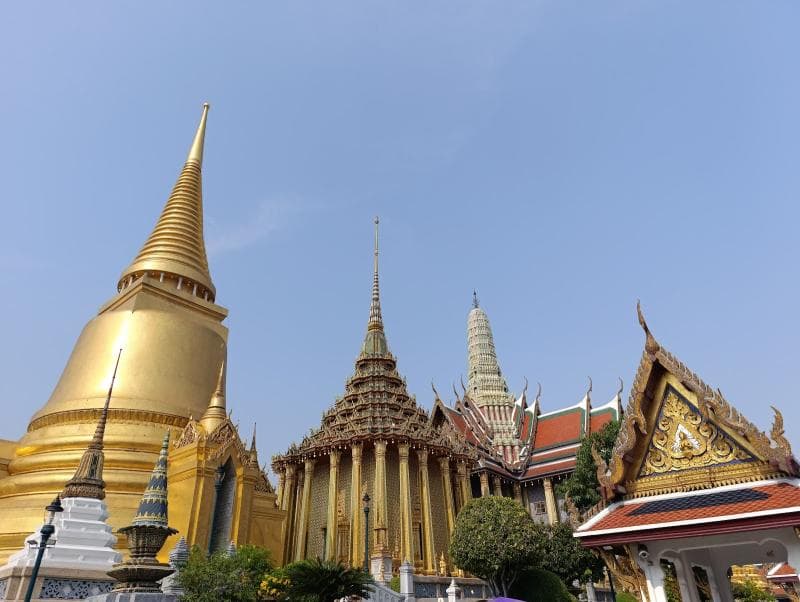

Discover the Miniature Model of Angkor Wat within Bangkok's Grand Palace, Thailand. Uncover its fascinating history, cultural significance, and unique stories.
Overview
Nestled within the revered grounds of Bangkok's Grand Palace, specifically within the magnificent Wat Phra Kaew (Temple of the Emerald Buddha), lies a truly captivating sight: a meticulously crafted miniature model of Angkor Wat. This exquisite replica, though often overshadowed by the larger-than-life architecture of the Grand Palace itself, offers a fascinating glimpse into a rich, shared cultural heritage and a complex historical narrative between Thailand and Cambodia. It stands as a detailed scale model of the iconic Khmer temple complex, inviting curious travelers to ponder its origins and significance.
History & Cultural Background
The story behind the Miniature Model of Angkor Wat begins in the mid-19th century with King Rama IV, also known as King Mongkut, the visionary monarch of Siam. Following the rediscovery of the ancient Khmer temple complex in Cambodia around 1860, King Mongkut conceived an ambitious plan: to dismantle the actual Angkor Wat and transport it, piece by piece, to Bangkok. His reasoning was that the Siamese populace would be greatly interested in witnessing such a wonder.
However, this grand endeavor proved to be physically impossible. Accounts suggest that an initial expedition of 2,000 men sent to undertake the task was even ambushed, highlighting the immense logistical and political challenges involved. Faced with the unfeasibility of moving the colossal monument, King Mongkut pivoted, ordering instead the construction of a highly detailed scale model within the sacred precincts of Wat Phra Kaew. While the king initiated the project, he passed away before its completion. The intricate miniature was finally finished in 1869, during the reign of his son, King Chulalongkorn (Rama V).
What Makes It Special
More than just an architectural curiosity, the Miniature Model of Angkor Wat is imbued with profound historical and political significance. In the 19th century, with Cambodia under Siamese suzerainty and the looming threat of French colonial expansion in Indochina, King Mongkut's commission served as a potent geopolitical statement. By erecting a replica of the Khmer Empire's greatest architectural achievement at the heart of Siamese royal and religious power, the king visually and politically asserted Siam's claim over Cambodia's heritage, subtly conveying that Angkor 'belonged' to Siam.
Beyond its political symbolism, the model also held spiritual and educational value. King Mongkut, who had spent 27 years as a Buddhist monk before his ascension, was deeply committed to religious scholarship. Angkor Wat, originally a Hindu temple, had evolved into a vital Buddhist pilgrimage site. Incorporating a representation of this sacred geography into the Grand Palace elevated the spiritual prestige of his reign. Furthermore, given the arduous and perilous journey to the actual Angkor Wat in the Cambodian jungles, the model provided an accessible way for the Siamese court and commoners alike to marvel at the grandeur of Khmer architecture.
Stories, Fun Facts & Local Details
The initial, audacious plan to relocate the entire Angkor Wat temple is a remarkable anecdote, underscoring the king's determination and the era's complex power dynamics. Imagine the sheer scale of such an undertaking! The decision to build a model instead speaks volumes about the pragmatic wisdom that eventually prevailed.
It's also intriguing to consider that Angkor Wat itself, built in the 12th century, was designed to represent Mount Meru, the mythical abode of the gods in Hindu and Buddhist cosmology. The model within the Grand Palace thus serves as a miniature 'Mount Meru,' bringing a piece of that cosmic grandeur to Bangkok. The placement of the model, specifically to the north of the Phra Mondop (Royal Pantheon) within Wat Phra Kaew, is a detail that astute visitors can observe.
In a gesture symbolizing diplomatic ties, Cambodian Prime Minister Hun Sen visited this very replica during a diplomatic trip to Thailand in 1989, highlighting its enduring role as a tangible link between the two nations' shared, often intertwined, histories.
Visitor Perspective
For any curious traveler exploring the Grand Palace complex, the Miniature Model of Angkor Wat is an essential stop. Located within the Wat Phra Kaew, it offers a moment of reflection amidst the dazzling Thai architecture. While smaller than the original, its intricate details allow for appreciation of the exquisite Khmer craftsmanship and architectural style. It's a testament to the enduring legacy of a historical relationship and cultural exchange between Thailand and Cambodia, providing a unique context to the region's rich past. As with all sacred sites within the Grand Palace, visitors are reminded to dress respectfully and adhere to local customs.
Coordinates: 100.4919, 13.75
View on Google Maps💬 How Travelers Describe This Place
Based on community votes
Must See
839Interesting
445Photogenic
416Beautiful
289Unique
141
Traveler Stories
Discover memorable experiences shared by travelers who have visited this place.
No traveler stories yet.
Be the first traveler to share what made this place memorable.

Tour
By
Spot
Discover amazing places around the world. Your journey starts here.
Explore
© 2026 TourBySpot. All rights reserved.