Phra Mondop
Bangkok, Thailand
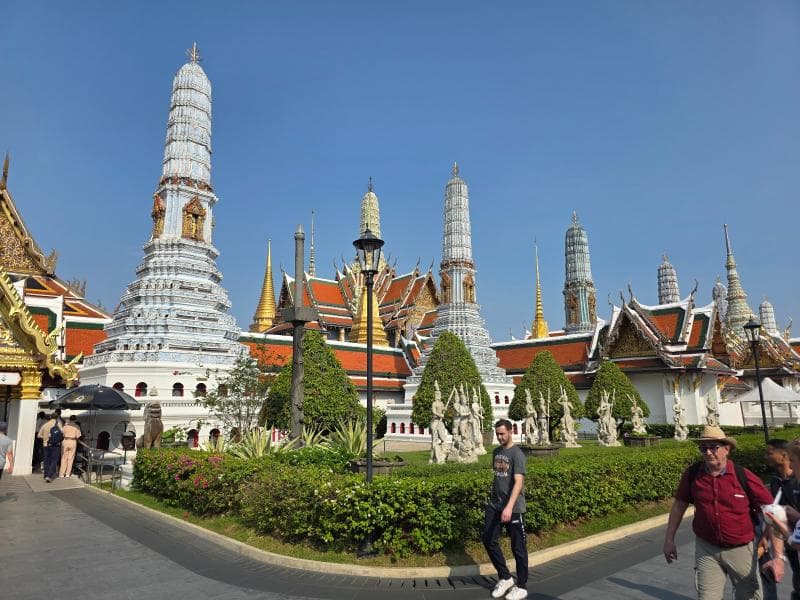
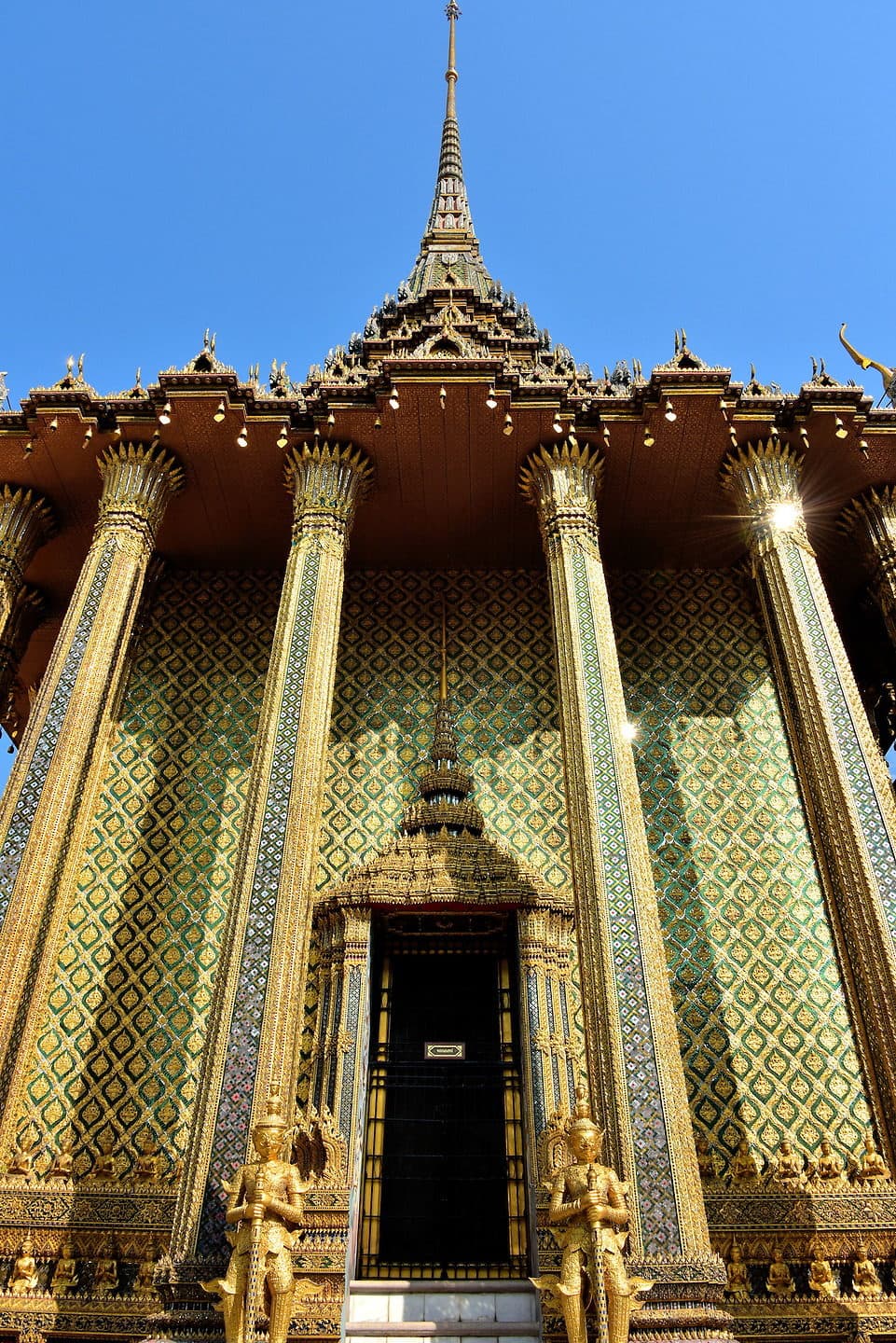
Discover Phra Mondop, the sacred library housing Buddhist scriptures within Bangkok's Grand Palace, Thailand. Admire its exquisite gilded architecture.
Overview
Nestled within the revered Wat Phra Kaew (Temple of the Emerald Buddha) complex, itself a part of Bangkok's magnificent Grand Palace, stands the exquisite Phra Mondop. This striking structure serves as a sacred library, meticulously preserving ancient and vital Buddhist scriptures. Its purpose is deeply rooted in the spiritual and intellectual heritage of Thailand, safeguarding the revised editions of Buddhist literature, including the Tripitaka. While its intricate beauty is a highlight for visitors exploring the Grand Palace grounds, the Phra Mondop remains closed to the public, underscoring its profound sanctity and the delicate nature of its contents.
History & Cultural Background
The history of the Phra Mondop is interwoven with the establishment of the Grand Palace itself, a monumental undertaking initiated by King Rama I in 1782 when he moved the capital to Bangkok. The Grand Palace served as the heart of the Siamese (and later Thai) monarchy and administration for over 150 years. The Phra Mondop was specifically constructed in 1789 under the command of King Rama I. It replaced an earlier library, the Ho Phra Monthien Tham, which was tragically destroyed by fire during a fireworks display. This event highlighted the urgent need for a secure and sacred repository for the nation's invaluable Buddhist texts. The design of the Phra Mondop draws inspiration from the mondop shrine that protects the Buddha's Footprint in Saraburi province, signaling its significant religious function and venerated status.
What Makes It Special
The Phra Mondop is a testament to the unparalleled artistry of traditional Thai craftsmanship. Its exterior is a dazzling display of green mirrored tiles, intricately inlaid with golden medallions that depict the Buddha, creating a shimmering, almost ethereal facade. At the base of its walls, two rows of small, gilded guardian angels stand in delicate formation, each one uniquely rendered, adding to the building's distinctive charm and intricate detail. Further enhancing its spiritual guardianship, stone Buddhas carved in the 9th-century Javanese style adorn its four corners. The structure is crowned by an elaborate multi-tier roof, supported by sixteen twelve-cornered, glass-inlaid stucco pillars. Perhaps most remarkably, the floor inside the Phra Mondop is said to be crafted from pure silver, a detail that powerfully underscores the building's immense significance and sacred role in housing the revered Buddhist Canon.
Stories, Fun Facts & Local Details
The very existence of the Phra Mondop is a story of resilience and dedication to preserving knowledge; it rose from the ashes of its predecessor, the Ho Phra Monthien Tham, which was lost to an accidental fire caused by fireworks. This incident led King Rama I to commission an even more magnificent and secure edifice for the sacred Buddhist scriptures. The meticulous detail of the small gilded guardian angels lining its walls, each possessing unique characteristics, offers a 'fun fact' that speaks to the profound artistic investment in every aspect of the structure. The reported silver floor is another captivating detail, symbolizing the immense value placed on the texts within. The Phra Mondop stands as a small, silent guardian of wisdom within the larger 'city within a city' that was historically the Grand Palace, embodying the cultural and spiritual core of Thailand.
Visitor Perspective
For any curious traveler to Bangkok, the Phra Mondop, though inaccessible inside, is an essential visual experience within the Grand Palace complex. As you wander through the Wat Phra Kaew, its striking beauty, with its shimmering green and gold exterior, immediately captures attention. While you cannot enter to behold the ancient scriptures, the mere presence of this sacred library offers a tangible connection to Thailand's rich Buddhist heritage and its commitment to preserving invaluable wisdom. Observing its intricate architecture and artistic details from the outside provides a profound appreciation for the spiritual and cultural grandeur of the Grand Palace, making it a memorable stop on your journey through this historic royal precinct.
Coordinates: 100.492, 13.7501
View on Google Maps💬 How Travelers Describe This Place
Based on community votes
Unique
847Beautiful
685Interesting
513Photogenic
482Must See
433
Traveler Stories
Discover memorable experiences shared by travelers who have visited this place.
No traveler stories yet.
Be the first traveler to share what made this place memorable.

Tour
By
Spot
Discover amazing places around the world. Your journey starts here.
Explore
© 2026 TourBySpot. All rights reserved.