El Rey Ruins
Cancún, Mexico
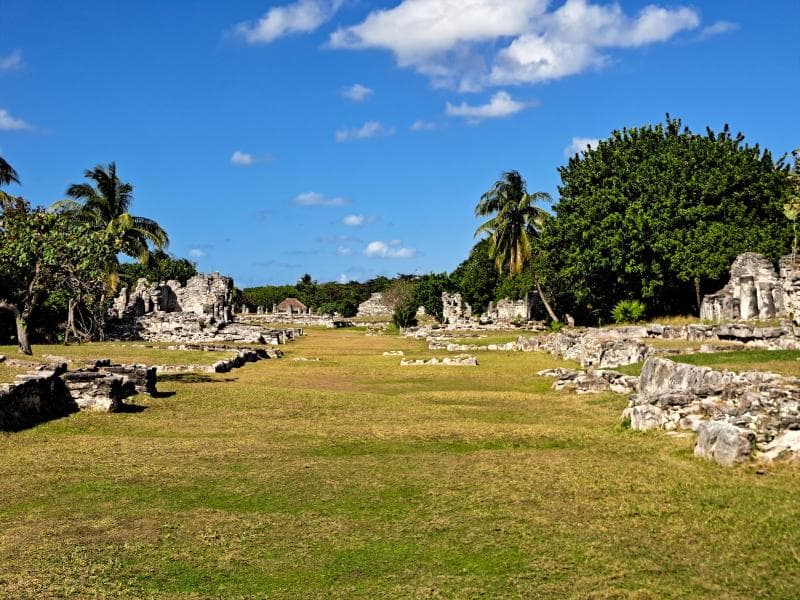

Discover El Rey Ruins in Cancún, Mexico. Explore ancient Mayan history, unique architecture, and charming iguanas at this accessible archaeological site.
Overview
Tucked away amidst the vibrant landscape of Cancún's Hotel Zone, the El Rey Ruins, officially known as Zona Arqueológica El Rey, offer a captivating glimpse into the ancient Mayan civilization. This archaeological site, conveniently located at Kilometer 18 of Boulevard Kukulcán, provides an accessible and intimate historical experience away from the bustling beaches. Comprising 47 structures, El Rey is a testament to a once-thriving pre-Columbian community. Visitors can explore a series of platforms, plazas, and a pyramid-temple complex, all while observing the site's most charming residents: numerous iguanas that freely roam among the ancient stones.
While relatively modest in scale compared to larger Mayan cities like Chichen Itza or Tulum, El Rey's compact nature allows for a comprehensive exploration in a shorter timeframe, typically an hour or so. Its ease of access makes it a popular choice for those seeking to immerse themselves in Mayan history without venturing far from Cancún's main tourist areas.
History & Cultural Background
The name 'El Rey,' meaning 'The King' in Spanish, was bestowed upon the site following the discovery of an anthropomorphic sculpture in 1909 by English travelers Channing Arnold and Frederick Frost. This significant artifact, believed to represent a Mayan noble or monarch, gave the ruins their regal designation, though its original Mayan name remains unknown. The head of this iconic sculpture is now preserved and displayed at the nearby Mayan Museum of Cancún, offering a tangible connection to the site's namesake.
El Rey's origins date back to approximately 300 AD, beginning as a modest settlement of fishermen. The site grew in prominence, reaching its peak during the Late Postclassic period, roughly between 1200 and 1550 AD. Strategically positioned between the Caribbean Sea and the Nichupté Lagoon, El Rey served as a crucial port within the extensive Mayan coastal trade network. It was not only a hub for maritime commerce and fishing but also played a role in salt extraction and may have functioned as an astronomy educational center and a burial ground for high-ranking individuals.
Archaeological evidence suggests El Rey was interconnected with other vital East Coast Mayan communities, including Xel Ha, Tankah, Tulum, and Xaman Ha (Playa del Carmen), facilitating cultural exchange and economic trade. The site's significance, however, waned with the arrival of the Spanish in the 16th century, leading to its eventual abandonment by the Mayan populace.
What Makes It Special
One of El Rey's most compelling features is its accessible location within Cancún's Hotel Zone. Unlike some more remote archaeological sites, El Rey provides an effortless opportunity for visitors to step back in time and explore Mayan heritage. The site's architectural style, often referred to as 'East Coast Style,' is visible in its layout, characterized by platforms and structures aligned along two main 'sacbeob,' or white stone roads, leading to two central plazas.
Among the 47 structures, notable edifices include Structure 2, featuring a pyramidal base with a temple, and Structures 1 and 4, which were once grand palaces or administrative buildings with columned galleries. Remnants of mural paintings, depicting ancient deities, can still be observed on some structures, offering rare artistic insights into Mayan beliefs. Furthermore, archaeological findings indicate that El Rey and the nearby San Miguelito ruins might have formed a single, larger settlement along Cancún's coast.
Stories, Fun Facts & Local Details
Perhaps the most enchanting residents of El Rey are the hundreds of iguanas that have made the ruins their home. These reptiles can be seen basking on the ancient stones, adding a unique, living element to the historical setting. Visitors are often captivated by their presence, but are kindly reminded not to feed or disturb them.
The story behind the site's name is particularly intriguing: while El Rey means 'The King,' the actual sculpture that inspired the name is no longer on-site. To truly appreciate its historical context, a visit to the Cancún Mayan Museum is recommended, where the 'King's Head' sculpture is safely housed. The archaeological excavations have also unveiled a wealth of information, including over 500 burials found beneath residential platforms, some containing artifacts like copper axes, bracelets, and shell ornaments, indicative of high-ranking individuals.
It's also worth noting that the original Mayan name for the site is lost to history. However, some have suggested 'Kin Ich Ahau Bonil,' meaning 'king of the solar countenance,' as a potential ancient designation, reflecting the significance of the royal figure.
Visitor Perspective
El Rey Ruins are open daily, typically from 8:00 AM to 5:00 PM, with the last entry at 4:30 PM. The admission fee for foreign visitors is generally around 145 Mexican Pesos or approximately $8.50 to $9.00 USD, though prices can vary slightly. Bringing essentials like a sun hat, water, and comfortable walking shoes is advisable, as much of the site is exposed to the sun.
For those interested in a deeper dive into Mayan culture, combining a visit to El Rey with the Mayan Museum of Cancún is highly recommended. The museum offers extensive historical context and houses many artifacts recovered from the region, including the famous 'King' sculpture. The ruins are also conveniently located near Playa Delfines, known for its scenic views and the iconic 'Cancún' sign, making it easy to combine multiple points of interest in one outing.
Coordinates: -86.7797, 21.0744
View on Google Maps💬 How Travelers Describe This Place
Based on community votes
Unique
674Beautiful
503Photogenic
261Must See
92Interesting
49
Traveler Stories
Discover memorable experiences shared by travelers who have visited this place.
No traveler stories yet.
Be the first traveler to share what made this place memorable.
Things to see at El Rey Ruins



Tour
By
Spot
Discover amazing places around the world. Your journey starts here.
Explore
© 2026 TourBySpot. All rights reserved.