Residential Structures
Cancún, Mexico
Explore the residential structures of El Rey Ruins in Cancún, Mexico, to uncover the daily life of the ancient Maya. A unique historical insight.
Overview
The El Rey Ruins, nestled within Cancún, Mexico's bustling hotel zone, offer a unique glimpse into the residential life of the ancient Maya civilization. This archaeological site, primarily dating to the Late Postclassic period (1200-1500 CE), is characterized by numerous stone platforms that once formed the foundations of homes and other structures. These residential areas are strategically arranged, often lining ancient pathways, providing a vivid picture of the community's layout. Over 500 burials have been uncovered beneath these platforms, suggesting that homes were often built over the resting places of ancestors, a common Maya practice.
Unlike some of the larger, more ceremonial Mayan cities, El Rey provides an intimate perspective on the daily routines and social organization of its inhabitants. The site is relatively compact, making it easily explorable for those curious about the less monumental, yet equally significant, aspects of Mayan culture.
History & Cultural Background
El Rey's history stretches back to approximately 300 CE when a small community of fishermen established wooden houses with palm roofs upon modest stone platforms. The site truly flourished and saw its residential peak during the Early Classical period (250-600 CE), though the organic materials of these earliest dwellings have long since vanished. A significant population surge occurred much later, between 1300 and 1550 CE, bringing immigrants from the Yucatán Peninsula's interior and transforming El Rey into a thriving coastal settlement.
The Maya at El Rey were primarily involved in fishing and salt production, activities crucial for their sustenance and for trade, even serving as tribute to larger inland cities. The architectural style evident in the residential structures is known as 'East Coast Style,' a regional characteristic featuring low-lying buildings, single chambers, and flat roofs. This design allowed for efficient construction and adaptation to the coastal environment. After the arrival of the Spanish in the 16th century, the established trade routes dissolved, leading the indigenous population to abandon El Rey and flee inland, leaving the structures to the jungle's embrace.
What Makes It Special
The residential structures at El Rey are particularly special because they offer direct insight into the everyday existence of the Maya people. Rather than grand temples, visitors encounter the remnants of where families lived, ate, and slept. A notable example is what archaeologists refer to as 'the Palace,' the site's only known stone residential complex. This impressive structure consists of an artificial platform supporting eighteen pillars, which once held a robust roof, indicating a significant dwelling.
Most residential platforms followed a distinct pattern for Late Postclassic dwellings: a porticoed entrance often with a bench for daytime activities and a room at the rear likely used for sleeping. The meticulous planning of the site is evident in the avenue lined with these residential buildings, showcasing a structured community design. The discovery of numerous burials within and around these living spaces further enriches our understanding, revealing a community with considerable biological variation and connections to other major Maya sites like Cozumel and Chichen Itza.
Stories, Fun Facts & Local Details
A fun fact woven into El Rey's modern identity is its name. 'El Rey,' meaning 'The King' in Spanish, was given to the site after the discovery of a sculpted mask of a presumed ruler. This original artifact, a symbolic link to the site's past leadership, is now preserved in the nearby Museo Maya de Cancún. While many of the original homes were made of perishable materials like wood and thatch, the surviving stone platforms tell a story of resilience and adaptation, echoing similar building traditions still seen in Maya communities today.
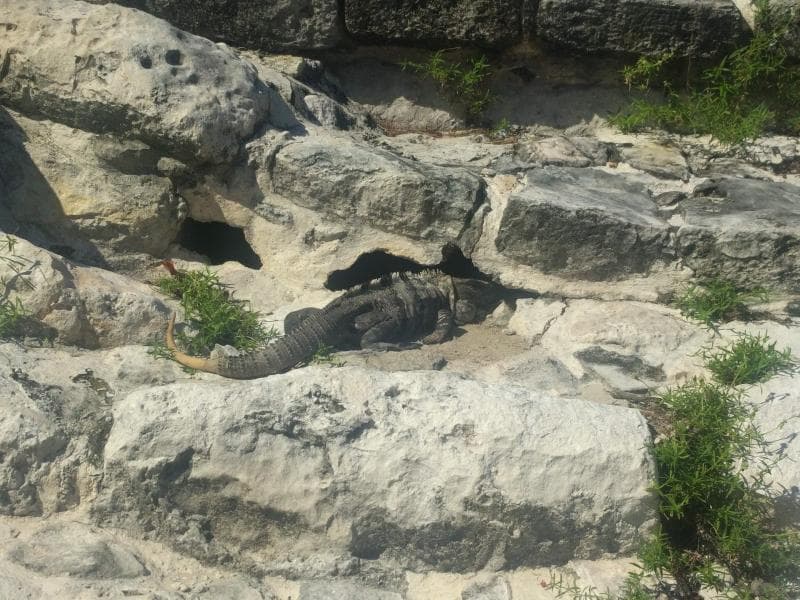
Today, the most prominent 'residents' you're likely to encounter are the numerous iguanas that freely roam the ruins. These sun-loving reptiles have made the ancient stones their home, adding a vibrant, natural element to the historical landscape. They are a beloved, if unofficial, part of the El Rey experience, often posing for photographs, though visitors are kindly asked not to disturb them.
Visitor Perspective
Visiting the residential structures at El Rey is an immersive journey into the domestic side of Maya civilization. As you wander among the low-lying platforms and their outlines, it is easy to imagine the daily routines that unfolded here centuries ago. The site is designed for easy exploration, with informative plaques providing context and enriching your understanding of each area.
For those seeking a more tranquil and accessible encounter with Mayan history away from the larger, more crowded sites, El Rey offers a perfect alternative. It allows for a deeper appreciation of the everyday lives of the people who shaped this ancient port. Be sure to wear comfortable footwear and bring protection from the sun, as much of the site is open, offering little shade. To fully complement your visit, consider combining it with a trip to the excellent Museo Maya de Cancún nearby, which offers broader insights into the region's rich Mayan heritage.
Coordinates: -86.7766, 21.0847
View on Google Maps💬 How Travelers Describe This Place
Based on community votes
Beautiful
894Unique
862Interesting
443Must See
304Photogenic
184
Traveler Stories
Discover memorable experiences shared by travelers who have visited this place.
No traveler stories yet.
Be the first traveler to share what made this place memorable.

Tour
By
Spot
Discover amazing places around the world. Your journey starts here.
Explore
© 2026 TourBySpot. All rights reserved.