Duomo di Milano
Milan, Italy
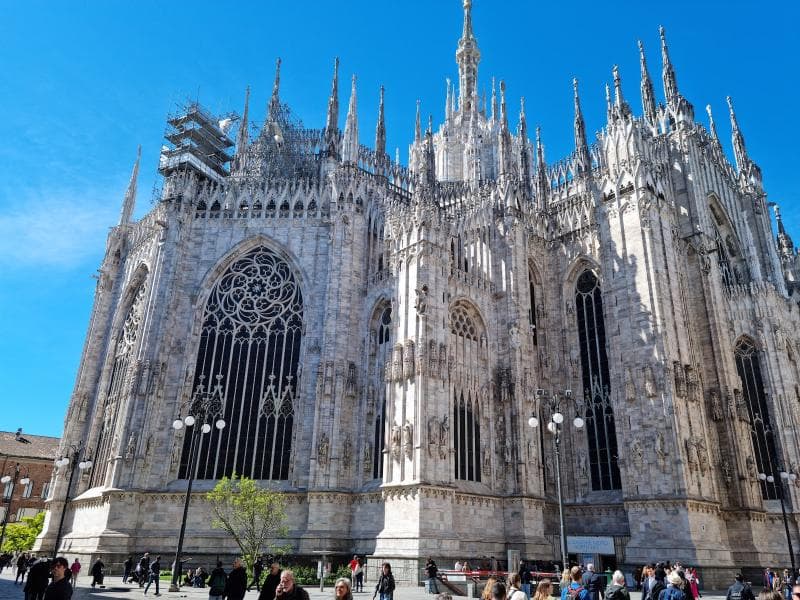
Explore Duomo di Milano, Milan, Italy's iconic Gothic cathedral. Discover its rich history, unique architecture, Madonnina statue, and panoramic rooftop views.
Overview
The Duomo di Milano, officially known as the Metropolitan Cathedral-Basilica of the Nativity of Saint Mary, stands as a breathtaking Gothic masterpiece in the heart of Milan, Italy. Positioned centrally in Piazza del Duomo, it is not merely a church but a profound symbol of the city's rich history and enduring spirit. Renowned as one of the largest cathedrals in the world and the largest Gothic church globally, it also holds the distinction of being the largest church in Italy, excluding St. Peter's Basilica which lies within Vatican City. Its construction commenced in 1386 and remarkably spanned nearly six centuries, finally concluding in 1965, resulting in an architectural marvel adorned with intricate marble detailing, soaring spires, and thousands of statues.
This iconic cathedral captivates visitors with its distinctive pinkish-white Candoglia marble facade and a 'stone forest' of spires that pierce the Milanese sky. Its immense scale, measuring 157 meters in length and capable of accommodating over 40,000 people, underscores its historical ambition and the dedication of countless artisans over generations.
History & Cultural Background
The site upon which the Duomo di Milano now stands has long been a place of worship, built over the remains of earlier basilicas, Santa Maria Maggiore and Santa Tecla, and the Baptistery of San Giovanni alle Fonti, elements of which are still visible in the archaeological area beneath the cathedral. The grand project of constructing a new cathedral began in 1386, initiated by Gian Galeazzo Visconti, the then Lord of Milan. His vision was to create a monumental church that would not only serve as a place of worship but also as a testament to Milan's power and influence, rivaling the great cathedrals of Northern Europe.
To manage this colossal undertaking, the 'Veneranda Fabbrica del Duomo' (Cathedral Factory) was established in 1387, an institution that continues to oversee the cathedral's maintenance today. The initial design leaned towards Lombard Gothic using brick, but Visconti's ambition led to a change in material to the exquisite Candoglia marble and the incorporation of more refined Gothic styles, particularly the French Rayonnant Gothic, introduced by engineers like Nicolas de Bonaventure. The marble was specifically sourced from quarries and transported to the city via a complex system of canals. The lengthy construction period, marked by the contributions of architects, sculptors, and artisans from across Europe, transformed the Duomo's construction site into a vibrant 'crossroads of peoples and cultures,' making the cathedral a unique fusion of styles. Even Napoleon Bonaparte played a role in its completion, ordering the finishing of the facade in the early 19th century.
What Makes It Special
Beyond its sheer size, the Duomo di Milano is distinguished by several extraordinary features. It boasts the most statues of any building in the world, with an astonishing 3,400 statues, 135 gargoyles, and 700 figures adorning its exterior and interior. Dominating the highest spire is the iconic 'Madonnina,' a golden copper statue of the Virgin Mary, 4.16 meters tall, which was placed in 1774. This cherished symbol of Milan famously upheld a tradition that no building in the city should surpass its height of 108.5 meters, a rule creatively circumvented in modern times by placing replicas of the Madonnina atop taller skyscrapers.
The cathedral's rooftop terraces offer a truly unparalleled experience. Visitors can walk among the 'stone forest' of 135 ornate spires and thousands of statues, enjoying panoramic views of Milan and, on clear days, even the distant Alps. Inside, the vast space is illuminated by beautiful, colorful stained-glass windows, some dating back to the 15th century, which depict biblical scenes. The Duomo also houses one of Italy's largest pipe organs, featuring over 15,000 pipes, which contributes to the cathedral's profound acoustic and cultural significance.
Stories, Fun Facts & Local Details
The lengthy construction of the Duomo gave rise to the Milanese saying, 'Lungh 'me la fabrica del domm,' meaning 'as long as the construction of the Duomo,' a testament to its protracted building period. One intriguing detail is the alleged presence of a 'nail from the True Cross' housed above the apse, which is retrieved annually by the Archbishop of Milan in a special ceremony. During World War II, the revered Madonnina statue was covered with a grayish cloth to prevent it from becoming an easy target for bombings, highlighting its civic importance beyond religious symbolism. The original Madonnina statue, designed by Giuseppe Perego, is made of 33 copper sheets covered in gold. Interestingly, among the multitude of religious statues, some contemporary figures, like boxing champion Primo Carnera, were added during a 1920s restoration, showcasing the blend of sacred and secular art. Inside, a meridian line on the floor serves as an ancient solar calendar, indicating solar noon.
Visitor Perspective
Visiting the Duomo di Milano is an unforgettable experience, offering a journey through art, history, and faith. As an active place of worship, a modest dress code is strictly enforced; shoulders and knees must be covered for entry. While access to a small prayer area is free, a ticket is required for a full exploration of the cathedral's interior, side aisles, crypt, museum, and the iconic rooftop terraces. To make the most of your visit and avoid potentially long queues, it is highly recommended to purchase tickets in advance online.
The rooftop, accessible by both stairs and elevator, provides an incredible perspective, especially recommended in the late afternoon for warmer light and stunning city views. Exploring the archaeological area beneath the cathedral reveals remnants of older structures, providing a deeper understanding of the site's ancient past. The Duomo Museum further enriches the experience, offering context and detailed insights into the cathedral's construction and artistic heritage. For those seeking quiet contemplation, attending one of the daily masses offers a chance to experience the cathedral's spiritual atmosphere.
Coordinates: 9.19192, 45.46427
View on Google Maps💬 How Travelers Describe This Place
Based on community votes
Must See
680Interesting
653Beautiful
588Unique
566Photogenic
503
Traveler Stories
Discover memorable experiences shared by travelers who have visited this place.
No traveler stories yet.
Be the first traveler to share what made this place memorable.
Things to see at Duomo di Milano



Tour
By
Spot
Discover amazing places around the world. Your journey starts here.
Explore
© 2026 TourBySpot. All rights reserved.