Archaeological Area
Milan, Italy
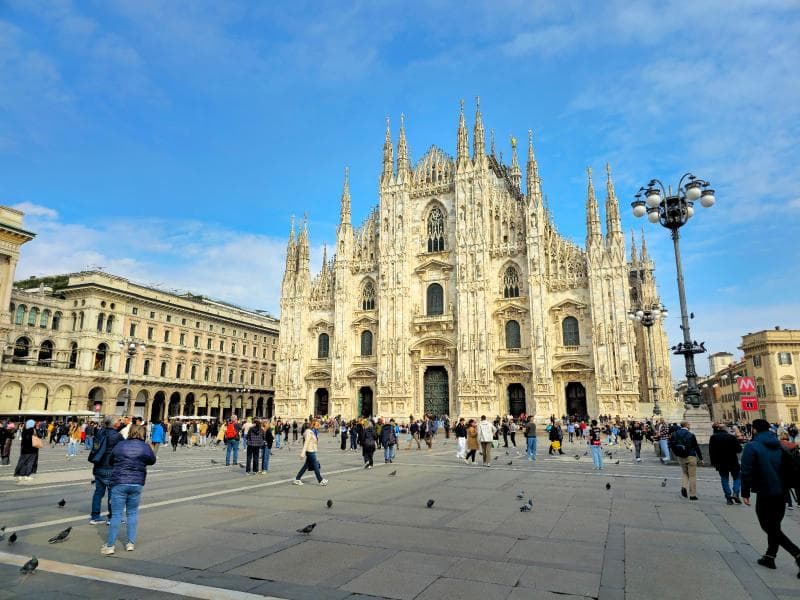
Uncover Milan's ancient past at the Duomo di Milano Archaeological Area. Explore Roman and early Christian ruins beneath the iconic Cathedral in Italy.
Overview
Beneath the magnificent Duomo di Milano lies a captivating journey through time: the Archaeological Area. This unique underground site offers a profound glimpse into Milan's ancient past, showcasing the remnants of religious structures that predate the current cathedral. It is a hidden treasure, a historical time capsule revealing the city's evolution from Roman times through the early Christian period and into the Middle Ages. Here, visitors can explore the foundations of the Basilica di Santa Tecla and the Baptistery of San Giovanni alle Fonti, experiencing the layers of history upon which modern Milan was built.
History & Cultural Background
The site where the Duomo di Milano now stands has been a place of continuous religious worship for nearly two millennia. Long before the Gothic cathedral began its construction in 1386, this area was home to significant Roman and early Christian buildings. The Archaeological Area uncovers the remains of two prominent basilicas: the Basilica di Santa Tecla and the Basilica di Santa Maria Maggiore. The Basilica di Santa Tecla, a large early Christian church, was established around 350 AD and served as Milan's summer cathedral for centuries. Alongside it stood Santa Maria Maggiore, known as the winter basilica.
Perhaps the most celebrated discovery within this underground complex is the Baptistery of San Giovanni alle Fonti. Built in 378 AD, this octagonal baptistery holds immense historical and religious significance. It was within its walls, in 387 AD, that Saint Ambrose famously baptized Saint Augustine, a pivotal moment in Christian history. The baptistery featured eight columns enclosing a large, octagonal baptismal pool, remnants of which are still visible today. In the 6th century, the baptistery was adorned with intricate mosaics, marble panels, and geometric black and white tile flooring, portions of which have been remarkably preserved. These earlier structures were eventually demolished or covered starting around 1386 to make way for the grand Duomo, preserving their foundations as a silent testament to Milan's deep historical roots.
What Makes It Special
The Archaeological Area beneath the Duomo is special because it offers a direct, tangible connection to Milan's earliest chapters. It is a rare opportunity to stand amidst the foundations of structures that witnessed the dawn of Christianity in the region and played a crucial role in its development. The site demonstrates an unbroken spiritual tradition spanning nearly two millennia, a claim few other places in Europe can make. Visitors can observe the impressive ground plan of the Basilica di Santa Tecla, along with remnants of enormous columns and liturgical furniture. The preserved mosaic floors and the octagonal baptismal pool of San Giovanni alle Fonti provide vivid insights into the artistic and architectural practices of late Roman and early Christian Milan. This juxtaposition of the towering Gothic cathedral above and the ancient ruins below creates a powerful sense of historical continuity and transformation.
Stories, Fun Facts & Local Details
One of the most compelling stories emanating from this site is that of Saint Ambrose and Saint Augustine. The act of Saint Ambrose baptizing Saint Augustine in the Baptistery of San Giovanni alle Fonti in 387 AD is a cornerstone of Christian history, making this area a sacred pilgrimage for many. The octagonal shape of the baptistery itself carries deep symbolism; the number eight, following the seven days of creation, represents the 'eighth day'—eternity and resurrection. The Archaeological Area was not widely known until its rediscovery in 1961 during excavation work for a new heating system, revealing layers of history that had been buried for centuries. It's a testament to Milan's character, a city that often hides its most profound historical treasures just beneath the surface, waiting to be rediscovered by curious eyes.
Visitor Perspective
Descending into the Archaeological Area is an immersive experience, often described as stepping into an 'Indiana Jones movie' or a historical time warp. The atmosphere is distinct, offering a quiet contrast to the bustling cathedral above. As you walk through the ancient foundations, you gain a unique perspective on the sheer scale of the historical layers that form Milan. Visitors can closely examine the ruins of the Basilica di Santa Tecla, picturing its immense size, and stand before the well-preserved baptismal pool of San Giovanni alle Fonti, imagining the momentous events that occurred there. You'll encounter ancient mosaic floors, Roman artifacts, and architectural remnants, all of which contribute to understanding Milan's transition from a Roman stronghold to an influential Christian center. Access to the Archaeological Area typically requires a combined ticket, often part of a Duomo complex pass. While the main cathedral is widely accessible, it's worth noting that due to the nature of the ruins, the archaeological area may have limited accessibility for wheelchair users. Comfortable shoes are recommended for exploring this fascinating subterranean world.
Coordinates: 9.191389, 45.464167
View on Google Maps💬 How Travelers Describe This Place
Based on community votes
Must See
923Unique
672Photogenic
539Interesting
369Beautiful
232
Traveler Stories
Discover memorable experiences shared by travelers who have visited this place.
No traveler stories yet.
Be the first traveler to share what made this place memorable.

Tour
By
Spot
Discover amazing places around the world. Your journey starts here.
Explore
© 2026 TourBySpot. All rights reserved.