Crypt of St. Charles
Milan, Italy
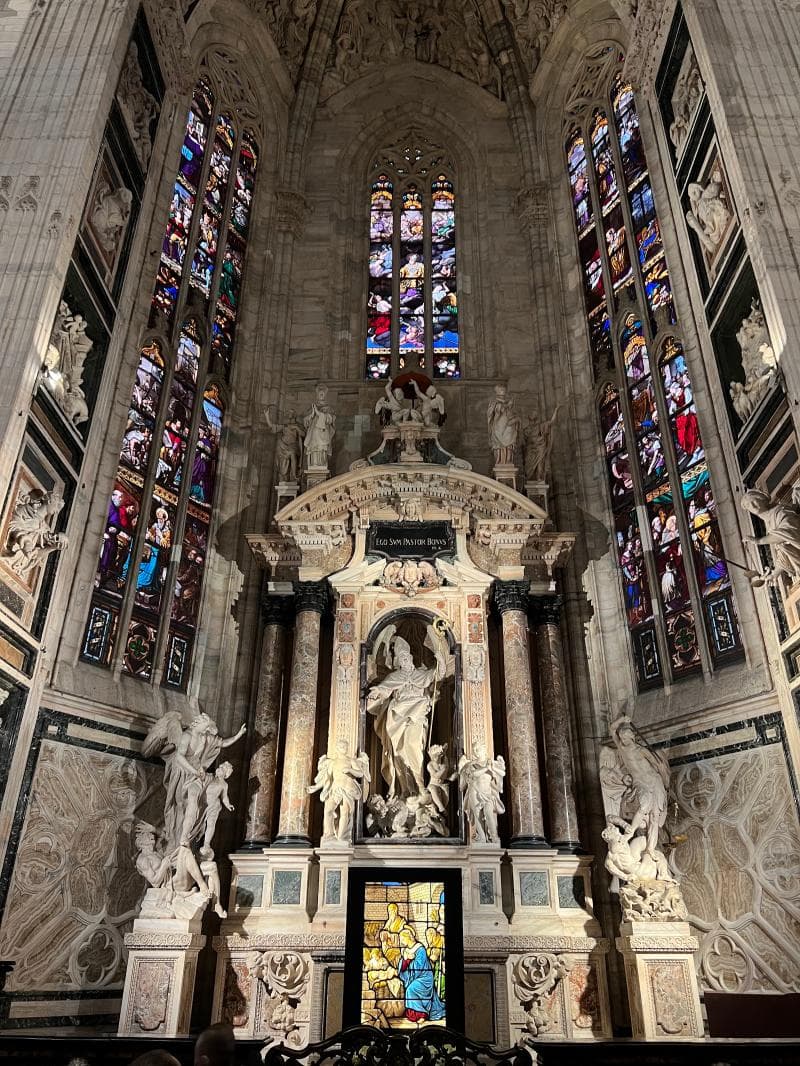
Explore the sacred Crypt of St. Charles inside Milan's Duomo, Italy. Discover the resting place and history of Saint Charles Borromeo.
Overview
Beneath the magnificent Duomo di Milano, a journey into profound spirituality awaits in the Crypt of St. Charles. This sacred space, also known as the 'Scurolo di San Carlo' or part of the larger 'Jemale Chapel', houses the revered remains of Saint Charles Borromeo, one of Milan's most influential archbishops. It is a quiet, contemplative area, a striking contrast to the grand scale of the cathedral above, yet equally rich in history and artistic detail. Visitors descend into this atmospheric crypt to pay homage to the saint and to experience a unique dimension of the Duomo's storied past.
The Crypt of St. Charles offers a rare glimpse into the underground layers of Milan's spiritual heritage. It is a key part of the monumental complex of the Duomo, deeply connected to the life and legacy of a figure central to the Counter-Reformation. Its design and precious contents make it a must-see for those seeking a deeper understanding of the Duomo's significance beyond its iconic facade.
History & Cultural Background
Saint Charles Borromeo, born in 1538, was a pivotal figure in the Catholic Church during the 16th century, serving as Archbishop of Milan from 1564 until his death in 1584. An aristocrat from the influential Medici family, he dedicated his life to reforming the Church, implementing the decrees of the Council of Trent, and establishing seminaries for clerical education. He was widely admired for his tireless work and compassion, particularly his heroic efforts during the plague in Milan in 1576, where he personally ministered to the sick and dying.
Following his death, Charles Borromeo was canonized by Pope Paul V in 1610, cementing his status as a saint. The crypt where his body now rests, the 'Scurolo di San Carlo', was specifically designed by Francesco Maria Richini in 1606, commissioned by Cardinal Federico Borromeo, to honor his beatified predecessor. This octagonal chapel was largely completed and decorated around the time of the saint's canonization, serving as a profound tribute from the Milanese community.
What Makes It Special
The Crypt of St. Charles is particularly special due to its exceptional artistic and spiritual value. Located directly beneath the Duomo's high altar, it is an intimate circular chamber. The space is adorned with eight blended-marble Tuscan columns and features a vaulted ceiling exquisitely embellished with stucco decorations and frescoes. These artworks depict powerful symbols of the Eucharist, the Passion of Christ, and angels, inviting deep contemplation.
At the heart of the crypt lies the crystal and silver urn, a masterpiece of Baroque artistry, containing the body of Saint Charles Borromeo, dressed in pontifical vestments. This precious reliquary was a gift from Philip IV of Spain, underscoring the international reverence for the saint. The elaborate embossed silver foil decorations, narrating episodes from St. Charles's life, took over fifty years to complete, reflecting the immense dedication to his memory. The flooring of red, black, and white marble, a reproduction of the original wooden floor, adds to the serene ambiance.
Stories, Fun Facts & Local Details
Legend has it that Saint Charles Borromeo held a deep personal connection to the underground spaces beneath the Duomo. He often chose this area for his private prayer, spending considerable time in meditation and contemplation, sometimes even entire nights. He referred to these crypts as the 'gymnasium of the Holy Spirit', highlighting his profound spiritual exercises within its walls.
The meticulous craftsmanship evident in the crypt's construction and decoration is a testament to the era's artistic prowess and the enduring devotion to St. Charles. The choice of rich materials like blended marble and the detailed stucco work transform the subterranean space into a beautiful sanctuary. The Crypt is not just a historical site; it's a place where the echo of centuries of prayer can almost be felt, offering a tangible link to Milan's spiritual past and one of its most cherished saints.
Visitor Perspective
Visiting the Crypt of St. Charles is an integral part of experiencing the full grandeur of the Duomo di Milano. Access to the crypt is typically included with combined tickets that cover the cathedral, archaeological area, and museum. It offers a moment of quiet reflection away from the bustling main nave of the cathedral. To enhance your visit, consider purchasing a ticket that explicitly includes access to the crypt. Remember to adhere to the dress code required for entry into the cathedral complex, ensuring shoulders and knees are covered as a sign of respect for this sacred site.
Coordinates: 9.1919264, 45.4642744
View on Google Maps💬 How Travelers Describe This Place
Based on community votes
Interesting
836Unique
620Must See
594Photogenic
522Beautiful
83
Traveler Stories
Discover memorable experiences shared by travelers who have visited this place.
No traveler stories yet.
Be the first traveler to share what made this place memorable.

Tour
By
Spot
Discover amazing places around the world. Your journey starts here.
Explore
© 2026 TourBySpot. All rights reserved.