Dublin Castle
Dublin, Ireland
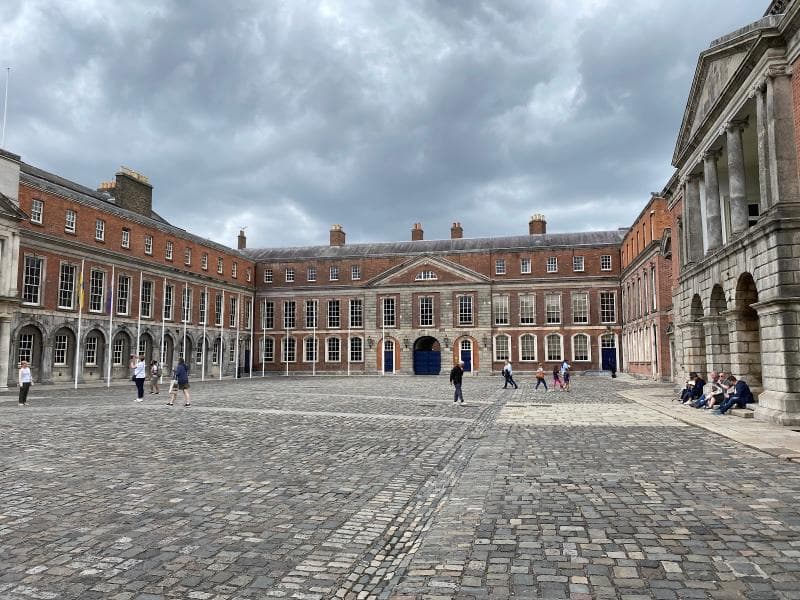
Explore Dublin Castle in Dublin, Ireland, a historic complex tracing 800 years of Irish history, from Norman fortress to Georgian palace and modern state ceremonial venue. Discover its past, State Apartments, and medieval foundations.
Overview
Dublin Castle, nestled in the heart of Dublin, Ireland, is a site steeped in over 800 years of history and cultural significance. More than just a castle, it has evolved from a formidable medieval fortress into a grand Georgian palace and now stands as a pivotal complex for the Irish government, a conference center, and a major tourist attraction. It serves as a living chronicle of Ireland's past, from its Norman origins to its role as the seat of British rule and finally, as a symbol of Irish independence. Visitors can explore layers of history, from Viking foundations to lavish State Apartments and serene gardens, offering a journey through the country's complex heritage.
History & Cultural Background
The story of Dublin Castle begins in 1204, when King John of England ordered its construction after the Norman invasion of Ireland. Built on a strategic elevated point that was formerly a Viking settlement, the castle was intended to defend the city, administer justice, and safeguard royal treasure. The site itself holds ancient roots; the city of Dublin takes its name from 'Dubh Linn,' the 'dark pool' located where the River Poddle met the River Liffey, now encompassed by the castle grounds. For over seven centuries, until Ireland's independence in 1922, Dublin Castle served as the administrative headquarters for English, and later British, rule in Ireland. It was the official residence of the Lord Lieutenant or Viceroy, the British monarch's representative, making it the nerve center of imperial power. A devastating fire in 1684 destroyed much of the medieval structure, leading to its extensive rebuilding in the Georgian style, transforming it into the stately palace largely seen today. Following the Anglo-Irish Treaty, a momentous handover occurred in 1922, marking the end of British administration and the beginning of the castle's new role as a facility for the independent Irish government.
What Makes It Special
What sets Dublin Castle apart is its multifaceted identity, embodying a unique blend of medieval resilience and Georgian grandeur. The castle complex is a captivating architectural fusion, where visitors can descend into the Medieval Undercroft to witness parts of the original 13th-century fortress, including remnants of the city walls and the flowing River Poddle. This offers a tangible connection to its Norman and even Viking past. Above ground, the magnificent State Apartments, once the opulent domain of the Viceregal Court, are now where Irish Presidents are inaugurated and state receptions are held, showcasing Ireland's modern sovereignty. The stunning Gothic Revival Chapel Royal, completed in 1814, with its intricate details, provides a stark yet harmonious contrast to the castle's older elements. Moreover, the presence of the renowned Chester Beatty Library, a museum of global art and manuscripts, adds an extraordinary cultural dimension, offering world-class collections within the castle's historic walls.
Stories, Fun Facts & Local Details
Dublin Castle is rich with captivating stories and local lore. One such tale recounts the symbolic handover in 1922, when Michael Collins, representing the new Irish Free State, was reportedly late. When the British viceroy quipped about his tardiness, Collins reputedly responded, 'We've been waiting 700 years, you can have the seven minutes.' This anecdote vividly captures the weight of history and the spirit of a newly independent nation. Another interesting detail is the Dubh Linn Gardens, located on the former 'dark pool' that gave Dublin its name. Here, patterns resembling sea serpents are artfully cut into the lawns, a nod to the area's Viking origins and the water features that once defended the castle. The castle was also a focal point during the Easter Rising in 1916 and witnessed the tragic events of Bloody Sunday in 1920 during the Anglo-Irish War. Today, beyond its historical weight, the castle continues to host various cultural events and even served as a backdrop for film and television productions.
Visitor Perspective
For the curious traveler, visiting Dublin Castle offers a profound journey through Irish history. The complex is generally open to the public, though it occasionally closes for state functions, particularly during significant government events like the EU Presidency. Visitors can choose between self-guided tours of the State Apartments or guided tours that provide access to the Medieval Undercroft and the Chapel Royal, offering a deeper dive into the castle's hidden layers. The State Apartments, with their grand staircase, Throne Room, and St. Patrick's Hall, provide a glimpse into the ceremonial heart of Ireland. Exploring the Undercroft allows one to literally walk through centuries of history, beneath the existing structures. The beautiful gardens offer a peaceful respite, while the Chester Beatty Library is a world-class attraction in its own right. It's advisable to check the official website for current opening times and tour availability, as guided tours are highly recommended for the most comprehensive experience.
Coordinates: -6.2675, 53.3429
View on Google Maps💬 How Travelers Describe This Place
Based on community votes
Photogenic
753Must See
747Beautiful
302Interesting
172Unique
79
Traveler Stories
Discover memorable experiences shared by travelers who have visited this place.
No traveler stories yet.
Be the first traveler to share what made this place memorable.
Things to see at Dublin Castle



Tour
By
Spot
Discover amazing places around the world. Your journey starts here.
Explore
© 2026 TourBySpot. All rights reserved.