Medieval Undercroft
Dublin, Ireland
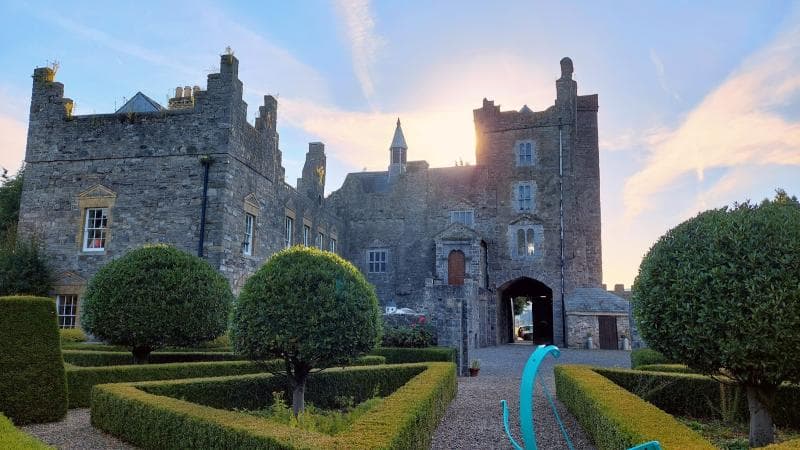
Explore the Medieval Undercroft at Dublin Castle, Dublin, Ireland, uncovering Viking foundations and Norman remnants deep beneath the city. Discover ancient history.
Overview
Deep beneath the grandeur of Dublin Castle, visitors can journey into the past through the remarkable Medieval Undercroft. This subterranean space offers a unique glimpse into the layered history of Dublin, revealing the ancient foundations upon which the modern city and castle stand. It is a place where Viking defenses meet Norman fortifications, providing a tangible connection to Dublin's very origins. The Undercroft houses archaeological excavations that showcase remnants of the earliest settlements, making it an essential destination for anyone seeking to understand the historical evolution of Ireland's capital.
History & Cultural Background
The story of the Medieval Undercroft begins long before the present Dublin Castle was built. The site itself is historically significant as the location of the 'Dubh Linn,' or 'Black Pool,' where the River Poddle met the River Liffey, giving Dublin its name. It was here, around the 10th century, that a prominent Viking settlement thrived, establishing the area as a crucial trading post. Evidence of these early inhabitants, including parts of their defense structures, can be explored within the Undercroft.
Following the Norman invasion of Ireland, King John of England ordered the construction of a formidable castle in 1204 to defend the city, administer justice, and safeguard royal treasures. This medieval fortress was largely completed by 1230, featuring a classic Norman courtyard design with thick defensive walls and corner towers. The Undercroft preserves elements of this Norman construction, such as the base of the 13th-century Powder Tower and sections of the medieval city wall. These remnants illustrate how the Norman builders incorporated and built upon the earlier Viking defenses, creating a continuous historical narrative visible to visitors today.
What Makes It Special
What truly sets the Medieval Undercroft apart is its ability to transport you through centuries of history, all within a single space. It is not merely a collection of ruins, but a dynamic archaeological site that vividly illustrates the continuous occupation and development of Dublin. Visitors can observe the preserved Viking defense bank, a stone-covered embankment that once protected the early settlement. Adjacent to this are the robust remains of the Norman Powder Tower, a testament to the castle's military past where gunpowder was once stored.
Furthermore, the Undercroft reveals a section of the medieval city wall, complete with a postern gate and steps that once led down to the castle's moat, fed by the River Poddle. Walking through these ancient passageways provides a profound sense of connection to the people who lived and worked within these walls hundreds of years ago. It offers a rare opportunity to witness the physical layers of history, from pre-Norman Dublin to the formidable medieval stronghold.
Stories, Fun Facts & Local Details
The very name 'Dublin' is derived from the 'Dubh Linn,' or 'Black Pool,' which was situated on the site now occupied by the castle's gardens. This dark pool served as a natural harbor for Viking longships and was crucial to the early settlement's strategic importance. The Undercroft offers a unique vantage point to understand this geographical genesis of the city. Imagine Viking traders and warriors navigating these waters, establishing the bustling port that would eventually become Dublin. The fact that the River Poddle still flows beneath the castle grounds today adds a fascinating, unseen dimension to the history you explore.
A significant detail for curious travelers is that the Medieval Undercroft, along with the Chapel Royal, is typically accessible only through a guided tour of Dublin Castle. This ensures that visitors receive expert commentary and historical context, enriching the experience significantly. These tours often weave together stories of the castle's various inhabitants, from Viking settlers and Norman lords to the British administration and finally the modern Irish government, bringing the stones and excavations to life with engaging narratives.
Visitor Perspective
A visit to the Medieval Undercroft is an immersive journey into Dublin's foundational past. Stepping down into the cool, atmospheric chambers, one can almost hear the echoes of centuries gone by. It's a striking contrast to the more opulent State Apartments above, offering a raw, authentic look at the castle's origins as a defensive fortification and Viking settlement. Many visitors find this part of Dublin Castle to be the most compelling, precisely because of its antiquity and the tangible connection it provides to the city's earliest days. The guided tour format ensures that every unearthed stone and ancient wall section is explained, transforming what might otherwise be just old ruins into a vibrant historical lesson. It's an unforgettable experience that deepens one's appreciation for Dublin's enduring heritage.
Coordinates: -6.2674, 53.3431
View on Google Maps💬 How Travelers Describe This Place
Based on community votes
Interesting
965Must See
862Photogenic
629Beautiful
443Unique
184
Traveler Stories
Discover memorable experiences shared by travelers who have visited this place.
No traveler stories yet.
Be the first traveler to share what made this place memorable.

Tour
By
Spot
Discover amazing places around the world. Your journey starts here.
Explore
© 2026 TourBySpot. All rights reserved.