Dubh Linn Gardens
Dublin, Ireland
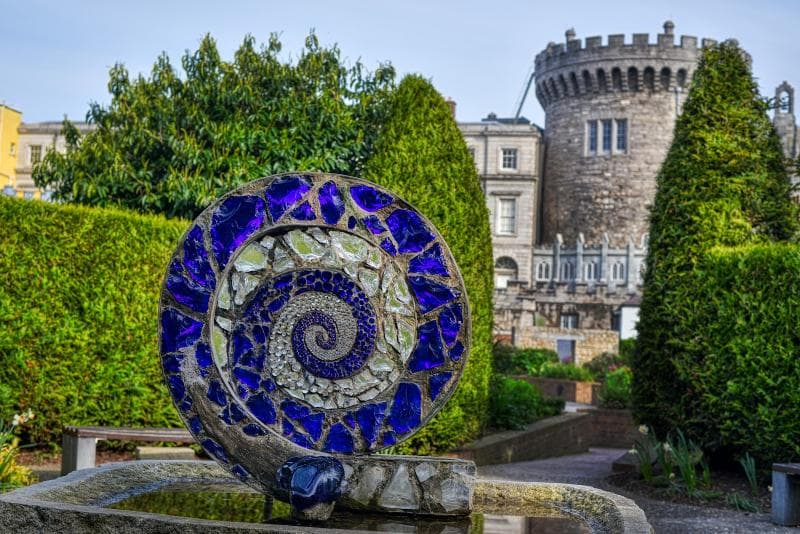
Explore Dubh Linn Gardens, the historic 'black pool' that gave Dublin, Ireland its name. Discover its Viking past, Celtic designs, and serene memorials.
Overview
Tucked away behind the majestic Dublin Castle, the Dubh Linn Gardens offer a tranquil escape in the heart of Ireland's bustling capital. This seemingly peaceful green space holds a profound historical significance, for it is here, on the site of an ancient 'black pool' or 'Dubh Linn', that Dublin itself gets its name. More than just a garden, it is a living testament to the city's origins, a serene landscape woven with layers of Viking, Norman, and Irish history.
The gardens are characterised by their distinctive design, featuring a central circular lawn adorned with intricate patterns, often described as sea serpents or Celtic knots, surrounded by smaller, themed gardens. It's a place where visitors can wander, reflect, and connect with Dublin's deep past, all while enjoying beautifully maintained greenery and thoughtful sculptures.
History & Cultural Background
The story of Dubh Linn Gardens begins long before any formal landscaping. In ancient times, the River Poddle, a tributary of the Liffey, broadened into a dark, tidal pool at this very spot. This sheltered inlet became known as 'Dubh Linn', meaning 'black pool' in Old Irish. It was a crucial natural harbour that attracted Viking settlers in the 9th century, who established a trading post and moored their ships here, eventually giving the burgeoning settlement its enduring name.
As centuries passed, the area evolved. Following the Norman invasion, Dublin Castle was constructed directly above the former Viking harbour, and the River Poddle was eventually channelled underground. The site remained largely utilitarian for a long period, serving various functions such as stables or a parade ground. However, records indicate that a formal garden was first laid out here in 1633 by Lord Deputy Sir Thomas Wentworth. The present-day layout, with its iconic circular lawn and Celtic motifs, was developed in more recent times, with significant work undertaken in the late 20th century and unveiled around the year 2000, partly in preparation for Ireland's Presidency of the European Union.
What Makes It Special
What makes Dubh Linn Gardens truly special is its unique blend of ancient history and thoughtful contemporary design. The central lawn, sculpted with mesmerising patterns resembling sea serpents or intricate Celtic knots, serves as a powerful visual link to Ireland's rich heritage and the Viking origins of Dublin. This green expanse also cleverly serves a modern purpose, doubling as a discreet helicopter landing pad for state visits, a testament to its ongoing significance.
Around the perimeter of the main garden lie four smaller, distinct gardens, sometimes referred to as 'four seasons' gardens. These spaces are not merely decorative; they house specially commissioned sculptures and serve as poignant memorial gardens. Notable among them are tributes to investigative journalist Veronica Guerin, the thousands of volunteers of the 2003 Special Olympics, and the Gardaí (Irish Police) Memorial Garden, honouring those who lost their lives in the line of duty. The elegant wrought-iron gates, adorned with Celtic spirals, provide a fitting entrance, hinting at the cultural depth within.
Stories, Fun Facts & Local Details
Imagine standing where Viking longboats once docked, their crews establishing a new life that would eventually give birth to a vibrant city. The very ground beneath your feet holds echoes of that bustling, early settlement. A fascinating detail is how the garden’s design subtly incorporates these historical layers; the circular shape of the central lawn can be seen as a nod to ancient Irish ringforts, while the flowing patterns evoke the tidal waters that once defined the 'black pool'.
While the name 'Dubh Linn' is commonly translated as 'black pool', some placename specialists suggest that 'dubh' might also have carried the sense of 'deep' in this context, hinting at the profound depths of the ancient tidal basin. It's also interesting to note that Dublin has another, equally ancient Irish name, 'Baile Átha Cliath', meaning 'Town of the Hurdle Ford', which refers to a different crossing point on the River Liffey, highlighting the city's complex early geography.
Visitor Perspective
Stepping into Dubh Linn Gardens offers a noticeable shift in atmosphere from the surrounding city. The gentle rustling of leaves and birdsong replace the urban hum, inviting visitors to slow down and embrace a moment of calm. It is an ideal spot for a leisurely stroll, a quiet contemplation on a bench, or even a peaceful picnic on a sunny day. The open, manicured lawns and artistic touches provide a refreshing contrast to the sturdy stone architecture of Dublin Castle itself, making it a perfect spot to unwind after exploring the castle's interior.
The gardens are thoughtfully laid out, with circular paths guiding you through lush greenery and past the various sculptures. Many find the symmetrical design and the contrast between the vibrant green and the historic grey walls to be particularly captivating, offering excellent opportunities for photography. Whether you're a history enthusiast, a nature lover, or simply seeking a serene retreat, Dubh Linn Gardens provides a delightful and enriching experience, connecting you intimately with Dublin's foundational past.
Coordinates: -6.2675, 53.3429
View on Google Maps💬 How Travelers Describe This Place
Based on community votes
Unique
894Interesting
862Photogenic
443Beautiful
304Must See
35
Traveler Stories
Discover memorable experiences shared by travelers who have visited this place.
No traveler stories yet.
Be the first traveler to share what made this place memorable.

Tour
By
Spot
Discover amazing places around the world. Your journey starts here.
Explore
© 2026 TourBySpot. All rights reserved.