State Apartments
Dublin, Ireland
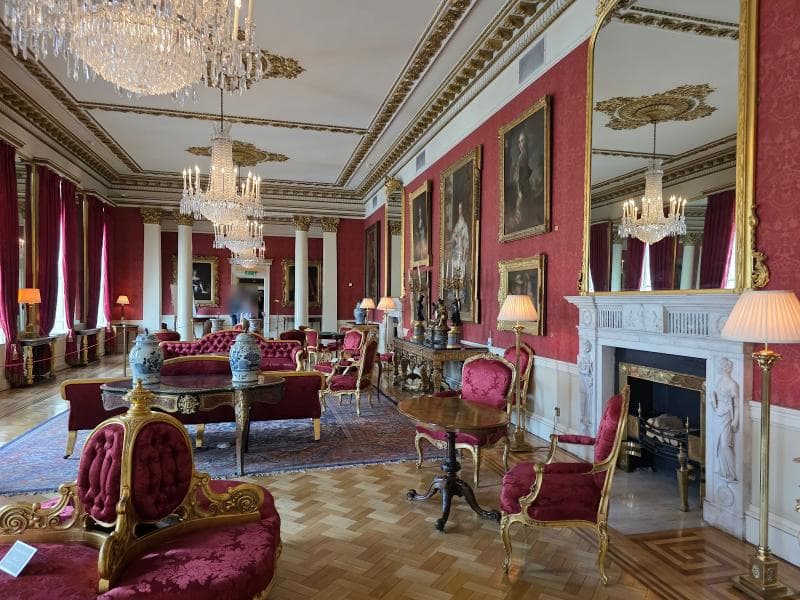
Discover the historic State Apartments in Dublin Castle, Ireland. Explore lavish rooms, Irish history, and cultural significance.
Overview
Step into the grandeur of Ireland's past by exploring the State Apartments within Dublin Castle, nestled in the heart of Dublin city. These magnificent rooms, once the residential and public quarters of the British Viceregal Court, now serve as a pivotal site for modern Irish state ceremonies. They offer a unique glimpse into centuries of political power, social life, and architectural evolution in Ireland. From presidential inaugurations to prestigious state functions, the State Apartments continue to witness significant moments in the nation's history, bridging the gap between a colonial past and a sovereign present.
Situated in the south range of the Upper Courtyard, these elaborately decorated spaces showcase a rich collection of art, furniture, and historical artifacts. Visitors can wander through the State Corridor, marvel at the Grand Staircase, and imagine the lavish balls and receptions that once filled St. Patrick's Hall. The apartments tell a compelling story, not just through their opulent decor, but through the pivotal historical events that unfolded within their walls, making them a must-visit for anyone seeking to understand Ireland's complex heritage.
History & Cultural Background
Dublin Castle, established in the early thirteenth century on a former Viking settlement, stood for centuries as the epicenter of English and later British rule in Ireland. After a devastating fire in 1684 destroyed much of the medieval structure, the castle underwent a significant transformation, evolving from a defensive fortress into a Georgian palace. It was during this rebuilding phase in the late seventeenth and eighteenth centuries that the spectacular State Apartments were constructed.
These apartments became the official residence of the Viceroy, the British monarch's representative, and the focal point for high society during the annual 'Castle Season'. This period was marked by extravagant balls, banquets, and ceremonial events that defined the social calendar for the Irish aristocracy. A particularly poignant moment in Irish history occurred in the Privy Council Chamber on January 16, 1922, when Dublin Castle was formally handed over from the last Viceroy to Michael Collins and the new government of the Irish Free State, marking a symbolic end to centuries of British administration.
What Makes It Special
The State Apartments are special due to their dual role as both a historical relic and a living monument of Irish sovereignty. They are not merely preserved rooms; they are active venues for Ireland's presidential inaugurations, EU presidencies, and the reception of foreign dignitaries. This continuous use imbues the spaces with a palpable sense of ongoing national significance. The Grand Staircase, dating back to 1749, is a remarkable example of imperial design and has been part of the ceremonial route for every Irish presidential inauguration since 1938.
St. Patrick's Hall, the grandest room, once served as the ballroom and features an impressive painted ceiling and flags representing the Knights of St. Patrick. It's here that presidents are inaugurated, and significant state events unfold. The State Drawing Room, created in 1838, has hosted queens and today displays a significant portrait by Sir Anthony Van Dyck. Another unique feature is the Apollo Room, which houses a stunning 1746 ceiling rescued from another Georgian townhouse and meticulously reassembled, showcasing incredible eighteenth-century craftsmanship.
Stories, Fun Facts & Local Details
Imagine the elaborate 'Castle Season' that once took place here, where debutantes and aristocrats in their finest court dress ascended the Grand Staircase, eager to attend the Viceroy's balls and dinners. The State Drawing Room, despite its elegance, has a complex architectural history, undergoing remodelling and even partial destruction and reconstruction after a 1941 fire. The original decoration, including cornices and capitals, was made from papier-mâché, faithfully reproduced in plaster during its 1960s restoration.
A lesser-known room, the Connolly Room, is named after James Connolly, a leader of the 1916 Rising. Wounded during the rebellion, he was brought to Dublin Castle's military hospital and nursed there before his court-martial and execution. This room, with its mid-18th-century joinery, serves as a quiet, powerful reminder of Ireland's fight for independence. Throughout the apartments, you'll encounter a rich collection of art, from portraits of past Viceroys to works by Dutch and Flemish masters, and even the 1916 Proclamation.
Visitor Perspective
Exploring the State Apartments offers a fascinating journey through Irish history and culture. Visitors can choose between self-guided or guided tours, allowing them to delve into the intricate details of each room at their own pace or with the insights of an expert. Brochures are available in multiple languages, enhancing the experience for international guests. It's recommended to budget approximately one hour for a guided tour and 30-45 minutes for a self-guided visit.
Important Visitor Notice: Please be aware that Dublin Castle, including the State Apartments, is currently closed to the public from May 5, 2026, until December 31, 2026. This closure is to facilitate Ireland's Presidency of the Council of the European Union, during which the castle will host numerous official events. Public tours are expected to resume in January 2027. When open, it's advisable to book tickets online in advance, especially during peak seasons, and to check the official Dublin Castle website for any unscheduled closures due to state functions. Photography is permitted for personal use, though flash is not allowed in the State Apartments due to light-sensitive collections.
Coordinates: -6.2675, 53.3429
View on Google Maps💬 How Travelers Describe This Place
Based on community votes
Unique
981Beautiful
795Must See
753Photogenic
439Interesting
66
Traveler Stories
Discover memorable experiences shared by travelers who have visited this place.
No traveler stories yet.
Be the first traveler to share what made this place memorable.

Tour
By
Spot
Discover amazing places around the world. Your journey starts here.
Explore
© 2026 TourBySpot. All rights reserved.