Chapel Royal
Dublin, Ireland
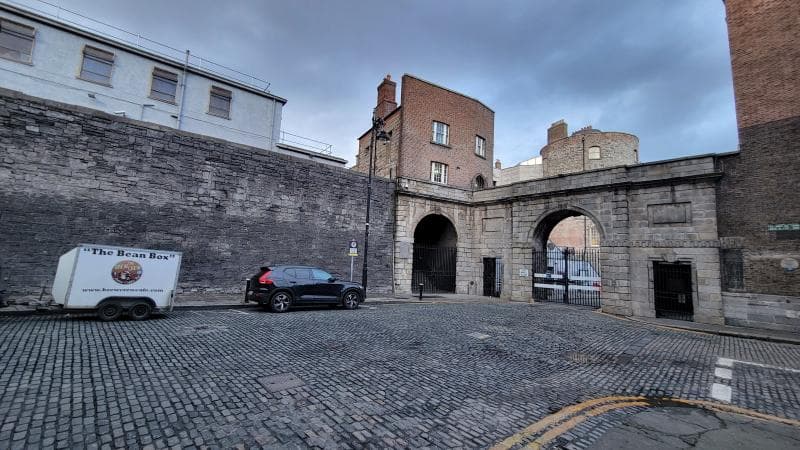
Explore the exquisite Chapel Royal within Dublin Castle, Dublin, Ireland. Discover its Gothic Revival architecture, rich history, and unique carvings.
Overview
Nestled within the historic walls of Dublin Castle in Dublin, Ireland, lies the captivating Chapel Royal. This magnificent 19th-century Gothic Revival structure stands as a testament to architectural ambition and historical change. Designed by the renowned architect Francis Johnston, it was originally consecrated on Christmas Day in 1814 as the Anglican chapel for the Lord Lieutenant of Ireland, the British monarch's representative. While no longer consecrated for worship, its breathtaking interiors and intricate details continue to draw visitors, offering a glimpse into a pivotal period of Irish history.
History & Cultural Background
The site of a chapel within Dublin Castle dates back as far as 1242, indicating a long spiritual tradition on these grounds. However, the present-day Chapel Royal replaced an earlier, less distinguished chapel which suffered from structural issues due to being built on soft ground. The construction of the current chapel began in 1807, a direct consequence of the Act of Union of 1801, which sought to solidify British administrative presence in Ireland. The design by Francis Johnston was intended to be a lavish and impressive edifice, symbolizing the confidence and grandeur of the British administration. It quickly became a central focus for the spiritual and social life of successive Viceroys, hosting regular Anglican worship and witnessing grand state ceremonies. The chapel earned its familiar name, the Chapel Royal, after King George IV attended a service there on 2 September 1821.
The course of history dramatically altered the chapel's role. Following Ireland's independence in 1922, the chapel lay dormant after the dissolution of the viceregal court. In 1943, it was reconsecrated and reopened as a Roman Catholic church, rededicated as the Church of the Most Holy Trinity, serving as a garrison church for the Irish Defence Forces. However, increasing structural problems led to its closure in 1983. Extensive restoration work took place between 1983 and 1990, allowing the building to be reopened for public appreciation, though it has not been used for regular worship since.
What Makes It Special
The Chapel Royal is celebrated as one of the finest examples of Gothic Revival architecture in Ireland, both inside and out. Its exterior, though described by Johnston himself as 'plain and simple' in comparison to the interior, is adorned with remarkable details. Over 90 intricately carved heads, fashioned from Tullamore limestone by father and son sculptors Edward and John Smyth, grace the facade. These carvings depict a diverse array of figures, including Irish historical icons such as Brian Boru and St. Patrick, as well as archbishops, kings, queens, and even 'grotesques,' offering a fascinating iconographical programme that attempts to link the then-new Church of Ireland with ancient Irish Christianity. A striking carved Celtic cross also sits prominently on the eastern gable.
Stepping inside, visitors are immediately struck by a 'captivating confection' of Gothic fan vaulting, virtuoso plaster ornamentation, and heraldic stained glass. The interior, which appears to be crafted from creamy Caen stone, is cleverly constructed from a timber frame with painted plaster, giving the illusion of solid stone while minimizing weight on the soft ground beneath. The galleries are particularly notable, boasting the carved coats of arms of every Lord Lieutenant who served in Ireland from 1172 to 1922. The east window, dating from 1815, features central panels believed to be of northern European medieval origin, a gift from Viceroy Charles Whitworth.
Stories, Fun Facts & Local Details
The construction of the Chapel Royal was a monumental undertaking, both in design and cost. Initially estimated at under £10,000, the final expenses soared to over £50,000, a colossal sum for its era, making it as expensive to build as Johnston's much larger General Post Office. This lavish expenditure highlights the importance placed on the chapel as a symbol of British authority. An interesting detail lies in the heraldic stained glass and carved wooden panels; the arms of the very last Viceroy, Lord FitzAlan Howard, installed in 1922, precisely filled the final available space, a symbolic closing of a long chapter in Irish history. The chapel's unique and ornate interior has also caught the eye of filmmakers, featuring as a backdrop in the popular television series 'The Tudors.'
Visitor Perspective
Today, the Chapel Royal stands as a cultural and historical jewel within Dublin Castle, inviting curious travelers to explore its rich heritage. It is accessible to visitors as part of guided tours of Dublin Castle, which are highly recommended for an in-depth understanding of the site. The chapel's stunning interiors and remarkable acoustics also make it a sought-after venue for concerts and other special events. All areas within the Chapel Royal are universally accessible, ensuring that everyone can experience the grandeur and intricate details of this architectural masterpiece.
Coordinates: -6.2675, 53.3429
View on Google Maps💬 How Travelers Describe This Place
Based on community votes
Unique
946Beautiful
439Interesting
92Must See
66Photogenic
66
Traveler Stories
Discover memorable experiences shared by travelers who have visited this place.
No traveler stories yet.
Be the first traveler to share what made this place memorable.

Tour
By
Spot
Discover amazing places around the world. Your journey starts here.
Explore
© 2026 TourBySpot. All rights reserved.