Deutsches Museum
Munich, Germany
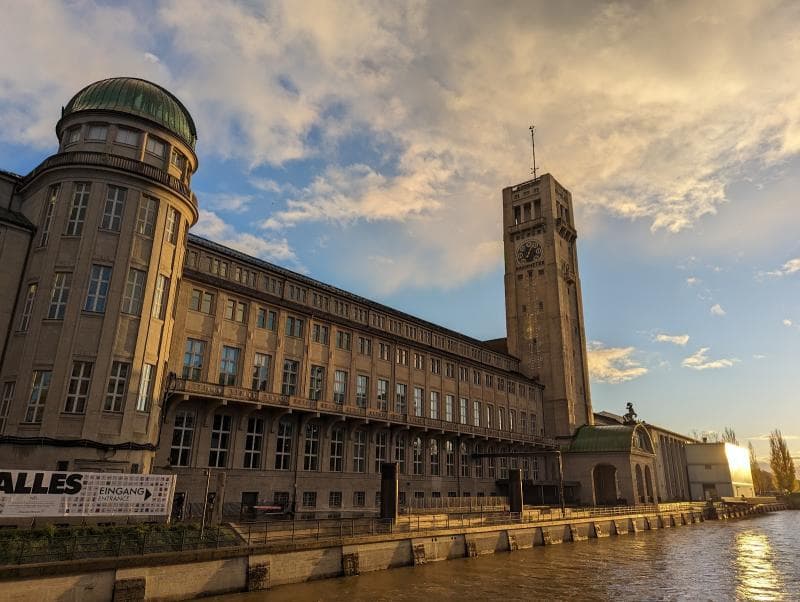
Explore the Deutsches Museum in Munich, Germany, one of the world's largest science and technology museums, featuring interactive exhibits, historic artifacts, and captivating demonstrations. Discover human ingenuity in diverse fields.
Overview
The Deutsches Museum in Munich, Germany, stands as a monumental tribute to human ingenuity, recognized globally as one of the largest and most significant museums of science and technology. Annually, approximately 1.5 million visitors flock to its exhibitions, immersing themselves in a world where scientific principles and technological advancements come to life. Located on the picturesque Museumsinsel (Museum Island) in the Isar River, the museum offers a vast collection spanning over 50 fields of science and technology. While its entire collection boasts more than 125,000 objects, about 7,000 to 25,000 are typically on display at its main location and various branches, inviting curious minds to explore everything from atomic physics to aeronautics. The museum is not merely a static display; it is a dynamic learning environment where interactive exhibits encourage visitors to engage directly with the wonders of science and engineering.
History & Cultural Background
The vision for the Deutsches Museum was brought to life by Oskar von Miller, a pioneering engineer in electrical engineering, who initiated its founding on June 28, 1903. His ambition was to establish a place that offered a comprehensive overview of science and technology, employing playful and experimental approaches to make complex subjects accessible. The city of Munich supported this grand endeavor by donating the 'Kohleninsel' (Coal Island) in the Isar River, which was subsequently renamed Museumsinsel, to house the museum. Construction commenced in 1906, but it wasn't until 1925 that the main exhibition building on Museum Island officially opened its doors, marking the realization of Miller's dream. Originally named the 'German Museum for Masterpieces of Natural Science and Technology,' its purpose was to highlight the importance of science and technology, not exclusively German achievements. The museum's innovative approach and organizational structure became a model for other prominent science museums worldwide, including the Museum of Science and Industry in Chicago. Though some valuable collections faced destruction during World War II, they were meticulously replaced, demonstrating the museum's resilience and commitment to its mission. Starting in the 1990s, the Deutsches Museum expanded its reach by opening several branch locations, further cementing its role as a leading institution.
What Makes It Special
What truly sets the Deutsches Museum apart is its unparalleled collection and its commitment to interactive learning. As the world's largest museum of its kind, it houses an extraordinary array of original masterpieces that chronicle scientific and technological progress. Visitors can marvel at Karl Benz's first gasoline-powered automobile from 1886, witness a prototype of the diesel engine, explore the U1 submarine, or view early examples of aircraft, including a reconstruction of the Wright Brothers' first powered airplane. The museum famously features a Foucault's pendulum, allowing visitors to observe the Earth's rotation in real-time, and a laboratory setup that demonstrates the splitting of the atom. Interaction is at the heart of the experience; many exhibits are designed for hands-on engagement, encouraging visitors to press buttons, turn levers, and participate in live demonstrations, such as the creation of artificial lightning or engaging chemistry shows. Beyond the main site, the museum's other locations, like the Verkehrszentrum (Transport Museum) in Munich, the Flugwerft Schleißheim (aviation museum), the Deutsches Museum Bonn focusing on contemporary research and AI, and the Deutsches Museum Nürnberg, or 'Future Museum,' which explores technological impact on society, offer specialized insights into various fields. Additionally, the Deutsches Museum is home to Germany's largest museum library and a premier archive dedicated to the history of science and technology.
Stories, Fun Facts & Local Details
The island on which the main museum stands, Museumsinsel, holds a fascinating history, once known as 'Kohleninsel' or Coal Island. For centuries, it served as a hub for rafting wood and coal, a testament to its industrial past before becoming a beacon of scientific enlightenment. Oskar von Miller, the museum's founder, wasn't just a visionary; he was instrumental in developing Bavaria's electricity supply, connecting his practical engineering prowess with his dream of scientific education. A spectacular parade accompanied the museum's official opening in 1925, with floats vividly depicting various technical disciplines and the four classical elements, transforming Munich's city center into a celebratory tableau of human innovation. The museum's design ethos is to demystify science, presenting complex concepts in such an engaging and clear manner that even young children can grasp them. For its youngest explorers aged three to eight, there's a dedicated 'Kids' Kingdom' featuring interactive stations like a giant guitar and an indoor playground, ensuring that learning is always fun. The museum's tower is not merely architectural; it houses a modern weather station and holds the distinction of having Germany's largest thermometer. Hidden behind the scenes are the museum's workshops, where skilled artisans meticulously craft unique dioramas and restore precious exhibits, bringing history back to life.
Visitor Perspective
A visit to the Deutsches Museum is an immersive journey that demands time and an open mind. Many visitors find it challenging to explore all its vast halls and diverse exhibitions in a single day, often suggesting that a deep dive into specific collections might require multiple visits. The museum operates daily from 9:00 to 17:00, though it's always wise to check their official website for holiday closures. Planning your visit in advance, especially if you have particular areas of interest, is highly recommended to make the most of your experience. Ongoing renovations mean some areas may be temporarily inaccessible, but new and exciting exhibitions are continually opening, offering fresh perspectives on science and technology. Accessibility is a priority, with provisions for disabled visitors and those with limited mobility. The museum is conveniently reachable via public transportation, with S-Bahn and tram stops nearby. Beyond the exhibitions, a museum shop offers a range of souvenirs and educational items, and a café provides a spot for refreshment, ensuring a comfortable and enriching visit for everyone.
Coordinates: 11.5830498, 48.1295845
View on Google Maps💬 How Travelers Describe This Place
Based on community votes
Unique
995Photogenic
839Beautiful
603Must See
581Interesting
388
Traveler Stories
Discover memorable experiences shared by travelers who have visited this place.
No traveler stories yet.
Be the first traveler to share what made this place memorable.
Things to see at Deutsches Museum



Tour
By
Spot
Discover amazing places around the world. Your journey starts here.
Explore
© 2026 TourBySpot. All rights reserved.