Space Exploration
Munich, Germany
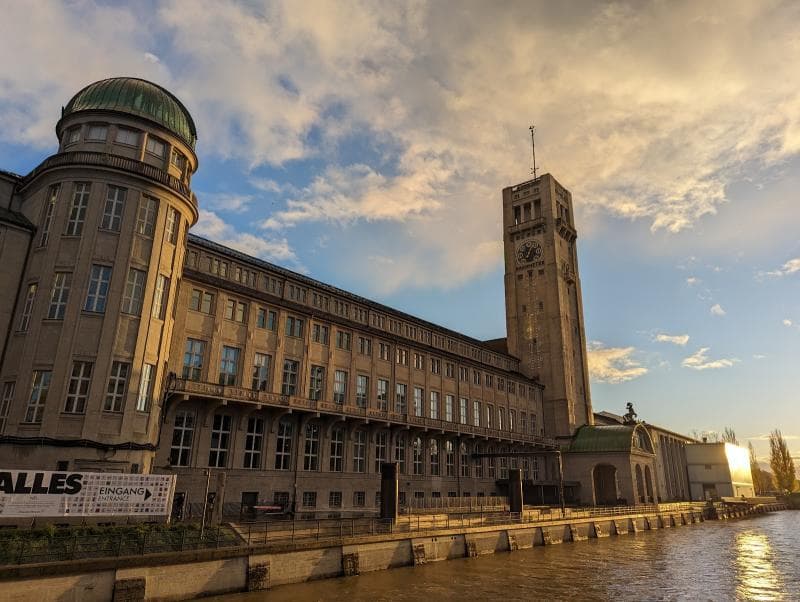
Discover the wonders of space exploration at Munich's Deutsches Museum, Germany. Journey through spaceflight history with rockets, satellites, and interactive exhibits.
Overview
Deep within the sprawling Deutsches Museum in Munich, Germany, lies a captivating realm dedicated to humanity's enduring fascination with the cosmos: the Space Exploration exhibit. This extensive permanent exhibition, known in German as 'Raumfahrt', invites visitors on an immersive journey through the history and future of space travel. Reopened in July 2022 following a significant modernization of the museum, it offers a refreshed and engaging perspective on our ventures beyond Earth's atmosphere.
Situated on Level 2 of the main museum building, the Space Exploration exhibit spans an impressive 1125 square meters, making it a substantial area for discovery. Here, approximately 290 carefully curated exhibits and models narrate the story of how our understanding and capabilities for venturing into space have evolved. From the earliest dreams of flight to the complex realities of orbital mechanics and interplanetary probes, the exhibit unfolds chronologically, mirroring humanity's gradual ascent into the stars.
History & Cultural Background
The human gaze has been directed skyward since time immemorial, fueled by curiosity and wonder about the universe. While this fascination is ancient, the actual technical discipline of space travel is remarkably young. The Deutsches Museum itself, founded in 1903 by Oskar von Miller, was established with the vision of making scientific and technological achievements accessible to the public, a mission perfectly embodied by its Space Exploration section.
The exhibit effectively demonstrates that the knowledge, means, and skills required to overcome Earth's gravitational pull have only been developed over recent decades. It highlights the pioneering minds and groundbreaking innovations that transformed ambitious ideas into tangible realities. Among these are the initial forays into rocket technology, tracing the path from rudimentary concepts to advanced propulsion systems. The collection illustrates how a blend of scientific inquiry, engineering prowess, and sheer human will paved the way for spacecraft, satellites, and ultimately, human presence in space.
What Makes It Special
What truly sets the Space Exploration exhibit apart is its commitment to an interactive and experiential approach. It's not merely a collection of artifacts; it's designed as a 'journey into space' that visitors can actively participate in. The narrative begins with an overview of our solar system and progresses through the development of rocket engines, manned spaceflight including space laboratories, and then moves on to satellites and probes, concluding with remote sensing.
The exhibit boasts a rich array of key artifacts and engaging stations. Visitors can marvel at the historic Rak.7 rocket car and sled, an early experimental vehicle from 1930 used by rocket pioneer Max Valier for test drives on the frozen Starnberger See. A Viking IV rocket engine provides insight into propulsion technology, while segments of a Spacelab module offer a glimpse into life aboard a space laboratory. Interactive displays allow for direct engagement, such as launching a miniature rocket with compressed air, demonstrating fundamental physical principles. A virtual lift simulates the ascent through Earth's atmosphere, complete with atmospheric effects like temperature and pressure changes, offering a unique sensory experience.
Stories, Fun Facts & Local Details
One of the most intriguing pieces in the collection is the Rak.7 rocket car, a testament to Max Valier's audacious experiments in the late 1920s and early 1930s. Valier, a true visionary, was among the first to test liquid-propellant rocket engines, and his rocket vehicles are among the oldest exhibits in the collection. These early, sometimes perilous, endeavors underscore the courage and innovative spirit that defined the dawn of space exploration. Imagine the spectacle of a rocket-powered car speeding across a frozen lake in 1930!
The exhibit's meticulous design ensures that the story of spaceflight is told not just through grand achievements, but also through the smaller, fascinating details. The inclusion of the Syncom and ASTRO-SPAS satellites highlights the crucial role these orbital instruments play in communication, weather forecasting, and scientific research in our daily lives. The exhibit underscores how thousands of satellites now orbit Earth, forming an invisible network that underpins much of modern society.
Visitor Perspective
For any curious traveler, the Space Exploration exhibit is an awe-inspiring destination. It’s an opportunity to connect with the human story of ambition and discovery, from the first tentative steps in rocketry to the continuous presence of humans in orbit. The chronological layout ensures a clear understanding of the progression of space technology, making complex scientific concepts accessible and exciting.
With five interactive demonstrations, 19 media stations, and three detailed dioramas, the experience is rich and varied, catering to different learning styles and age groups. Children and adults alike can be captivated by the scale models, the impressive real components, and the chance to interact with the exhibits. As one progresses through the hall, the narrative builds, leading visitors through the exciting evolution of humanity's journey into the infinite expanses, fostering a deeper appreciation for the ingenuity and dedication behind space exploration. It's an inspiring reminder that 'nothing is impossible in the world, you just have to discover the means by which it can be done,' a quote attributed to rocket pioneer Hermann Oberth, prominently featured by the museum.
Coordinates: 11.5834522, 48.1298707
View on Google Maps💬 How Travelers Describe This Place
Based on community votes
Photogenic
446Unique
152Interesting
33Must See
30Beautiful
16
Traveler Stories
Discover memorable experiences shared by travelers who have visited this place.
No traveler stories yet.
Be the first traveler to share what made this place memorable.

Tour
By
Spot
Discover amazing places around the world. Your journey starts here.
Explore
© 2026 TourBySpot. All rights reserved.