Physics Demonstrations
Munich, Germany
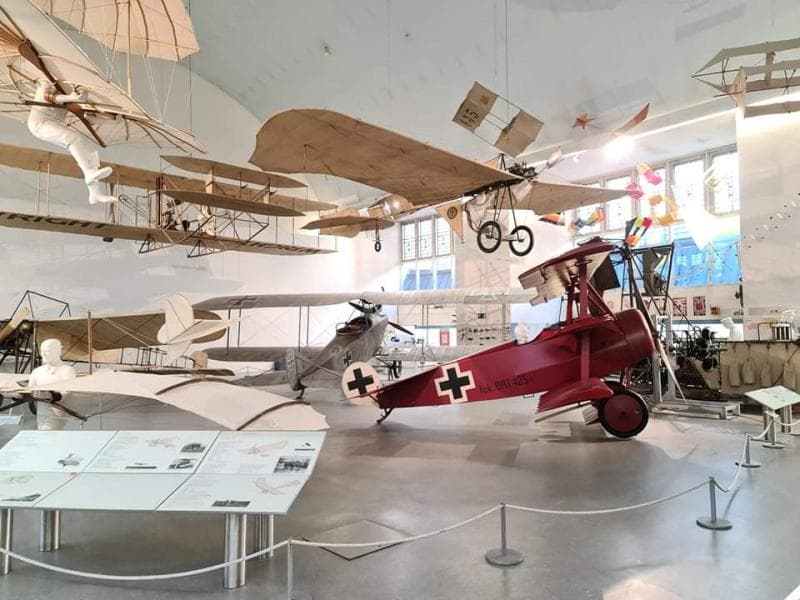
Discover the exciting Physics Demonstrations at Deutsches Museum in Munich, Germany. Experience live experiments that bring scientific principles to life.
Overview
Deep within the revered Deutsches Museum in Munich, Germany, visitors encounter the captivating world of Physics Demonstrations. These are not merely static displays but dynamic, live experiments that transform abstract scientific principles into tangible, awe-inspiring experiences. Far from a dusty textbook, these demonstrations bring the laws of physics to life with flair and precision, making complex concepts accessible and engaging for all ages. From the chilling effects of liquid nitrogen to the spectacular force of electricity, the demonstrations offer a unique window into how our world works.
The Deutsches Museum is renowned globally for its interactive approach to science and technology, and its Physics Demonstrations stand as a testament to this philosophy. They are designed to spark curiosity and wonder, presenting topics from classical mechanics to modern quantum phenomena in an unforgettable format. These shows are a highlight for many, promising both entertainment and profound educational value for every curious traveler.
History & Cultural Background
The Deutsches Museum, founded in 1903 by Oskar von Miller, was established with a revolutionary vision: to make science and technology comprehensible to the general public through hands-on engagement. This pioneering ethos directly underpins the Physics Demonstrations. Early public demonstrations of scientific phenomena were crucial in popularizing science, transforming scientific discovery from an elite pursuit into a subject of widespread public fascination.
Historically, the museum has championed the idea that visitors should not just observe but actively interact with the exhibits. This commitment to experiential learning has ensured that live demonstrations remain a cornerstone of its educational program. The museum itself houses an extensive collection of original equipment, providing a rich historical backdrop to the principles being demonstrated, bridging the past and present of scientific inquiry.
What Makes It Special
What sets the Physics Demonstrations apart is their exceptional ability to blend spectacle with solid scientific explanation. Unlike many museums where 'don't touch' is the unspoken rule, the Deutsches Museum actively encourages discovery through participation and observation of live experiments.
These demonstrations tackle fundamental physics topics—mechanics, thermodynamics, electrostatics, magnetism, oscillations, and waves—through memorable, often dramatic, experiments. The presenters are skilled at explaining the 'how' and 'why' behind each phenomenon, ensuring that the visual impact is matched by intellectual understanding. It is this unique combination of theatricality and rigorous science that leaves a lasting impression, turning casual visitors into enthusiastic learners.
Stories, Fun Facts & Local Details
Among the most popular demonstrations are those involving liquid nitrogen. Spectators witness its astonishing properties at -196°C as it affects various everyday objects, from handkerchiefs to roses, in spectacular fashion. These experiments vividly illustrate concepts of states of matter and extreme temperatures.
Another classic is the high-voltage demonstration, simulating lightning strikes with nearly one million volts and showcasing the remarkable principle of the Faraday cage. Here, museum staff sometimes sit within a wire mesh sphere while hundreds of thousands of volts are applied, emerging completely unharmed—a compelling testament to the power of scientific principles. While the main high-voltage exhibit is part of the Physics exhibition currently under renovation until 2028, the spirit of such impactful demonstrations persists in various science shows. Interactive elements related to atomic physics also invite visitors to engage with the world of subatomic particles, allowing them to perform their own experiments and explore the structure of atoms.
Visitor Perspective
For any traveler exploring the Deutsches Museum, attending a Physics Demonstration is highly recommended. These engaging science shows typically run several times a week, lasting around 30 minutes, and are included with museum admission, requiring no prior registration. While the primary Physics exhibition is undergoing modernization with a planned reopening in 2028, the museum continues to host various 'Science Shows' and 'Discover Science Live!' events.
Visitors are advised to check the daily program upon arrival for specific showtimes and topics, as the schedule can vary. These demonstrations are generally suitable for all museum visitors interested in science, with a recommended minimum age often around 10 years for optimal engagement. They provide an immersive and often surprising way to grasp complex scientific ideas, ensuring a memorable and educational experience that transcends language barriers through the universal language of experimentation.
Coordinates: 11.5830498, 48.1295845
View on Google Maps💬 How Travelers Describe This Place
Based on community votes
Interesting
995Must See
989Unique
603Beautiful
581Photogenic
388
Traveler Stories
Discover memorable experiences shared by travelers who have visited this place.
No traveler stories yet.
Be the first traveler to share what made this place memorable.

Tour
By
Spot
Discover amazing places around the world. Your journey starts here.
Explore
© 2026 TourBySpot. All rights reserved.