Mining Exhibit
Munich, Germany
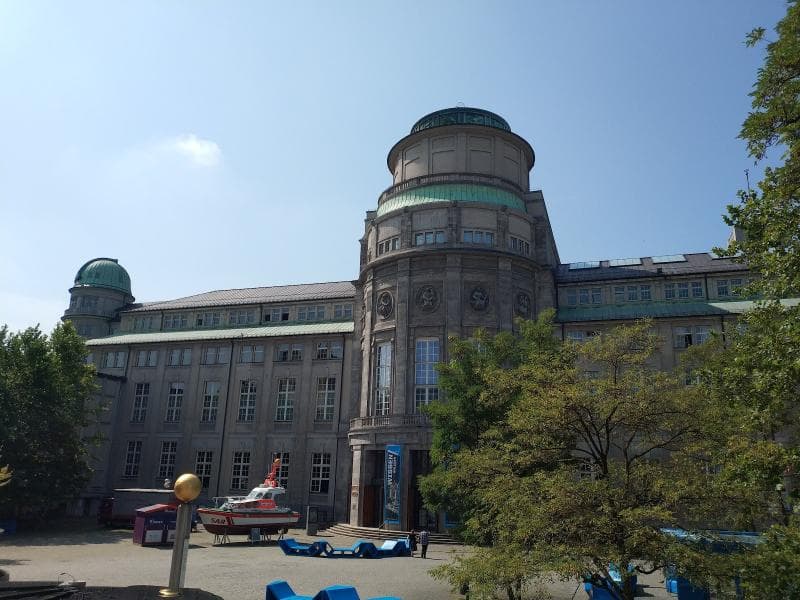
Explore the Deutsches Museum's Mining Exhibit in Munich, Germany. Discover the history, technology, and cultural impact of mining, from ancient times to modern day.
Overview
Deep within the extensive Deutsches Museum in Munich, Germany, lay one of its most compelling and immersive experiences: the Mining Exhibit. This remarkable sub-spot transported visitors into the fascinating, challenging world beneath the earth's surface. While currently undergoing significant renovation and scheduled to reopen in 2028, the original exhibition was a sprawling, subterranean journey covering approximately 500 meters. Around three-quarters of this route was designed as a realistic show mine, meticulously recreating the atmosphere and conditions of various mining operations. It offered a profound insight into the extraction, transportation, and refinement of raw materials, showcasing mining technology from the 16th century right up to modern times.
Today, while the main exhibit is closed, the Deutsches Museum continues to offer engaging temporary displays and virtual reality experiences that touch upon the vital role of raw materials and the historical significance of mining. These newer offerings ensure that the legacy and lessons of underground work remain accessible to curious minds.
History & Cultural Background
Mining has played a pivotal role in human civilization, from the earliest extraction of flint and metal ores around 4000 BC to the industrial powerhouses of recent centuries. The exhibit at the Deutsches Museum delved into this rich history, charting the evolution of mining techniques and their profound impact on society and economics. Early German mining records date back to around 970 AD, with Central European metal ore mining experiencing a golden age in the Middle Ages.
The exhibition detailed how miners continually innovated, overcoming challenges like water ingress and the need to dig deeper. The 15th and 16th centuries saw significant advancements allowing for greater depths, while subsequent eras shifted focus from metal ores to coal and salt, crucial for energy and the chemical industry. The 19th and 20th centuries brought rapid mechanization and automation, transforming the industry.
What Makes It Special
What truly set the Mining Exhibit apart was its unparalleled realism and scale. Visitors descended into a meticulously reconstructed mine, spreading across three levels connected by stairs and steep slopes, creating an authentic sense of being underground. This wasn't merely a display of artifacts; it was an experiential journey. The exhibit featured full-sized machinery, tools, and dioramas depicting miners at work in various historical contexts.
From the claustrophobic confines of a pitch coal mine around 1900, where miners crouched in low seams, to the impressive scale of modern lignite surface mining models, the exhibit brought the industry to life. It showcased the progression from hand tools to complex drilling systems and massive excavators, making the sheer effort and ingenuity involved in resource extraction palpable.
Stories, Fun Facts & Local Details
The Mining Exhibit was rich with specific narratives and details that brought the past to life. One could witness a 'hewer' kneeling at the end of a three-meter tunnel, illustrating the arduous annual performance of a miner in hard rock. Techniques like 'fire-setting,' an ancient method for breaking hard rock using heat, were vividly depicted, referencing operations like the Rammelsberg mine in Goslar, Germany.
Visitors could observe a replica of a functional 'man engine' from the 19th century, an ingenious energy-saving transport system for miners, and a 19th-century pit bank from the Rammelsberg mine itself. Another engaging detail was the depiction of pit ponies, once vital for hauling tubs in dimly lit, low-ceilinged coal seams. The exhibit also featured a wooden slide, similar to those used by Alpine miners until the 17th century to quickly descend into the mines. These elements offered glimpses into the daily lives, struggles, and clever solutions of miners through the ages.
Visitor Perspective
For visitors, the Mining Exhibit was an unforgettable, multisensory experience. Descending into the dark, cool depths of the show mine, one immediately felt transported. The sounds, the dim lighting, and the realistic settings created an immersive atmosphere that evoked both awe and a deep appreciation for the challenging work of miners. It was a journey through time and technology, offering a tangible understanding of how crucial raw materials are obtained.
Even with the main exhibit currently closed for renovation, the museum ensures the story of mining continues. Pop-up exhibitions explore contemporary issues of raw materials, sustainability, and the future of resource extraction. Additionally, a highly praised virtual reality experience allows visitors to digitally journey through the former show mine, providing an immersive insight into the underground working world of times gone by. This blend of historical immersion and contemporary relevance continues to make the exploration of mining at the Deutsches Museum a compelling experience for all.
Coordinates: 11.583452, 48.129871
View on Google Maps💬 How Travelers Describe This Place
Based on community votes
Unique
685Photogenic
472Beautiful
446Interesting
399Must See
33
Traveler Stories
Discover memorable experiences shared by travelers who have visited this place.
No traveler stories yet.
Be the first traveler to share what made this place memorable.

Tour
By
Spot
Discover amazing places around the world. Your journey starts here.
Explore
© 2026 TourBySpot. All rights reserved.