Christiansborg Palace
Copenhagen, Denmark
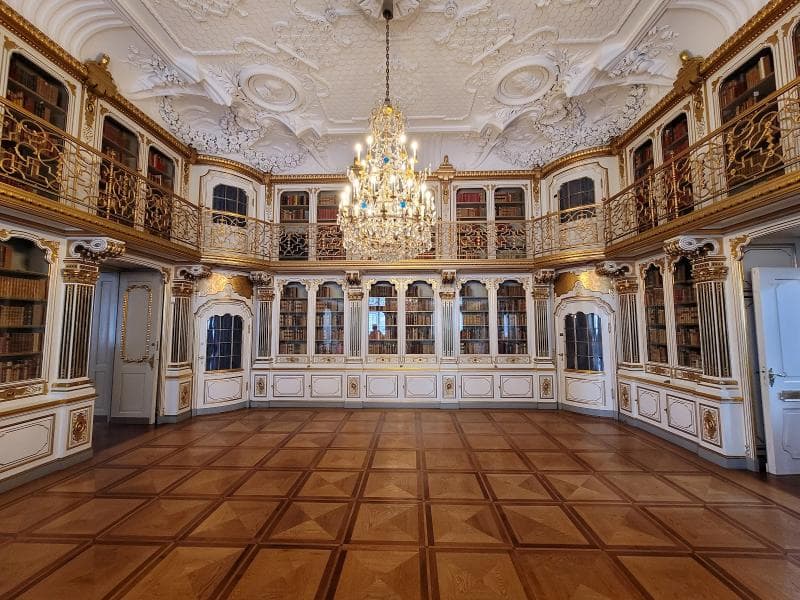
Explore Christiansborg Palace in Copenhagen, Denmark, home to Parliament, the Supreme Court, and Royal Reception Rooms. Discover its rich history and unique role.
Overview
Perched majestically on the islet of Slotsholmen in central Copenhagen, Christiansborg Palace stands as a profound symbol of Denmark's past and present. More than just a grand edifice, it uniquely houses all three supreme powers of the state: the executive (the Prime Minister's Office), the legislative (the Danish Parliament, known as the Folketinget), and the judicial (the Supreme Court of Denmark). This makes Christiansborg the only building in the world to concentrate all three branches of a country's government under one roof. While not the primary royal residence today, parts of the palace, including the Royal Reception Rooms, the Palace Chapel, and the Royal Stables, are still actively used by the Danish monarchy for state functions and ceremonial duties.
Its imposing architecture and central location make it an unmissable landmark for any curious traveler exploring the Danish capital. The palace serves as a living museum, offering a glimpse into centuries of Danish history, politics, and royal traditions, all intertwined within its walls. From opulent state rooms to ancient ruins, Christiansborg provides a multifaceted journey through Denmark's rich heritage.
History & Cultural Background
The story of Christiansborg Palace is a narrative woven through fire, reconstruction, and the evolution of Danish governance. The site itself boasts over 800 years of history, with the first castle, Absalon's Castle, erected by Bishop Absalon in 1167. This medieval fortress was followed by Copenhagen Castle in the late 14th century, which served as a royal power center for centuries.
The current Christiansborg is actually the third palace to stand on this very spot. The first Christiansborg Palace, a magnificent Baroque structure commissioned by King Christian VI, was built between 1734 and 1745. It was considered the largest palace in Northern Europe at the time but was tragically consumed by fire in 1794, forcing the royal family to relocate to Amalienborg Palace. A second Christiansborg, designed in a Neoclassical style by C.F. Hansen, was completed in 1828. This palace, too, succumbed to a devastating fire in 1884, though the Chapel survived. The present palace, constructed between 1907 and 1928 under architect Thorvald Jørgensen, combines Historicist Neo-baroque elements and was built specifically to house Denmark's democratic institutions, becoming the seat of Parliament after the constitutional monarchy was established in 1849.
What Makes It Special
Christiansborg Palace's most distinctive feature is its role as the nerve center of Danish democracy, uniquely bringing together the executive, legislative, and judicial branches. Beyond its governmental functions, the palace offers visitors a wealth of historical and cultural experiences:
- The Royal Reception Rooms: These lavishly decorated rooms are still used by the Danish monarch for official events, galas, and audiences with foreign ambassadors. Visitors can explore gilded salons, including the Oval Throne Room, where new monarchs are proclaimed from the balcony, and the Fredensborg Room with its grand paintings.
- The Great Hall with Queen Margrethe's Tapestries: This impressive hall houses a series of 17 tapestries, a gift to Queen Margrethe II for her 50th birthday, depicting 1000 years of Danish history from the Viking Age to the present day. These vibrant artworks offer a unique visual narrative of the nation's past.
- The Palace Chapel: Dating back to 1826 and built in a Neoclassical style, the Chapel is used by the royal family for various ceremonies. It was rebuilt after a fire in 1992 but retains much of its original character, including Bertel Thorvaldsen's angel frieze.
- The Royal Stables: Here, visitors can see the horses used by the Royal Family for ceremonial duties.
- The Ruins under Christiansborg: Discovered during the construction of the present palace, these underground ruins offer a fascinating archaeological journey back to the foundations of Bishop Absalon's 12th-century castle and Copenhagen Castle.
Stories, Fun Facts & Local Details
The resilience of Christiansborg Palace is a testament to its enduring significance; having burned down twice, it has risen from the ashes each time. Locals sometimes refer to the palace simply as 'Borgen' (the castle), a nickname that underscores its deep integration into Danish daily life and political discourse. The Tower, standing at 106 meters, is Copenhagen's highest, offering spectacular panoramic views of the city – and remarkably, access to the Tower is free. A quirky detail lies in the equestrian statue of King Christian IX at the Riding Ground; the horse model for it was sourced from Hanover, Germany, which apparently caused some discontent among Danish breeders at the time. The royal family, after the 1794 fire, permanently moved their primary residence to Amalienborg Palace, which is where they reside to this day, though they still utilize Christiansborg for official functions.
Visitor Perspective
A visit to Christiansborg Palace is an immersive experience. Travelers can choose to explore different areas, such as the opulent Royal Reception Rooms, the historic Palace Chapel, the Royal Stables, or the intriguing underground ruins. Guided tours are often available, providing deeper insights into the palace's history and significance. Don't miss the opportunity to ascend the Tower for unparalleled views of Copenhagen's skyline. While some areas require paid admission, the Tower offers free access. It's advisable to check the official websites for the most current opening hours, as these can vary due to state events or seasonality. Many visitors praise the stunning architecture, the historical richness, and the unique insight into Danish governance and royalty that the palace provides.
Coordinates: 12.58026, 55.67629
View on Google Maps💬 How Travelers Describe This Place
Based on community votes
Must See
995Unique
839Beautiful
388Interesting
289Photogenic
141
Traveler Stories
Discover memorable experiences shared by travelers who have visited this place.
No traveler stories yet.
Be the first traveler to share what made this place memorable.
Things to see at Christiansborg Palace



Tour
By
Spot
Discover amazing places around the world. Your journey starts here.
Explore
© 2026 TourBySpot. All rights reserved.