Ruins Beneath Palace
Copenhagen, Denmark
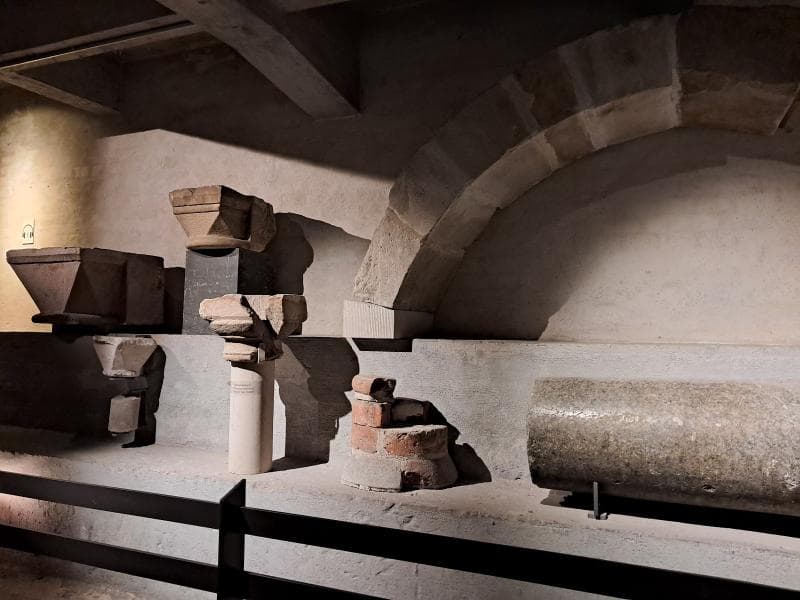
Explore the ancient 'Ruins Beneath Palace' at Christiansborg Palace in Copenhagen, Denmark. Delve into 800 years of history, from Bishop Absalon's 12th-century castle to Copenhagen Castle's 'Blue Tower' prison.
Overview
Deep beneath the grandeur of Christiansborg Palace in Copenhagen, Denmark, lies a fascinating subterranean world known as the 'Ruins Beneath Palace'. This hidden archaeological site reveals the foundations of Copenhagen's earliest fortifications and royal residences, offering a unique journey through over 800 years of Danish history. Discovered accidentally during the construction of the present-day palace, these ruins include remnants of Bishop Absalon's 12th-century castle and the subsequent Copenhagen Castle.
Visitors can explore the sturdy stone walls and various structures that once formed the bustling heart of medieval Copenhagen, now carefully preserved and protected. The site provides a tangible connection to the city's origins and the evolution of royal power in Denmark, all nestled directly under the modern seat of the Danish Parliament, the Prime Minister's Office, and the Supreme Court.
History & Cultural Background
The story of the Ruins Beneath Palace begins in 1167, when Bishop Absalon of Roskilde founded a castle on the small islet of Slotsholmen to defend Copenhagen, then a fledgling trading town, from pirate raids. This modest fortress, known as Absalon's Castle, was encircled by a formidable curtain wall and contained several buildings, including the bishop's residence and a chapel. It stood for approximately two centuries until 1369 when it was ultimately destroyed by the Hanseatic League during a period of conflict.
Following the demolition of Absalon's Castle, Copenhagen Castle was constructed on its ruins in the late 14th century. This new castle served as a royal residence and underwent numerous transformations over the years. It famously included the 'Blue Tower', a prominent structure that also functioned as a state prison. However, extensive rebuilding over centuries made the castle increasingly heavy and structurally unstable, leading King Christian VI to order its demolition in 1731 to make way for the first Christiansborg Palace.
The ruins we see today came to light unexpectedly in 1907 (some sources indicate 1906) during the excavation work for the current Christiansborg Palace. Workers stumbled upon ancient walls, prompting experts from the National Museum of Denmark to investigate. They quickly identified the significant historical layers, dating back to Absalon's original stronghold. Recognizing their immense value, a decision was made to preserve these remnants, and they were opened to the public in 1924, safeguarded by a reinforced concrete structure built in 1908.
What Makes It Special
The Ruins Beneath Palace offer a unique cross-section of Danish history, allowing visitors to literally walk through layers of time. It is a rare opportunity to witness the physical evolution of a significant power center, from a medieval defensive castle to a royal residence, all within the confines of a single site. The careful preservation of these ancient structures, uncovered by chance, is a testament to Denmark's dedication to its heritage.
The sheer age of the oldest remnants, dating back to the 12th century, makes them particularly special, providing a direct link to Copenhagen's foundation. Furthermore, the site's location directly beneath the contemporary Danish Parliament highlights the continuity of governance and power on Slotsholmen. The visible segments of the 'Blue Tower' and its associated dungeons serve as poignant reminders of its past as a state prison, adding a somber yet compelling dimension to the historical narrative.
Stories, Fun Facts & Local Details
One of the most captivating stories associated with the ruins, particularly Copenhagen Castle's 'Blue Tower,' is that of Leonora Christine, daughter of King Christian IV. Imprisoned without charge for nearly 22 years for the alleged crimes of her husband, Corfitz Ulfeldt, her compelling memoirs, 'Jammers Minde' ('Memory of Woe'), recount her ordeal within these very walls. Her tale adds a deeply human and dramatic element to the cold stone foundations.
The discovery of the ruins itself is a fascinating anecdote. It was not a planned archaeological dig but an accidental unearthing during construction, underscoring how much history lay hidden just beneath the surface of the modern city. The chronicler Saxo Grammaticus is the source of much of our early knowledge about Bishop Absalon's founding of the original castle, connecting literary history with tangible archaeological evidence. Locals sometimes whisper that the restless souls of former prisoners, like Leonora Christine, might still linger in the cool, echoing passages, adding an atmospheric touch to the historical experience.
Visitor Perspective
Exploring the Ruins Beneath Palace is often described as an immersive 'underground adventure,' transporting visitors far from the bustling streets of modern Copenhagen. The dimly lit, atmospheric passages lead you through the remnants of Absalon's Castle and Copenhagen Castle, allowing for a deep reflection on the passage of time and the many lives that once walked these grounds. Informative displays and reconstructions help contextualize the walls and foundations, painting a vivid picture of the castles' former glory and subsequent demises.
The experience is less about grand halls and opulent decorations and more about the raw, foundational history of a nation's capital. It offers a quiet, contemplative contrast to the opulence of the Christiansborg Palace above. The entrance to this historical underworld is conveniently located within the palace complex, often accessible from the courtyard or near the stables, making it an essential and easily integrated stop for any curious traveler seeking to understand Copenhagen's deep historical roots.
Coordinates: 12.580263025477015, 55.67629455714023
View on Google Maps💬 How Travelers Describe This Place
Based on community votes
Photogenic
685Interesting
446Beautiful
152Unique
33Must See
16
Traveler Stories
Discover memorable experiences shared by travelers who have visited this place.
No traveler stories yet.
Be the first traveler to share what made this place memorable.

Tour
By
Spot
Discover amazing places around the world. Your journey starts here.
Explore
© 2026 TourBySpot. All rights reserved.