Chapel Bridge
Lucerne, Switzerland
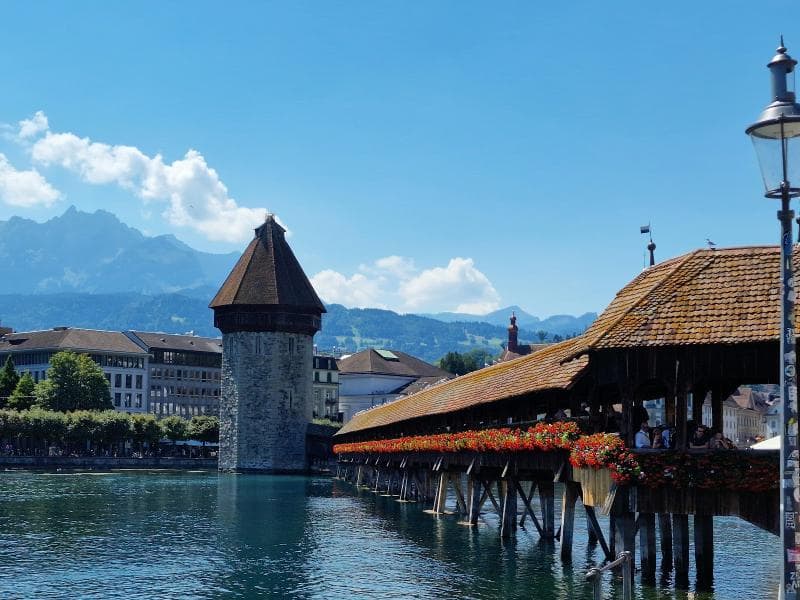
Explore Lucerne's iconic Chapel Bridge (Kapellbrücke), Europe's oldest covered wooden bridge. Discover its history, unique paintings, and the Water Tower.
Overview
The Chapel Bridge, known locally as Kapellbrücke, stands as an iconic symbol of Lucerne, Switzerland. This historic covered wooden footbridge gracefully spans the Reuss River, connecting the city's old town with its newer areas. It is widely recognized as the oldest covered wooden bridge in Europe and holds the distinction of being the world's oldest surviving truss bridge.
Its picturesque zigzag path across the water, often adorned with vibrant flowers, makes it a prime subject for photographers and a cherished landmark for both residents and visitors alike. Standing proudly alongside the bridge is the octagonal Water Tower, or Wasserturm, an imposing structure that predates the bridge itself and adds to the site's unique architectural charm.
History & Cultural Background
The Chapel Bridge's origins date back to the medieval era, with construction believed to have taken place around 1333 to 1365. An indirect reference to the bridge was made as early as 1347, though its first direct mention is found in records from 1367. Originally, the bridge served a crucial defensive purpose, forming an integral part of Lucerne's city fortifications. It linked the old town on the right bank of the Reuss to the new town on the left, safeguarding the city from potential attacks from the south.
The bridge acquired its name from the nearby St. Peter's Chapel. A defining feature of the Chapel Bridge is the series of triangular paintings housed beneath its roof. These captivating artworks, created in the 17th century between approximately 1614 and 1624, depict significant events from Swiss history, alongside stories and legends of Lucerne's patron saints, St. Leger and St. Maurice. These panels were often sponsored by city council members, who in turn had their family coats of arms included.
The Water Tower, an octagonal stone structure, is even older than the bridge, dating back to around 1290-1300. Over its long history, it has served various roles, including a prison, a torture chamber, a municipal archive, and a treasury. On August 18, 1993, a devastating fire, believed to have been started by a dropped cigarette, consumed a significant portion of the bridge and approximately two-thirds of its precious paintings. However, Lucerne demonstrated remarkable resilience, rebuilding the bridge in just eight months. The 'new' Chapel Bridge was triumphantly reopened on April 14, 1994, with 30 of the salvaged paintings fully restored and reinstated.
What Makes It Special
The Chapel Bridge's distinction lies in several unique attributes. It is not merely a crossing but a living museum, holding the title of Europe's oldest covered wooden bridge and the world's oldest surviving truss bridge. The triangular gable paintings are a feature unparalleled in other European wooden footbridges, offering a unique historical narrative as one walks through. Its survival and swift, faithful reconstruction after the 1993 fire further underscore its special status as a symbol of the city's enduring spirit.
The inseparable connection with the Water Tower, a structure of immense historical versatility, also contributes to its unique character, providing a visual focal point and a deeper layer of history. The bridge's unusual diagonal route across the Reuss River and its original role as a strategic defense mechanism highlight the ingenuity of medieval engineering and city planning.
Stories, Fun Facts & Local Details
Originally, the Chapel Bridge was a considerable 279 meters long, but it was shortened several times over the centuries due to embankment constructions, reaching its current length of approximately 204 to 205 meters. The 1993 fire was a monumental event, leading to an outpouring of sadness worldwide, but also an impressive civic effort to rebuild. Before the fire, 147 of the original 158 paintings had survived.
Interestingly, in the 19th century, rumors of the bridge's potential demolition sparked significant public outcry, particularly from English tourists who cherished the landmark, leading to successful protests that ultimately saved it. Today, the bridge remains a vital part of daily life in Lucerne, with approximately 13,800 people crossing it every day.
Visitor Perspective
For any traveler to Lucerne, walking across the Chapel Bridge is an essential experience. It is freely accessible to the public 24 hours a day, seven days a week, making it convenient for visitors at any time. The bridge is easily found, located just a short walk from Lucerne's main train station. As you stroll along, looking up at the historical paintings offers a moment of reflection on Switzerland's past.
For the classic postcard-perfect photograph of the bridge and the Water Tower, consider viewing it from the Seebrücke or from the riverbanks near Rathausquai or the station side. Visiting in the early morning or late evening can provide a more tranquil experience, avoiding larger crowds and offering softer, warmer light for photography. While the bridge is considered wheelchair accessible, navigating crowds or wet wooden surfaces might pose some challenges. After crossing, the vibrant Old Town, with its colorful facades, cafes, and historic squares, is just steps away, inviting further exploration.
Coordinates: 8.3074, 47.0516
View on Google Maps💬 How Travelers Describe This Place
Based on community votes
Photogenic
910Interesting
755Must See
481Beautiful
183Unique
28
Traveler Stories
Discover memorable experiences shared by travelers who have visited this place.
No traveler stories yet.
Be the first traveler to share what made this place memorable.
Things to see at Chapel Bridge



Tour
By
Spot
Discover amazing places around the world. Your journey starts here.
Explore
© 2026 TourBySpot. All rights reserved.