Bridge Interior
Lucerne, Switzerland
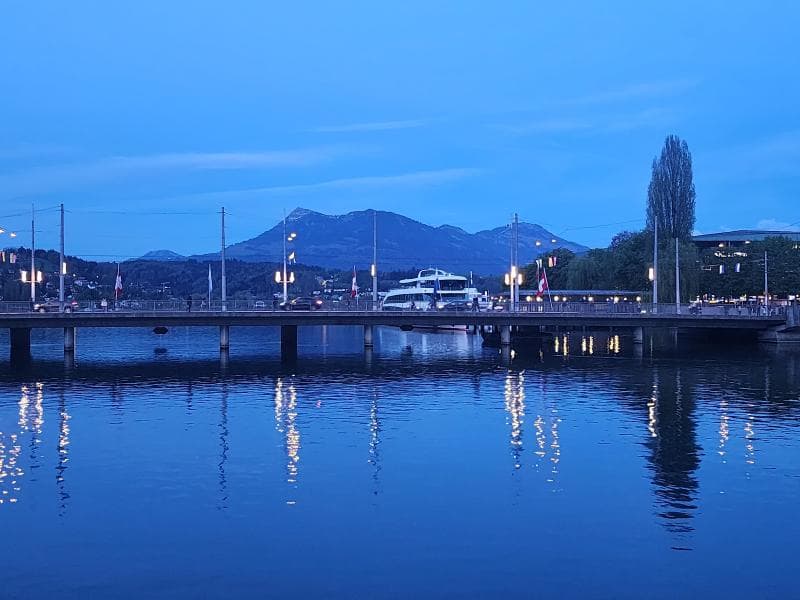
Explore the historic Bridge Interior of Lucerne's Chapel Bridge, Switzerland, adorned with unique 17th-century triangular paintings depicting Swiss history.
Overview
The Bridge Interior of Lucerne's Chapel Bridge, known locally as Kapellbrücke, offers a captivating journey through Swiss history and art. This iconic covered wooden footbridge, spanning the Reuss River in Lucerne, Switzerland, is renowned worldwide for its unique triangular paintings nestled beneath its roof. These artworks transform a simple pedestrian crossing into a vibrant historical gallery, providing a glimpse into the region's past.
As Europe's oldest covered wooden bridge and the world's oldest surviving truss bridge, the Chapel Bridge itself is a marvel of medieval engineering. The true heart of its interior appeal, however, lies in the 17th-century paintings that adorn its gables, depicting significant events from Lucerne's and Switzerland's history, alongside the lives of its patron saints. Tragically, a devastating fire in 1993 destroyed a large portion of these treasures, yet the bridge was swiftly and faithfully reconstructed, preserving its historical essence and ensuring its continued role as Lucerne's most prominent landmark.
History & Cultural Background
Constructed around 1333 to 1360, the Chapel Bridge initially served as a vital part of Lucerne's fortifications, linking the Old Town with the new and protecting the city from southern attacks. Its accompanying octagonal Water Tower (Wasserturm), even older than the bridge, once functioned as a prison, torture chamber, archive, and treasury, underscoring the bridge's historical strategic importance.
The distinctive series of triangular paintings, which constitute the bridge's interior, were commissioned in the early 17th century, around 1611 to 1614. The project was overseen by city chronicler Renward Cysat and executed by local Catholic painter Hans Heinrich Wägmann. These panels were created during the Counter-Reformation, serving a dual purpose: to promote the Catholic Church's values and to narrate the rich history of Lucerne and the Swiss Confederation. Wealthy city council members sponsored individual paintings, proudly displaying their personal coats of arms beneath each scene, often accompanied by explanatory verses.
Of the original 158 paintings, 147 survived until August 18, 1993, when a catastrophic fire consumed two-thirds of the bridge and most of its artworks. However, an extraordinary effort led to the bridge's reconstruction in just eight months, reopening in April 1994. From the remains of 47 paintings, only 30 were fully restored, with other damaged works replaced by those safely stored since 1834.
What Makes It Special
The Bridge Interior's most compelling feature is its unparalleled collection of triangular gable paintings. Lucerne is unique in possessing not one, but two, wooden pedestrian bridges (Chapel Bridge and Spreuer Bridge) adorned with such elaborate interior artworks, a characteristic virtually unseen in other European wooden bridges. Each painting serves as a window into a specific moment or legend, weaving a coherent narrative of Swiss history, Lucerne's development, and the devotion to its patron saints, St. Leger and St. Maurice.
This art gallery above the water transforms a simple crossing into an immersive historical experience. The interplay of light and shadow filtering through the bridge's structure highlights the aged wood and the vibrant, often dramatic, artwork, creating an atmosphere that is both contemplative and enlightening. The integration of public art with a functional structure demonstrates a deep cultural appreciation that has endured for centuries.
Stories, Fun Facts & Local Details
The paintings inside the Chapel Bridge are more than just art; they are visual lessons. They tell tales of ancient heroes, significant battles, and religious allegories, reflecting the strong Catholic identity of Lucerne during the Counter-Reformation. For instance, some panels depict the life and death of St. Leger, a French saint whose detailed portrayal was a subtle homage to the French king, reflecting the political alliances of the time. Similarly, the legends of St. Maurice, a Theban legionnaire, served as a tribute to Savoy, a Catholic ally.
A fascinating local detail is the tradition of the paintings being temporarily replaced with modern, carnival-themed artworks during the festive Carnival days, typically from late January through early February. This playful transformation offers a contemporary twist on the bridge's artistic legacy, albeit temporarily obscuring the historical narratives. Another intriguing aspect is that the verses accompanying the paintings, composed by Renward Cysat and Hans Rudolf Sonnenberg, sometimes offer interpretations that subtly diverge from the images themselves, hinting at interesting collaborations (or lack thereof) between writers and painters.
Visitor Perspective
Walking through the Bridge Interior of the Chapel Bridge is an experience that resonates deeply with travelers. It is a free and accessible attraction, open 24 hours a day, inviting visitors to stroll at their own pace. The wooden walkway, often adorned with seasonal flowers on the exterior, provides a serene path over the Reuss River. Inside, the triangular paintings capture attention, each inviting closer inspection and reflection on its story. Explanations below each panel further enrich the experience.
For photographers, early morning or late afternoon during the 'golden hour' offers the best light to capture the bridge's beauty, both inside and out. While the Water Tower is not open for climbing, its imposing presence alongside the bridge provides an iconic backdrop. The bridge connects seamlessly with Lucerne's charming Old Town, making it a perfect starting point for further exploration of the city's cobbled streets, historic squares, and riverside cafes.
Coordinates: 8.307352707845547, 47.051597709321584
View on Google Maps💬 How Travelers Describe This Place
Based on community votes
Unique
910Beautiful
755Photogenic
658Interesting
374Must See
28
Traveler Stories
Discover memorable experiences shared by travelers who have visited this place.
No traveler stories yet.
Be the first traveler to share what made this place memorable.

Tour
By
Spot
Discover amazing places around the world. Your journey starts here.
Explore
© 2026 TourBySpot. All rights reserved.