Painted Panels
Lucerne, Switzerland
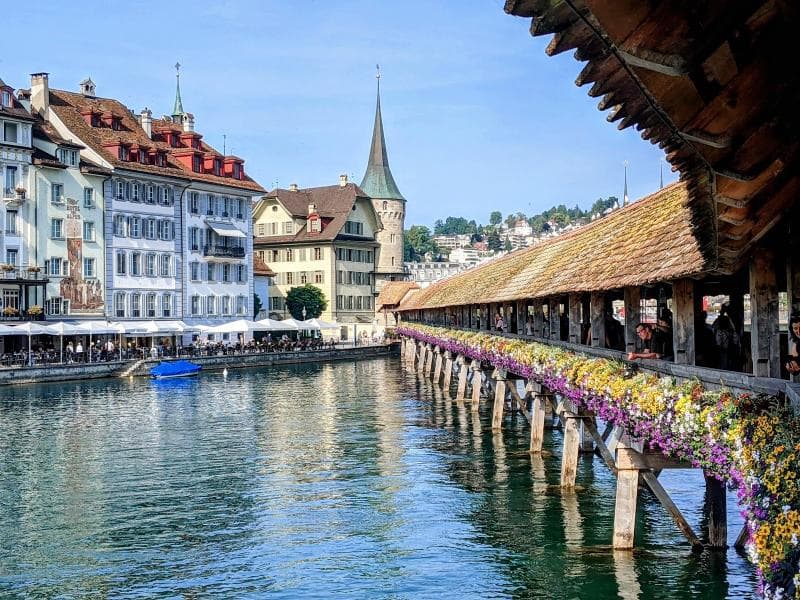
Explore the historic Painted Panels of Lucerne's Chapel Bridge, a unique collection of 17th-century artworks detailing Swiss history in Switzerland.
Overview
The Chapel Bridge (Kapellbrücke) in Lucerne, Switzerland, is more than just a picturesque wooden walkway; it is a living museum adorned with a unique series of painted panels. These triangular artworks, nestled within the bridge's roof trusses, tell the rich history of Lucerne and the Swiss Confederation. Originally dating back to the 17th century, these panels transform a simple crossing over the Reuss River into an immersive journey through time, inviting travelers to explore centuries of local heritage.
Standing as Europe's oldest covered wooden bridge and the world's oldest surviving truss bridge, the Kapellbrücke, together with its iconic Water Tower, forms an enduring symbol of Lucerne. While a devastating fire in 1993 tragically destroyed many of the original panels and much of the bridge, extensive restoration efforts ensured that this cultural treasure could once again welcome visitors, continuing its role as a prominent landmark.
History & Cultural Background
The concept for the Chapel Bridge's cycle of paintings emerged in the early 17th century, a period significantly influenced by the Counter-Reformation. Lucerne's city chronicler, Renward Cysat, meticulously developed a thematic program for the artworks, which began to be created around 1611 and continued until about 1617. These panels, primarily crafted from spruce wood, depict crucial moments from Lucerne's history, the lives and legends of its patron saints – St. Leger and St. Maurice – and significant events concerning the Old Swiss Confederacy.
Local Catholic painter Hans Heinrich Wägmann is believed to have overseen much of the artistic execution. An intriguing aspect of their creation was the sponsorship model: prominent members of the city council financed individual paintings, and in return, their personal coats of arms were incorporated into the artwork. Beneath each scene, an explanation of the depicted theme was provided, making the bridge an accessible public gallery and a powerful tool for promoting the Catholic Church and civic pride.
What Makes It Special
What sets the Painted Panels of the Chapel Bridge apart is their integration into a functioning piece of infrastructure and their narrative function. Unlike typical museum displays, these artworks are an intrinsic part of a historic bridge, offering a walking gallery experience. This feature is unique among European wooden footbridges, distinguishing Lucerne's bridge from all others.
The panels serve as a remarkable visual chronicle, preserving the stories and values important to Lucerne across generations. They reflect a politically turbulent era, showcasing both religious devotion and civic achievements. Even after the devastating fire of 1993, which destroyed a significant portion of the collection, the commitment to restoring and preserving this historical narrative highlights its profound cultural importance. The remaining and restored panels, along with the visible signs of the fire's impact, tell a story of resilience and remembrance.
Stories, Fun Facts & Local Details
Before the 1993 fire, the Chapel Bridge housed 147 of its original 158 paintings. The inferno, believed to have started on a boat moored beneath the bridge, consumed two-thirds of the structure and many of its precious artworks. Of the 47 panels salvaged from the debris, only 30 could be fully restored. The reconstruction thoughtfully incorporated these restored originals, alongside paintings that had been safely stored due to previous shortenings of the bridge or that were located in the undamaged bridgeheads.
Walking through the bridge today, one can observe the charred remnants of some panels, a poignant reminder of the fire and a testament to the bridge's tumultuous history. The hexagonal Water Tower, an older structure predating the bridge by about 30 years, has served various purposes, including a prison, torture chamber, municipal archive, and treasury. Today, it houses a local artillery association and a gift shop, adding another layer of historical intrigue to the site.
Visitor Perspective
For the curious traveler, a stroll across the Chapel Bridge offers an intimate encounter with Lucerne's past. As you walk beneath the roof, your gaze naturally lifts to the triangular gables, where the Painted Panels unfold their stories. Each panel, with its unique depiction and accompanying inscription, invites contemplation of historical events, legendary figures, and the daily lives of people centuries ago. The contrast between the brightly restored panels and the evocative, blackened remnants from the fire provides a tangible connection to the bridge's dramatic journey through time.
This is not just sightseeing; it's an educational experience, a chance to step into a bygone era and feel the pulse of Lucerne's heritage. The panels spark imagination, encouraging visitors to piece together the narratives and appreciate the artistic and historical significance of this extraordinary public art installation. Observing the coats of arms reminds one of the personal investment of Lucerne's citizens in preserving their collective memory. The Chapel Bridge, with its Painted Panels, is truly a bridge to the past.
Coordinates: 8.3073527, 47.0515977
View on Google Maps💬 How Travelers Describe This Place
Based on community votes
Photogenic
826Unique
800Must See
589Interesting
387Beautiful
90
Traveler Stories
Discover memorable experiences shared by travelers who have visited this place.
No traveler stories yet.
Be the first traveler to share what made this place memorable.

Tour
By
Spot
Discover amazing places around the world. Your journey starts here.
Explore
© 2026 TourBySpot. All rights reserved.