Night Illumination
Lucerne, Switzerland
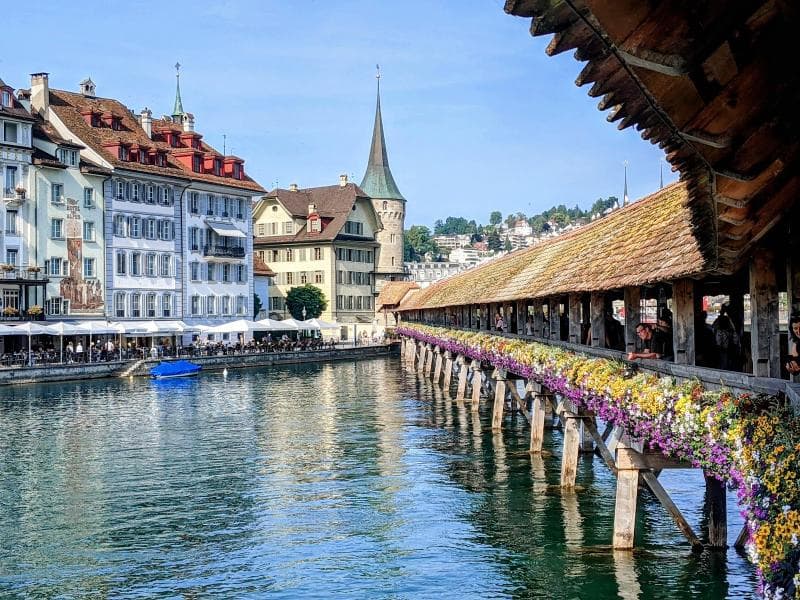
Discover the magical night illumination of Chapel Bridge (Kapellbrücke) in Lucerne, Switzerland. Explore its history and enchanting evening glow.
Overview
The Chapel Bridge, or Kapellbrücke, in Lucerne, Switzerland, is more than just a crossing; it is an enduring symbol of the city's rich history and architectural ingenuity. As the oldest covered wooden bridge in Europe and one of the world's oldest surviving truss bridges, it gracefully spans the Reuss River, connecting Lucerne's Old Town with its newer sections. While captivating by day with its historic triangular paintings, it is the 'Night Illumination' that truly transforms this landmark into a magical spectacle. As dusk settles, the bridge, along with the adjacent Water Tower, begins to glow, casting soft, inviting lights that reflect beautifully on the tranquil river surface, making Lucerne earn its moniker as the 'City of Lights'. This nocturnal ambiance invites travelers to experience a tranquil and enchanting side of one of Switzerland's most photographed destinations.
History & Cultural Background
The Chapel Bridge's origins trace back to approximately 1333, although some sources suggest its construction around 1360. Originally, it was not merely a pedestrian walkway but an integral part of Lucerne's city fortifications, explaining its distinctive diagonal route across the Reuss River. The bridge is named after St. Peter's Chapel, which stands on the right bank of the Reuss. What truly sets the Chapel Bridge apart are the 17th-century triangular paintings nestled under its eaves. These artworks, originally numbering around 158, depict significant moments from Swiss history, legends of Lucerne's patron saints (St. Leger and St. Maurice), and the coats of arms of city council members who sponsored them. This extensive cycle of paintings served as a visual chronicle for the citizens. Sadly, a catastrophic fire in August 1993 destroyed a large portion of the bridge and many of its irreplaceable paintings. However, through a remarkable eight-month reconstruction effort, the bridge was faithfully restored, with some original, restored paintings reinstalled, preserving its historical essence for future generations.
What Makes It Special
The Chapel Bridge's uniqueness stems from several facets, most notably its design as a covered wooden truss bridge and the distinctive triangular paintings that adorn its interior. These paintings offer a rare glimpse into medieval Swiss society and beliefs. Another iconic feature is the octagonal Water Tower, which predates the bridge and has served various functions over the centuries, from a prison and torture chamber to a municipal archive and treasury. However, the 'Night Illumination' elevates the bridge's charm, transforming it into a romantic and picturesque scene. The soft glow emanating from the bridge, often reflecting on the calm waters of the Reuss, creates a serene atmosphere that is distinct from its daytime appearance. This interplay of light and water enhances the bridge's architectural details and highlights its historical presence against the modern cityscape, making it an exceptional sight.
Stories, Fun Facts & Local Details
Lucerne's Chapel Bridge is steeped in fascinating stories. The paintings, for instance, were originally commissioned by the city council in the early 17th century to be protected from the elements, becoming one of only two such bridges in the world with decorated roof frames (the other being Lucerne's Spreuerbrücke). During the 1993 fire, which was reportedly started by a dropped cigarette, a significant portion of the paintings was lost, with only about 30 fully restored from the original 111 that were on the bridge at the time. The Water Tower, standing proudly alongside the bridge, never actually stored water; its name comes from its location in the river. Though not open to the public today, its varied past as a prison, torture chamber, and archive adds a layer of intriguing history to the landmark. The city of Lucerne itself is often called the 'City of Lights,' a reputation reinforced by the captivating evening glow of its most famous landmark.
Visitor Perspective
Experiencing the Chapel Bridge at night is often described as stepping into a fairytale. The gentle illumination of the wooden structure and the Water Tower creates a peaceful and charming ambiance. Visitors can stroll across the 204-meter-long bridge, taking in the historical paintings that remain and enjoying uninterrupted views of the Reuss River and the illuminated Old Town. The reflections of the glowing lights on the water offer exceptional photographic opportunities, capturing the tranquil beauty of Lucerne after dark. Many find the evening hours to be particularly atmospheric, as the city slows down, allowing for a more intimate connection with this historic landmark. It is a moment for quiet contemplation, enjoying the gentle glow, and soaking in the unique charm of this iconic Swiss structure. The bridge is freely accessible at all times, making a nighttime visit a highlight for any traveler to Lucerne.
Coordinates: 8.3075, 47.0516
View on Google Maps💬 How Travelers Describe This Place
Based on community votes
Interesting
443Must See
414Unique
310Beautiful
277Photogenic
233
Traveler Stories
Discover memorable experiences shared by travelers who have visited this place.
No traveler stories yet.
Be the first traveler to share what made this place memorable.

Tour
By
Spot
Discover amazing places around the world. Your journey starts here.
Explore
© 2026 TourBySpot. All rights reserved.