Reuss River Views
Lucerne, Switzerland
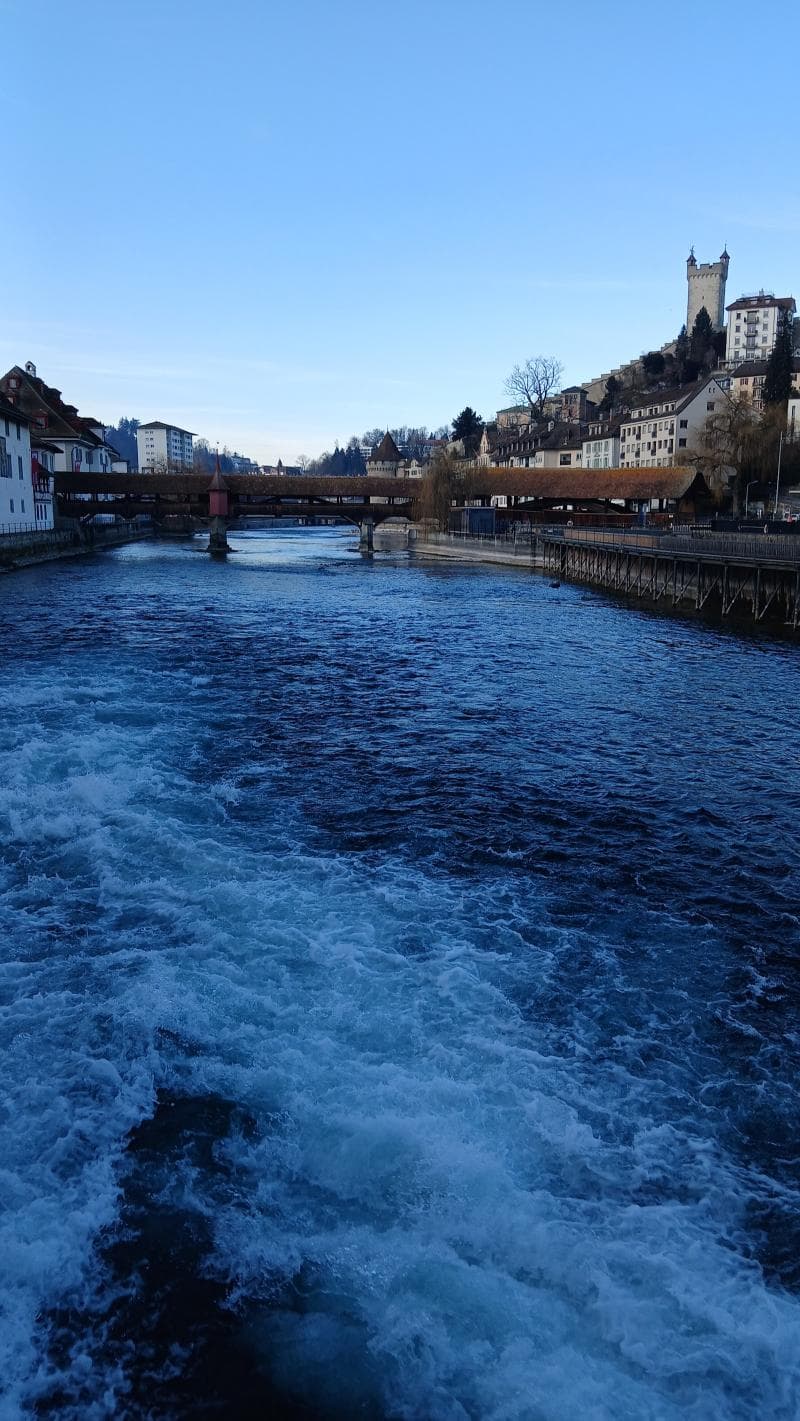
Explore the historic Reuss River Views from Chapel Bridge in Lucerne, Switzerland. Discover Europe's oldest wooden bridge, its 17th-century paintings, and the iconic Water Tower, offering captivating cityscapes and cultural insights.
Overview
The Reuss River Views from Lucerne's Chapel Bridge, or Kapellbrücke, offer an iconic glimpse into the heart of Switzerland. This venerable covered wooden footbridge diagonally spans the serene Reuss River, connecting the old town with newer parts of Lucerne. A stroll across its historic planks reveals not only the shimmering, clear waters of the Reuss but also panoramic vistas of the charming old town facades, nestled against a backdrop of majestic surrounding mountains. Standing as Lucerne's most recognizable landmark, the Chapel Bridge, paired with its distinct octagonal Water Tower (Wasserturm), creates a picturesque scene that has captivated visitors for centuries.
History & Cultural Background
The Chapel Bridge's origins trace back to around 1333 or 1360, when it was constructed as a crucial component of Lucerne's city fortifications. Its primary role was to link the old town on the right bank of the Reuss to the burgeoning new town on the left, safeguarding the city from potential attacks, particularly from the south via Lake Lucerne. The bridge's unusual diagonal path and the higher parapets on one side are lasting testament to its original defensive purpose.
Even older than the bridge itself is the adjacent Water Tower, an imposing octagonal structure built between approximately 1262 and 1300. Over its long history, this tower has served a multitude of functions, including a prison, a torture chamber, a municipal archive, and even a treasury. Inside the bridge, a unique cycle of 17th-century triangular paintings, created by local artist Hans Heinrich Wägmann, once adorned the gables. These artworks depicted pivotal events from Lucerne's history, local legends, and stories of its patron saints.
A tragic fire in August 1993, believed to have been sparked by a discarded cigarette, ravaged much of the bridge and devastated a significant portion of these invaluable paintings. However, with remarkable speed and dedication, the Chapel Bridge was reconstructed and reopened within a year, a testament to its profound cultural importance to the city.
What Makes It Special
What truly sets the Chapel Bridge apart is its remarkable fusion of historical architecture and its intimate connection with the Reuss River. It holds the distinction of being the oldest wooden covered bridge in Europe and is also recognized as the world's oldest surviving truss bridge. The interior paintings, even after the 1993 fire and subsequent restoration, remain a singular artistic feature, telling stories that few other bridges in Europe can rival. The bridge's distinctive zigzagging path across the water, coupled with the stoic presence of the Water Tower, creates an unforgettable visual landmark.
The Reuss River itself adds immensely to the bridge's special character. Its waters, often described as alpine-blue and crystal clear, host graceful swans and ducks, enhancing the tranquil beauty of the scene. This seamless blend of human ingenuity and natural splendor makes the Chapel Bridge and its river views a cherished symbol of Lucerne and an enduring icon of Switzerland.
Stories, Fun Facts & Local Details
The Chapel Bridge has undergone several transformations over the centuries. Originally longer, it was shortened multiple times due to changes in the riverbanks, particularly in the 19th century. Interestingly, there were once rumors of its complete demolition in the late 1800s, but strong opposition from both locals and English tourists ensured its preservation, leading to its designation as a national monument in 1913.
Before the 1993 fire, 147 of the original 158 triangular paintings were still intact. Tragically, two-thirds of these were destroyed in the blaze. From the remnants, only about 30 panels could be fully restored, while others were replaced with works that had been held in storage since 1834. The Water Tower's name, 'Wasserturm,' simply means 'water tower' due to its location in the river, not because it ever stored water. The Reuss River, central Switzerland's quintessential waterway, divides Lucerne into its historic Old Town and the more modern New Town, shaping the city's unique geography.
Visitor Perspective
For any traveler exploring Lucerne, walking across the Chapel Bridge is an immersive journey through history and natural beauty. The views are exceptionally rewarding, offering ever-changing perspectives of the Reuss River, the charming Old Town with its colorful buildings, and the distant, majestic Swiss Alps. Whether you visit in the early morning for peaceful reflection or during the bustling daytime, the pedestrian-only bridge invites a leisurely pace. It is a prime location for photography, capturing the iconic bridge, the historic Water Tower, and the clear river waters teeming with wildlife. Standing on the bridge, you become part of Lucerne's living history, feeling the gentle flow of the Reuss beneath and witnessing the timeless charm of this Swiss city.
Coordinates: 8.3075, 47.0516
View on Google Maps💬 How Travelers Describe This Place
Based on community votes
Unique
951Must See
748Interesting
491Beautiful
427Photogenic
414
Traveler Stories
Discover memorable experiences shared by travelers who have visited this place.
No traveler stories yet.
Be the first traveler to share what made this place memorable.

Tour
By
Spot
Discover amazing places around the world. Your journey starts here.
Explore
© 2026 TourBySpot. All rights reserved.