Water Tower
Lucerne, Switzerland
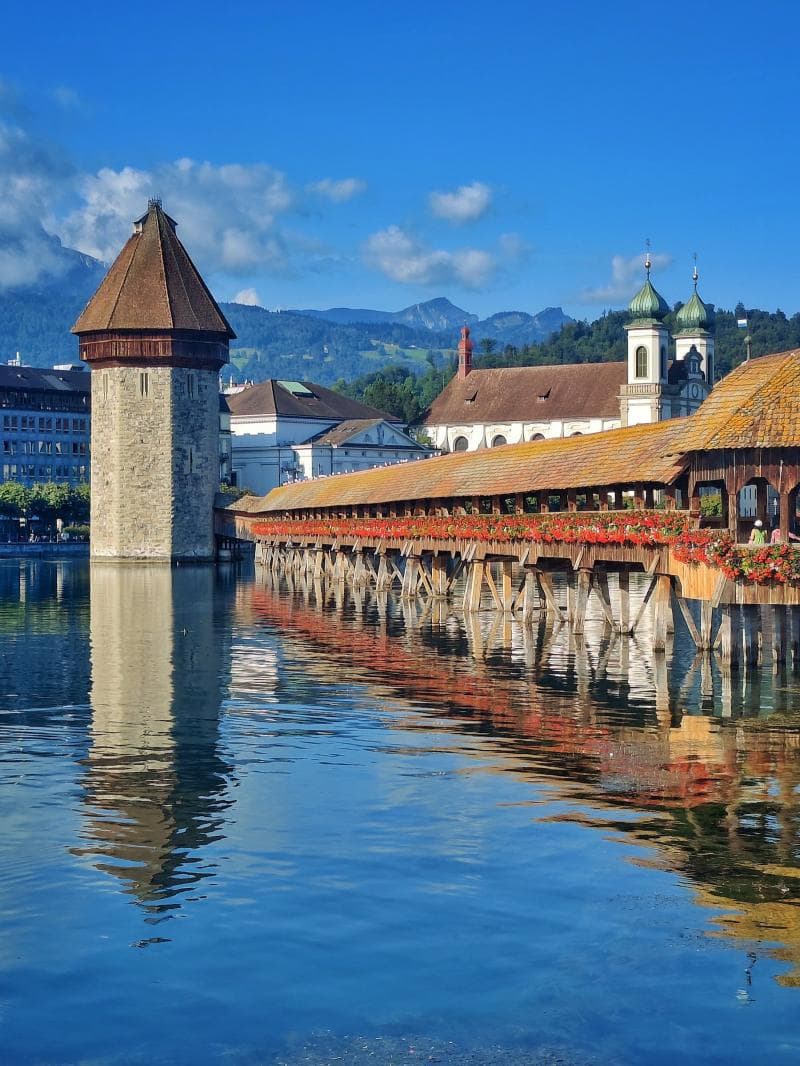
Explore Lucerne's Water Tower, an ancient octagonal fortress within the iconic Chapel Bridge in Switzerland, rich in history as a prison, archive, and treasury.
Overview
In the heart of Lucerne, Switzerland, an iconic landmark graces the Reuss River: the Chapel Bridge, or Kapellbrücke, and its enduring companion, the Water Tower. This distinctive octagonal stone tower, known locally as the Wasserturm, stands proudly within the bridge's structure, a silent sentinel that has watched over the city for centuries. While the Chapel Bridge is a celebrated wooden covered bridge, the Water Tower is actually significantly older, pre-dating the bridge by almost a hundred years. Together, they form one of Switzerland's most photographed and cherished symbols, offering a tangible link to Lucerne's medieval past.
This impressive stone edifice, with its octagonal shape and towering presence, has served a myriad of purposes throughout its long history, from a defensive watchtower to a formidable prison. Today, while largely closed to the general public, it continues to be a focal point of the city's rich heritage and a captivating sight for every visitor.
History & Cultural Background
The Water Tower's origins trace back to the 13th century, with its construction estimated to have occurred around 1262 or between 1200 and 1339. Dendrochronological analysis of the wooden beams in its attic dates them to 1339, making the tower a venerable structure indeed. It was in place long before the Chapel Bridge was built in the mid-14th century, initially serving a crucial role in Lucerne's fortifications, safeguarding the city from potential threats from the lake.
Over the centuries, its functions evolved dramatically. The tower transformed into a formidable prison, housing a dungeon and even a torture chamber in its lowest, thick-walled chambers, where prisoners were lowered by rope into complete darkness. Beyond its punitive roles, the Water Tower also acted as a municipal archive, safeguarding important documents and city records until as late as 1919. Furthermore, it functioned as the city's treasury, holding valuable objects and monetary reserves, a testament to its secure and strategic location.
The Chapel Bridge, built later, connected the old town with the new and also formed a part of the city's defensive line, making the Water Tower an integral component of this medieval defense system.
What Makes It Special
What truly sets the Water Tower apart is its remarkable versatility and its enduring presence alongside the Chapel Bridge. Its octagonal form and impressive height of 34.5 meters make it an architectural marvel that has adapted to the changing needs of Lucerne over more than 700 years. Unlike many historical structures that retain a single purpose, the Water Tower's multiple transformations—from watchtower to prison, archive, and treasury—offer a unique glimpse into the administrative, judicial, and defensive facets of a medieval city.
Its survival, notably during the devastating fire of 1993 that ravaged much of the wooden Chapel Bridge, underscores its robust construction and historical significance. While the bridge was meticulously restored, the Water Tower stood resilient, a beacon of Lucerne's past that continues to inspire awe. It embodies the very essence of Lucerne's rich history, making it far more than just a tower; it's a living monument to the city's evolution.
Stories, Fun Facts & Local Details
Local lore tells of its thick walls, up to four and a half meters, and a dungeon so dark that no light could penetrate it, accessed only by lowering prisoners. Imagine the countless stories these walls could tell, from the whispers of incarcerated individuals to the careful handling of the city's most precious assets. It's said that a spectacular theft of state treasure occurred from the tower in the mid-18th century, only discovered years later.
Another fascinating detail is that, for decades, the roof of the Water Tower has provided a nesting site for the rare Alpine Swift, adding a touch of natural wonder to this historical landmark. While it's commonly perceived as an integral part of the Chapel Bridge, the Water Tower's earlier construction means it was a standalone entity for a considerable period, standing majestically in the Reuss River before the bridge was even conceived. This historical separation adds another layer of intrigue to its story.
Visitor Perspective
Although the interior of the Water Tower is generally not accessible to the public, its external presence is an indispensable part of the Chapel Bridge experience. Visitors can admire its octagonal form and imagine its many historical roles while strolling across the wooden bridge. The combination of the wooden bridge and the stone tower creates a picturesque scene, perfect for photography, especially from the banks of the Reuss River. It's a place where history feels alive, inviting curious travelers to reflect on the passage of time and the resilience of human ingenuity.
The Chapel Bridge itself, with its unique 17th-century interior paintings depicting Lucerne's history, makes the walk an immersive journey. While the tower stands as a historical monument, the bridge offers a continuous narrative of the city's past, and together they provide a profound sense of place and time in beautiful Lucerne.
Coordinates: 8.3075, 47.0516
View on Google Maps💬 How Travelers Describe This Place
Based on community votes
Beautiful
910Must See
755Interesting
658Photogenic
589Unique
374
Traveler Stories
Discover memorable experiences shared by travelers who have visited this place.
No traveler stories yet.
Be the first traveler to share what made this place memorable.

Tour
By
Spot
Discover amazing places around the world. Your journey starts here.
Explore
© 2026 TourBySpot. All rights reserved.